

Industrial 3D Scanning Strategies for Rework Reduction and Efficiency
Discover how industrial 3D scanning reduces rework, accelerates inspection cycles, and improves manufacturing efficiency. Explore practical implementation strategies with INSVISION.
Identifying the Cost Drivers in Traditional Workflows
The true cost of quality and measurement isn’t just in the tooling; it’s embedded in the workflow delays and corrective actions they necessitate. Key pain points in pre-3D scanning workflows include:
Scenario Snapshot
A practical way to read the article is through this scenario:
- Identifying the Cost Drivers in Traditional Workflo…: The true cost of quality and measurement isn’t just in the tooling;
- Operational Improvement Paths with 3D Scanning: 3D scanning introduces an operational shift from spot-checking to comprehensive digital capture.
- A Framework for Quantifying the Business Impact: To evaluate the potential return, consider applying this framework to your specific operations:
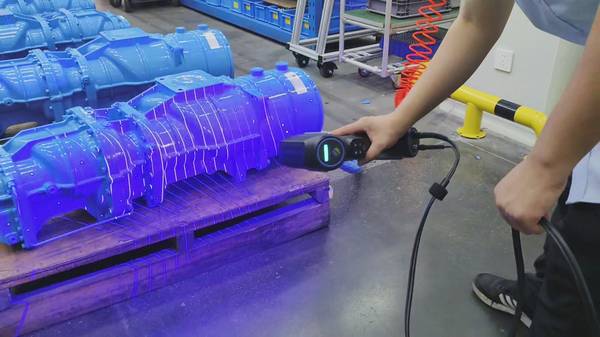
- Protracted inspection cycles: First-article inspection (FAI) and in-process checks using touch probes or hand tools stall production flow, creating a queue at the quality lab.
- The rework loop: Discrepancies found late in production, or worse, at the customer’s site, trigger expensive disassembly, repair, and re-inspection cycles.
- Skilled labor constraints: Accurate manual measurement depends on experienced technicians, creating a resource bottleneck and training overhead.
- Data gaps for root cause analysis: 2D measurements or single-point data lack the comprehensive spatial context needed to quickly diagnose tooling wear, casting distortion, or assembly fit issues.
Operational Improvement Paths with 3D Scanning
3D scanning introduces an operational shift from spot-checking to comprehensive digital capture. Here is how it translates into measurable gains across key stages:
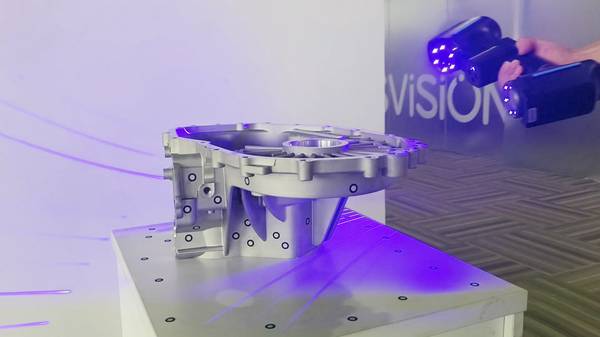
- Incoming Part & First-Article Inspection
- Pain Point: Slow, sample-based inspection delays production release. Complex freeform surfaces are inadequately assessed with traditional tools.
- Improvement: Rapid, full-field capture generates a dense point cloud for comparison against the CAD nominal. A color-map deviation report provides immediate, visual pass/fail analysis for the entire part geometry, including GD&T verification.
- Observable Value: Drastically reduced FAI turnaround time, enabling faster production ramp-up and more comprehensive quality gates.
- Tool & Mold Maintenance
- Pain Point: Reactive maintenance after failure or quality drift. Assessing wear on complex tooling surfaces is qualitative and imprecise.
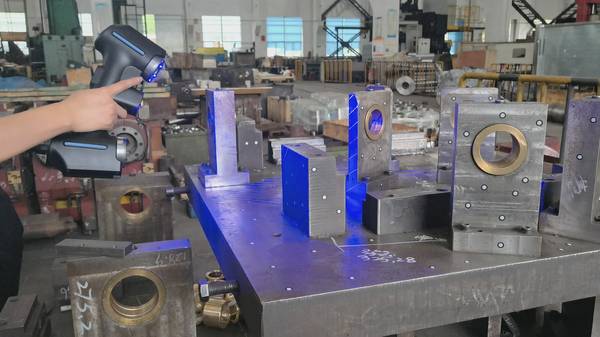
- Improvement: Regular 3D scanning of critical tools creates a digital wear history. By comparing current scans to the CAD master or a baseline scan, wear patterns and volume loss are quantified before they affect production.
- Observable Value: Shift from reactive to predictive maintenance, extending tool life, minimizing unplanned press downtime, and preventing batches of non-conforming parts.
- Reverse Engineering & Digital Work Instructions
- Pain Point: Legacy parts lack digital documentation, making reproduction or repair slow and error-prone. Assembly guidance relies on 2D drawings.
- Improvement: Scanning an existing part or a master assembly creates an accurate 3D CAD model. This model can be used for CNC programming, or to create interactive 3D work instructions for the shop floor.
- Observable Value: Eliminates guesswork in reproducing legacy components. Reduces assembly errors and training time for complex fit-ups.
A Framework for Quantifying the Business Impact
To evaluate the potential return, consider applying this framework to your specific operations:
| Operational Area | Key Metrics to Benchmark | Potential Impact of 3D Scanning |
|---|---|---|
| Quality & Inspection | • FAI report generation time • Non-conformance (NCR) processing time • Escapes to customer |
• Accelerates inspection closure • Provides definitive evidence for root cause analysis • Enhances first-pass yield |
| Production & Rework | • Scrap rate • Rework labor hours per incident • Tooling-related downtime |
• Reduces defects via comprehensive inspection • Minimizes rework scope with precise deviation data • Predicts tool failure to schedule maintenance |
| Labor & Efficiency | • Technician time per inspection job • Dependency on specific skilled individuals • Engineering requests for part data |
• Frees skilled labor for analysis, not just data capture • Democratizes accurate data collection • Creates self-service digital assets for engineering |
Where INSVISION’s AlphaScan Delivers Tangible Operational Gains
The business value of a 3D scanner is determined by its reliability, speed, and integration into the production environment. INSVISION’s AlphaScan is engineered for plant floor practicality, which translates into predictable operational improvements. Its metrology-grade accuracy ensures that the digital data you base decisions on is trustworthy, reducing the need for verification repeats.
The system’s speed and portability mean 3D scanning inspections can be performed at the press, in the weld bay, or at the receiving dock—minimizing part handling and logistics delays. For tooling analysis, the ability to quickly capture fine details and surface textures provides the actionable data needed for precise maintenance decisions.
Ultimately, it is about turning a complex measurement process into a routine, reliable data-gathering task that directly feeds into continuous improvement cycles.
Getting Started: A Phased 3D Scanning Implementation Approach
A successful rollout focuses on targeted, high-impact applications that demonstrate quick wins and build internal confidence.
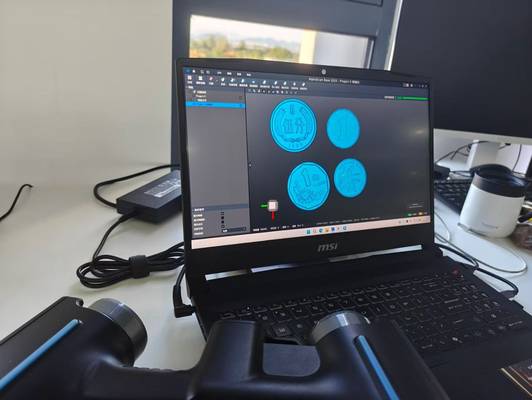
- Pilot with a Contained Rework Problem: Identify a recurring, costly rework scenario—e.g., a complex weldment that consistently fails fit-up. Use the AlphaScan to map the entire assembly against the CAD model to definitively identify the source of misalignment. The clear visual evidence and quantified data directly justify the solution and showcase the technology’s problem-solving power.
- Digitize Critical Tooling: Select a high-value production mold or die. Create a pristine digital master scan, then implement a periodic 3D scanning schedule (e.g., every 10,000 cycles). This builds a digital wear history, providing data to optimize polishing intervals and predict end-of-life, transforming a subjective process into a data-driven one.
Moving Forward with Digital Measurement
Within lean manufacturing and Industry 4.0 frameworks, 3D scanning is no longer a novel tool; it is a core component of operational resilience. The investment is not merely in hardware, but in a capability that compresses quality cycles, converts physical assets into actionable digital data, and systematically reduces the costly drag of rework.
For forward-looking manufacturing operations, industrial 3D scanning represents a direct path to hardening efficiency and securing a competitive edge in delivery and quality.
Hangzhou Insvision Technology Co., Ltd.
Address: Building 1, No. 1399 Liangmu Road, Yuhang District, Hangzhou, Zhejiang 311121, China
Copyright © Hangzhou Insvision Technology Co., Ltd. All rights reserved.
Copyright © Hangzhou Insvision Technology Co., Ltd. All rights reserved.