

How to Evaluate 3D laser profilers for Industrial Inspection
Before a single scan is taken, conventional workflows already carry cost. Contact measurement on complex freeform surfaces is slow, and CMM programming for
Where Traditional Inspection Erodes Margins
Before a single scan is taken, conventional workflows already carry cost. Contact measurement on complex freeform surfaces is slow, and CMM programming for a new part can take hours. On the floor, shiny machined surfaces, dark composites, or textured castings force operators into a routine of developer sprays, matting tapes, and repeated setups—each step adding labor, consumables, and the risk of surface contamination.
Thermal swings across a plant, from cold storage to welding bays, cause measurement drift that demands frequent recalibration. And when inspection data lives in a proprietary format, quality engineers waste time converting files or manually populating reports. These aren’t just technical annoyances; they are recurring operational costs that eat into margin and throttle throughput.
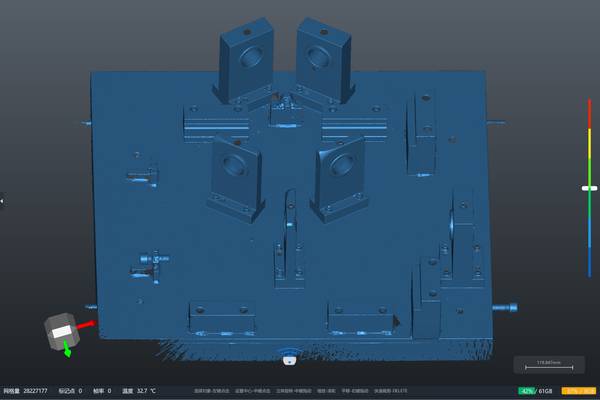
How 3D Laser Profilers Change the Cost Equation
A well-designed 3D laser profiler attacks these costs at multiple points. The following paths show where the technology shifts from a capital expense to a daily efficiency lever.
Inspection cycle time. Handheld 3D laser profilers capture full-field point clouds in seconds, not minutes. A single pass can digitize a die cavity or a large panel, eliminating the point-by-point probing that ties up a CMM. For first-article inspection or in-process checks, the measurement cycle shrinks, and parts spend less time waiting for a verdict.
The result is higher machine utilization and faster release of conforming product.
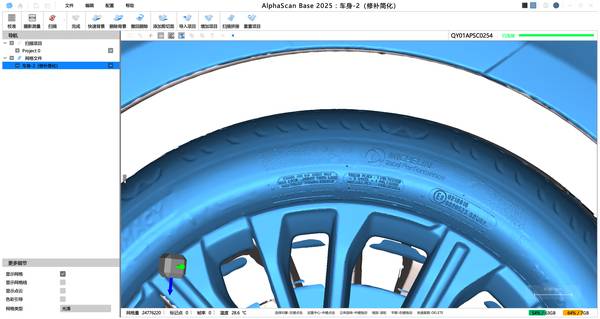
Rework and scrap reduction. When a profiler handles high-reflective, dark, or textured surfaces without surface preparation, the entire spray-and-clean step disappears. Operators no longer apply developer, wait for it to dry, scan, and then clean the part. That removes a source of measurement variability and a recurring consumable cost.
More importantly, reliable raw data reduces false rejects and the rework loops they trigger. Catching dimensional drift early—before a batch of out-of-tolerance parts is produced—prevents material waste and unplanned downtime.
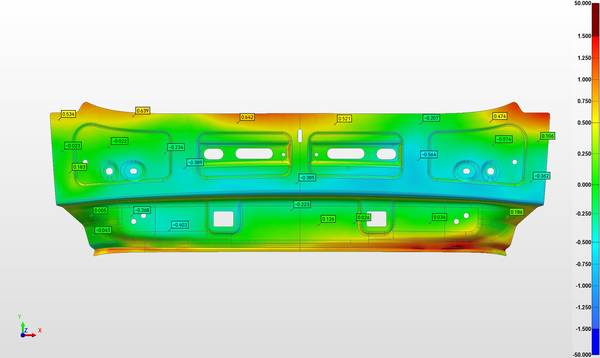
Labor and skill dependency. Traditional CMM programming and contact scanning demand experienced metrology technicians. A handheld 3D laser profiler with intuitive software allows a broader pool of operators to perform in-line inspections.
This doesn’t eliminate the need for metrology expertise, but it shifts skilled resources to higher-value tasks like root-cause analysis and process optimization, rather than routine data collection.
Delivery responsiveness. When a legacy part arrives with no CAD file and a worn tool, reverse engineering can stall a production order for days. A portable 3D laser profiler that outputs native IGES, STP, or DXF/DWG files lets a team capture as-built geometry in an afternoon and feed it directly into CAM or CAD.
The same speed applies to MRO tear-downs: scanning a turbine component on-site, before weld repair, compresses the decision-to-repair timeline and keeps service crews moving.
Quality traceability and supplier trust. Digital inspection records that flow into a central quality system create a verifiable thread from first article to production lot. When a profiler supports role-based cloud sharing, a quality manager in one region can review GD&T deviation maps from a supplier on another continent without waiting for a paper report.
This traceability strengthens customer confidence and reduces the administrative cost of audits and supplier qualification.
A Framework for Evaluating Operational Value
Rather than rely on generic ROI claims, manufacturing leaders can assess the impact of a 3D laser profiler by tracking a handful of operational metrics before and after deployment. The table below outlines factors that translate directly into cost and throughput.
| Value Driver | What to Measure | Observable Change |
|---|---|---|
| Inspection throughput | Average time per part from setup to report | Reduction in queue time at the CMM; more parts inspected per shift |
| Surface preparation cost | Consumables (spray, tape) and labor hours per week | Elimination or sharp reduction of preparation steps |
| Rework rate | Percentage of parts reworked due to measurement uncertainty or late detection of drift | Fewer rework orders; lower scrap cost |
| Skilled labor allocation | Hours of CMM programmer or senior inspector time redirected to routine scanning | Senior staff focused on process improvement, not data capture |
| Reverse engineering turnaround | Elapsed time from part receipt to usable CAD model | Faster response to service part requests and tooling modifications |
| Supplier quality overhead | Time spent on supplier qualification paperwork and audit follow-ups | Streamlined acceptance when profiler certifications align with QMS requirements |
Each plant can baseline these metrics with its own data. The goal is not to promise a universal percentage saving, but to give operations leaders a clear, self-managed method for quantifying the shift.
Where INSVISION’s Approach Delivers Perceptible Improvement
INSVISION’s AlphaScan handheld 3D laser profiler addresses the cost drivers above through deliberate engineering choices, not marketing checkboxes. The 520 nm blue laser and multi-line configuration capture clean data on shiny stampings, dark carbon fiber, and textured castings without developer spray. That alone removes a recurring consumable cost and a time sink from daily inspection routines.
Thermal stability is another operational gain. The AlphaScan holds positioning accuracy across a wide temperature range, so an operator moving from a freezer to a press line doesn’t stop to recalibrate. Less downtime for recalibration means more parts scanned per shift and fewer measurement errors caused by drift.
Data integrity matters when a scan session runs 20 minutes or longer. INSVISION re-engineered the USB connection into a locking design that prevents micro-disconnects and corrupted data. For a quality engineer, that eliminates the rework of re-scanning a full assembly because of a dropped connection—a small detail with a direct impact on labor efficiency.
Software integration cuts workflow waste. The AlphaScan outputs IGES, STP, and DXF/DWG natively, so scan data moves into existing CAD and inspection software without file conversion. The INSVISION software stack combines scanning, inspection comparison, and model generation in a single interface, removing the need to toggle between separate tools.
For lean manufacturing teams, that consolidation reduces the non-value-added time spent managing multiple applications. And because firmware and software updates remain backward compatible, the system you deploy today won’t force a hardware refresh next year—protecting capital and keeping improvement programs on track.
On the compliance side, INSVISION’s certifications—CE, FCC, RoHS, IEC 60825 laser safety, IEC 62471 photobiological safety, backed by ISO 9001, ISO 14001, and ISO 45001 management systems—mean the profiler slots into an existing QMS without triggering a lengthy supplier qualification process.
For procurement and quality managers in aerospace, automotive, and medical device sectors, that alignment reduces administrative friction and speeds up deployment.
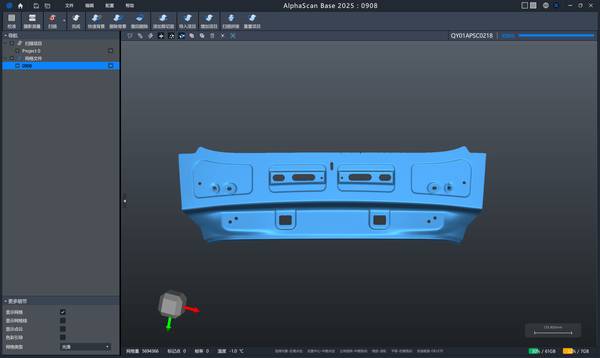
Field evidence reinforces the operational case. Automotive teams use AlphaScan for in-line inspection of complex curved panels and for reverse engineering service parts with lost CAD. Medical device manufacturers scan small, deep-cavity mold inserts for first-article validation. Energy service crews run the same hardware on turbine components during off-site MRO, capturing as-found geometry before weld repair.
These are not lab demonstrations; they are daily production and maintenance workflows where repeatable, portable metrology directly affects turnaround time and quality outcomes.
Implementation Rhythm: Where to Start
A phased approach reduces risk and builds internal buy-in. Three entry points typically deliver fast, visible results:
- Reverse engineering and legacy part digitization. Start with a recurring pain point: a service part with no CAD, a worn tool that needs replacement, or a first-article inspection that currently ties up the CMM for hours. Deploy the handheld profiler to capture geometry and generate a solid model in a single shift. The time saved versus traditional methods is immediately measurable and builds confidence among engineering and production staff.
- In-line inspection of difficult surfaces. Target a production cell where operators routinely apply developer spray or matting tape to shiny or dark parts. Replace that preparation step with direct scanning using the blue laser profiler. Track the reduction in consumable cost, the elimination of cleaning steps, and the drop in measurement-related rework over a two-week trial. This scenario often yields the most tangible operational savings.
- MRO and large-component scanning. For maintenance teams working on turbines, large weldments, or airframe components, mobility and accuracy are equally critical. Pilot the profiler on an off-site repair job where bringing the part to a fixed CMM is impractical. Measure the time from scan to actionable inspection report and compare it with previous turnaround times. The ability to capture as-found condition quickly can compress repair planning and reduce asset downtime.
In each case, assign a cross-functional owner—someone from quality, production, or maintenance—to document baseline metrics before the pilot and track the same metrics afterward. That data becomes the foundation for a broader business case, not a vendor’s generic claim.
A Practical Path to Leaner Inspection
INSVISION’s 3D laser profilers don’t demand a factory-wide digital overhaul. They address the everyday frictions that inflate inspection costs: surface preparation, recalibration downtime, data loss, software fragmentation, and supplier qualification delays.
By giving frontline teams a portable, metrology-grade tool that works on real production surfaces and fits into existing software and quality systems, the technology turns inspection from a bottleneck into a source of faster, more reliable decisions. For operations leaders focused on margin protection and throughput, that shift is worth measuring.
Hangzhou Insvision Technology Co., Ltd.
Address: Building 1, No. 1399 Liangmu Road, Yuhang District, Hangzhou, Zhejiang 311121, China
Copyright © Hangzhou Insvision Technology Co., Ltd. All rights reserved.
Copyright © Hangzhou Insvision Technology Co., Ltd. All rights reserved.