

Deploying a 3D Scan Engine for Inline Quality Control on Automotive Stamping Lines
See how a Tier 1 supplier deployed the INSVISION AlphaScan 3D scan engine for inline stamping inspection, cutting CMM bottlenecks and audit prep time.
The Persistent Quality Bottleneck on High-Volume Stamping Lines
Stamping cells present a hostile measurement environment. Ambient temperature swings of 15°C or more across a shift, floor vibration from adjacent presses, and airborne oil mist are everyday realities. In this setting, quality teams face three intertwined challenges.
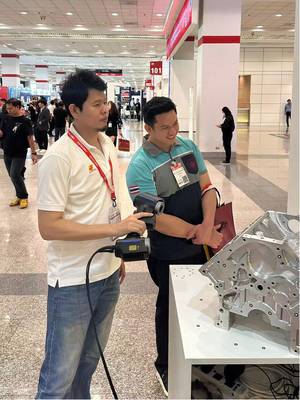
Validation Points from Use Cases
| Focus Area | Decision Point | Deployment Note |
|---|---|---|
| The Persistent Quality Bottleneck on High-Volume Stampi… | Stamping cells present a hostile measurement environment. | Ambient temperature swings of 15°C or more across a shift, floor vibration from adjacent presses, and airborne oil mist are everyday realities. |
| Defining Non-Negotiable Criteria for a Production-Ready… | The engineering team established four performance pillars any 3D scan engine had to satisfy before it would be considered for the shop floor: | These criteria ruled out general-purpose structured-light scanners and reinforced the need for a metrology-focused 3D scan engine built for indu… |
| Aligning Requirements with INSVISION AlphaScan Capabili… | The INSVISION AlphaScan 3D scan engine addresses each criterion through a combination of hardware design and embedded algorithms. | Its stable metrology accuracy of 0.020 mm is verified under controlled conditions and validated across production runs, providing the repeatabil… |
| Three dedicated scan modes cover the geometry range enc… | The portable, battery-powered design eliminates fixed wiring, allowing the same 3D scan engine to move between incoming die inspection, first-piece c… | Confirm against part conditions, inspection tempo, and data-output requirements. |
CMM capacity is finite. When every new die, every first-piece check, and every periodic audit queues for the lab, production decisions stall. Operators either wait for lab results or proceed on faith, accepting the risk of running nonconforming material.
Complex draw panels and structural brackets contain deep-draw features, tight radii, and datum surfaces that are difficult to access with contact probes. Manual caliper and gauge checks introduce operator-to-operator variation and rarely capture the full surface profile needed for root-cause analysis.
Customer PPAP and IATF 16949 requirements demand a traceable digital thread. Paper check sheets and isolated CMM reports create documentation gaps that surface during audits, consuming engineering hours that could be spent on process improvement.
Defining Non-Negotiable Criteria for a Production-Ready 3D Scan Engine
The engineering team established four performance pillars any 3D scan engine had to satisfy before it would be considered for the shop floor:
- Sub-0.025 mm metrology-grade accuracy under real operating conditions, not just in a climate-controlled lab.
- Environmental resilience that maintains measurement stability across temperature gradients, vibration, and ambient light interference.
- Cycle-time-compatible data processing capable of delivering actionable deviation maps within the production takt time.
- Audit-ready reporting that generates traceable, customer-accepted dimensional records without manual transcription.
These criteria ruled out general-purpose structured-light scanners and reinforced the need for a metrology-focused 3D scan engine built for industrial deployment.
Aligning Requirements with INSVISION AlphaScan Capabilities
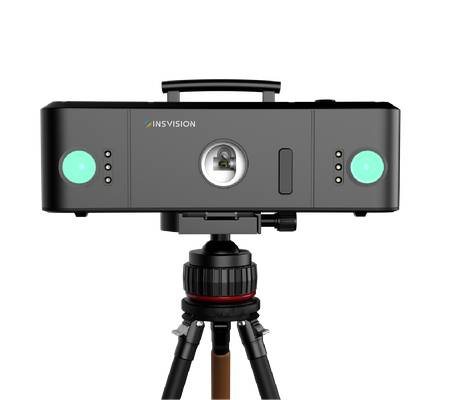
The INSVISION AlphaScan 3D scan engine addresses each criterion through a combination of hardware design and embedded algorithms. Its stable metrology accuracy of 0.020 mm is verified under controlled conditions and validated across production runs, providing the repeatability stamping applications demand.
The scanner’s AI+3D algorithm integration accelerates point-cloud reconstruction while filtering ambient interference from overhead lighting and the vibration signatures common to stamping and weld cells. Operators do not need to black out the inspection zone or isolate the part from floor movement to obtain usable data.
Three dedicated scan modes cover the geometry range encountered in automotive stamping:
- 30/42 blue laser cross-lines for rapid full-part coverage on large panels and structural members.
- Single-line mode for deep-draw geometries and narrow channels where cross-line patterns lose line of sight.
- Seven-fine-line mode for capturing tight radii, trim edges, and critical datum features with high point density.
The portable, battery-powered design eliminates fixed wiring, allowing the same 3D scan engine to move between incoming die inspection, first-piece checks, and mid-run spot audits as shift priorities change.
Phased On-Floor Deployment Without Production Disruption
The rollout placed the INSVISION 3D scan engine across three stamping lines over eight weeks, with zero unplanned downtime. The process began with validation on a certified master part. The CMM team ran parallel measurements while the scanner operator captured the same geometry. Results fell within the established tolerance stack, and the entire test occurred during a normal shift with no line stoppage.
Training quality technicians took less than a day. Hands-on sessions covered scan mode selection for different feature types, CAD alignment procedures, and report generation. By the second session, operators worked independently—no lengthy certification program, no classroom overload.
Integration moved in three phases:
- Incoming die inspection – scanning tooling before production launch to catch wear or damage that would propagate into stamped parts.
- First-piece checks – verifying the initial part from each batch against the nominal CAD model before releasing the run.
- Random mid-run spot audits – sampling parts at intervals to detect drift and trigger corrective action before scrap accumulates.
Scan data and deviation reports synced automatically to the plant’s quality management system, building a complete digital trail for every batch. When the IATF 16949 auditor arrived, pulling traceable records took minutes instead of the usual paperwork hunt.
Measurable Operational Outcomes and Cross-Industry Application
The most tangible gains came from workflow redesign rather than isolated speed improvements. When quality technicians use a portable 3D scan engine for first-piece inspection, the process shifts from sequential setup-measure-report to simultaneous data capture and analysis.
This collapses the learning curve across shifts and eliminates the subjective variation that naturally occurs when different technicians interpret caliper readings on complex geometry.
For facilities with constrained CMM capacity, deploying a 3D scan engine for routine dimensional checks frees the lab for high-value final audits and certification work. The scan data generates traceable, repeatable records that simplify ISO and customer compliance documentation without manual transcription.
Proactive die maintenance becomes feasible when operators can quickly compare current part geometry against nominal models, catching wear patterns before they cause scrap or downtime. The same scan data that serves quality inspection feeds tooling decisions, creating a closed loop between production and maintenance.
Beyond assembly line inspection, the INSVISION AlphaScan configuration handles aerospace MRO applications, weld cell verification, and any high-mix production environment where complex freeform surfaces and tight GD&T callouts make traditional contact measurement impractical. The common thread is a need for shop-floor metrology that does not compromise between speed and accuracy.
How Similar Operations Can Adopt the Approach
Plants evaluating a 3D scan engine for stamping or fabrication quality can replicate the phased deployment model without disrupting production. Key steps include:
- Validate the scanner against a certified master part with parallel CMM correlation.
- Start with a single high-pain-point application—incoming die inspection or first-piece checks—before expanding to other use cases.
- Integrate scan data directly into the existing QMS to eliminate manual data entry and build an audit-ready digital record from day one.
- Leverage the scanner’s portability to serve multiple lines or cells, maximizing utilization without additional capital.
The INSVISION AlphaScan’s combination of metrology-grade accuracy, environmental robustness, and operator-friendly scan modes makes it a practical fit for these scenarios, where the goal is not to replace the CMM entirely but to extend dimensional visibility to the point of production.
Summary
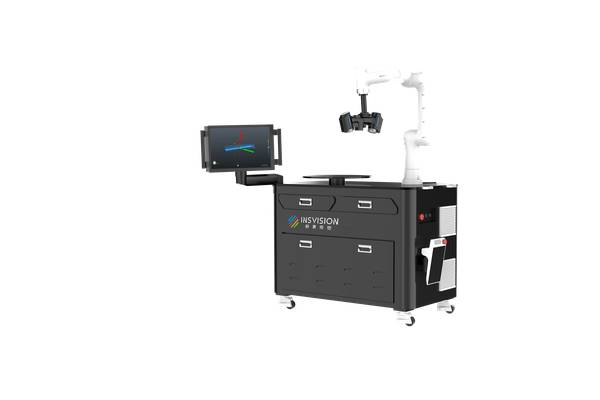
A production-ready 3D scan engine shifts dimensional inspection from a bottleneck to an enabler on high-volume stamping lines.
By meeting the four non-negotiable criteria of accuracy, environmental resilience, processing speed, and audit-ready reporting, the INSVISION AlphaScan allowed a Tier 1 supplier to collapse inspection lead times, free CMM capacity, and build a traceable digital quality record that satisfied both internal process control and external audit requirements.
Hangzhou Insvision Technology Co., Ltd.
Address: Building 1, No. 1399 Liangmu Road, Yuhang District, Hangzhou, Zhejiang 311121, China
Copyright © Hangzhou Insvision Technology Co., Ltd. All rights reserved.
Copyright © Hangzhou Insvision Technology Co., Ltd. All rights reserved.