

Beyond the Blueprint: How 3D Scanning Physical Objects Unlocks Operational Certainty
In precision manufacturing, uncertainty is the primary cost driver. Discrepancies between design intent and physical part, delayed inspection bottlenecks
In precision manufacturing, uncertainty is the primary cost driver. Discrepancies between design intent and physical part, delayed inspection bottlenecks, and the labor-intensive nature of legacy measurement methods erode margins and compromise delivery cadence. The strategic shift is from reactive measurement to proactive digital capture. When you 3D scan an object, you are not merely collecting points;
you are creating a definitive, actionable digital record that integrates across the entire product lifecycle.
This transition is fundamental. It replaces subjective, sample-based checks with comprehensive data, turning physical objects into immutable digital assets that drive efficiency from first-article inspection to final quality assurance.
From Bottleneck to Flow: Digitizing Objects on the Production Floor
Traditional metrology—CMMs, hand tools, fixtures—often dictates workflow. Parts must travel to the measurement lab, a process that halts production flow, depends on specialized environments, and struggles with complex geometries like freeform surfaces or internal channels. This creates a bottleneck where quality control dictates production tempo, not the other way around.
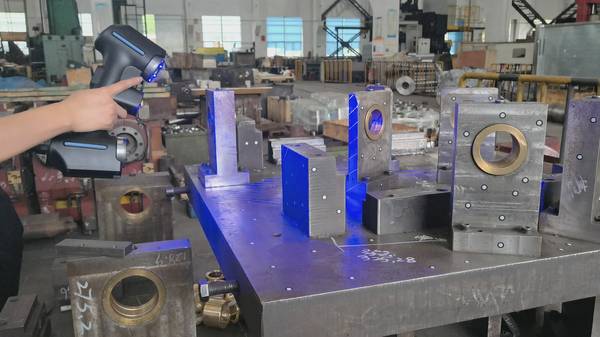
INSVISION’s AlphaScan series redefines this dynamic. As a handheld metrology-grade scanner, it brings the inspection to the part. This allows for in-process verification on the shop floor, within assembly cells, or on large, fixed installations. The operational impact is immediate: production continues while critical dimensional data is captured.
Complex assemblies can be validated in situ, eliminating the need for costly disassembly or dedicated fixtures, and enabling real-time decision-making that keeps workflows moving.
Quantifying Efficiency: Labor, Rework, and Velocity
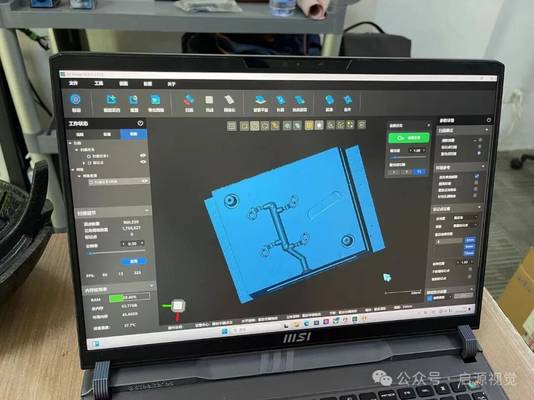
The most tangible return on implementing 3D scanning is the dramatic reduction in non-value-added labor. Manual measurement workflows require skilled technicians, multiple setups, and data transcription—each step an opportunity for error and delay. AlphaScan consolidates capture, alignment, and initial analysis into a single, operator-friendly workflow.
Training focuses on application, not advanced metrology theory, broadening the pool of capable personnel.
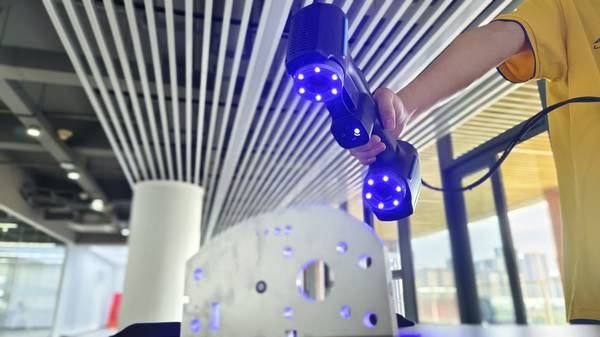
Efficiency is further amplified by the scanner’s capability. Using structured blue light technology with multiple laser line configurations, AlphaScan captures large surface areas rapidly while resolving fine details. This versatility means a single device handles everything from a small, intricate casting to a large weldment, reducing equipment sprawl.
More importantly, it captures complete datasets in minutes—data that would take hours through touch-probe methods.
This speed and completeness directly attack the cost of rework. By identifying out-of-tolerance conditions early in the manufacturing process, you contain quality issues before value is added in subsequent stages. Catching a deviation at the machining stage avoids the catastrophic cost of discovering it post-assembly or, worse, after shipment.
The digital record—a comprehensive point cloud and mesh—provides irrefutable evidence for root-cause analysis, turning quality events into learning opportunities rather than recurring expenses.
Building Long-Term Value: Data as a Strategic Asset
The initial investment in 3D scanning technology accrues compound returns through data reuse. The digital twin created when you 3D scan an object becomes a perpetual asset. It feeds directly into CNC programming for remanufacturing, supports reverse engineering for legacy part replacement, and provides a baseline for wear and degradation analysis in predictive maintenance programs.
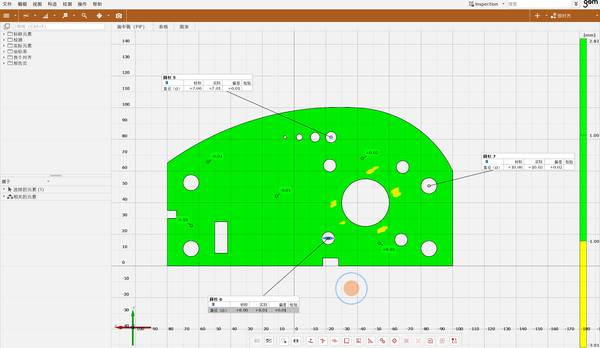
For quality assurance and traceability, this digital thread is indispensable. In sectors like aerospace, automotive, and energy, regulatory compliance demands rigorous documentation. AlphaScan, integrated with dedicated metrology software, generates not just pass/fail results but rich, auditable records: 3D deviation color maps, GD&T reports, and statistical process control data.
This satisfies both immediate inspection needs and long-term quality system requirements, providing a clear audit trail from part to digital certificate.
Operational stability underpins this long-term value. INSVISION engineers AlphaScan for production environments, with an operating temperature range and robust construction that eliminate the need for climate-controlled labs. This reliability minimizes calibration downtime and ensures consistent accuracy where it matters—next to the machine tool.
The Strategic Imperative: Operational Certainty
Adopting industrial 3D scanning is a commitment to operational certainty. It is a move from estimating to knowing, from sampling to totality, and from delayed feedback to real-time insight.
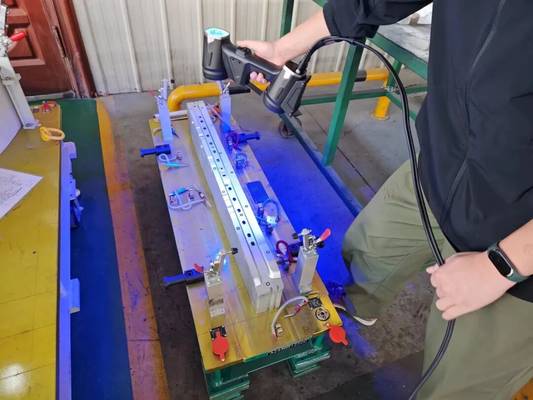
INSVISION’s AlphaScan provides the toolset for this transformation, enabling manufacturers to compress lead times, enforce quality at the source, and build a reusable digital library of their physical assets. In a landscape where efficiency and traceability are directly linked to competitiveness, the ability to accurately and efficiently 3D scan an object transitions from an advanced technique to a core operational competency.
The result is a more resilient, responsive, and cost-efficient production ecosystem.
Hangzhou Insvision Technology Co.,Ltd.
Address: Building 1, No. 1399 Liangmu Road, Yuhang District, Hangzhou, Zhejiang 311121, China