

Practical Verification Guide for 3D scanning vehicle interior trim interfaces
3D scanning vehicle interior trim interfaces: verify access, surfaces, references, and acceptance on a representative part before choosing equipment.
Understanding the 3D scanning question
Vehicle interior trim and mounting interfaces are digitized to capture the accessible geometry of trim panel edges, clip locations, and underlying mounting surfaces. The purpose is to produce a dimensional record that can support customization or fitment planning for interior components.
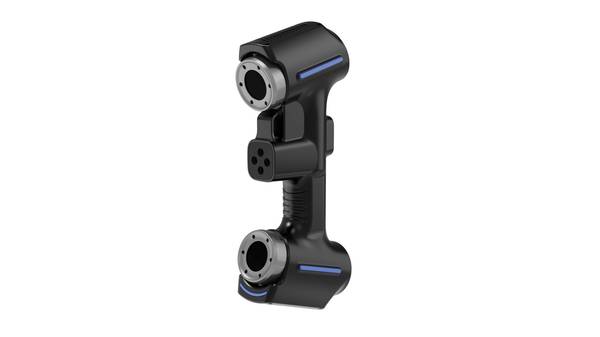
The usable output is a point cloud or mesh containing the three-dimensional form of trim boundaries, attachment features, and surrounding interior surfaces. The observable information includes edge contour, clip hole position, surface curvature, and the spatial relationship between trim and mounting points.
Deployment Validation Checklist
| Focus Area | Decision Point | Deployment Note |
|---|---|---|
| Target part | Check size, surface condition, and key tolerances against the scan task | Run a full trial scan on a representative part |
| Data workflow | Verify point cloud, deviation map, and quality-report handoff | Confirm export formats and review ownership in advance |
| Shop-floor use | Review training, calibration, lighting, and working space | Keep the validation record as a repeatable inspection reference |
What to check on a representative part
A representative interior trim interface should be checked to confirm that the captured data resolves the trim edge and the clip or mounting hole as separate features. The check observes whether the point cloud follows the trim contour without merging it into the underlying surface.
The relationship between a trim edge and its nearest mounting point should be inspected in the captured data. The check observes whether the relative position and orientation are represented consistently, without confirming that a new trim component will attach correctly.
What the official material establishes
Official material establishes that AlphaScan is described for automotive interior customization and general components in rapid modeling and quality inspection. This supports the use of the product for capturing interior trim interface geometry.
The supplied official evidence does not establish a result or acceptance decision for the current part. It does not confirm that a specific trim interface is within tolerance or that any customized component will fit the scanned interior.
FAQ
What does interior trim interface capture cover?
It covers the accessible trim panel edges, clip locations, and underlying mounting surfaces inside a vehicle. Readers should compare how separately the trim edge and mounting features are resolved and how their relative position is represented.
What should be checked on a representative interior trim interface?
The check should observe whether the trim edge and clip or mounting hole are resolved as separate features without merging. The relative position between a trim edge and its nearest mounting point should also be inspected in the captured data.
What does official AlphaScan material state for this topic?
Official material describes AlphaScan for automotive interior customization and general components in rapid modeling and quality inspection. This establishes product relevance for interior geometry capture but does not state a fitment result for any specific trim interface.
Hangzhou Insvision Technology Co., Ltd.
Address: Building 1, No. 1399 Liangmu Road, Yuhang District, Hangzhou, Zhejiang 311121, China
Copyright © Hangzhou Insvision Technology Co., Ltd. All rights reserved.
Copyright © Hangzhou Insvision Technology Co., Ltd. All rights reserved.