

3D scanning inspection: Practical Criteria for Manufacturing Teams
The plant produces mid-sized castings, weldments, and machined components in frequent changeovers.
The Real-World Bottleneck: Fixed CMMs in a Small-Batch World
The plant produces mid-sized castings, weldments, and machined components in frequent changeovers. Each new part number triggered the same wasteful sequence: transport the part to a climate-controlled lab, fixture it on a granite table, and wait for one of two certified CMM programmers to become available. Those two programmers were a single point of failure—a sick day or vacation could halt inspection entirely.
First-article inspection (FAI) reports often took days to complete, stretching the gap between setup approval and full production. From a lean manufacturing perspective, the process was loaded with non-value-added motion, waiting, and underutilized talent. The team knew the fix had to move inspection out of the lab and into the production cell, but the tool had to earn its place next to a machine tool.
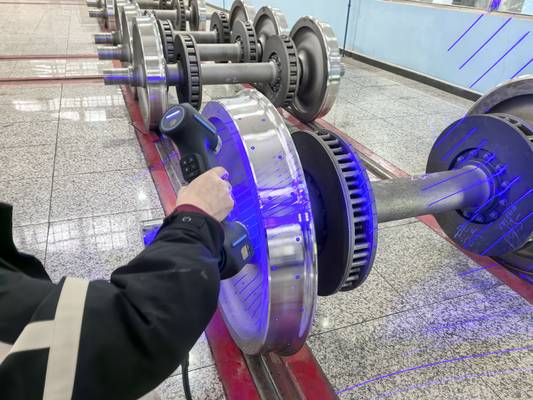
Scenario Snapshot
A practical way to read the article is through this scenario:
- The Real-World Bottleneck: Fixed CMMs in a Small-Ba…: The plant produces mid-sized castings, weldments, and machined components in frequent changeovers.
- Defining What On-Site Inspection Actually Requires: A cross-functional group—quality, production, and engineering leads—sat down to separate a demo-room performer fro…
- Phased Rollout: From Desk Alignment to Three-Shift…: Getting AlphaScan onto three shifts without stopping production came down to a four-phase plan that plant operatio…
Defining What On-Site Inspection Actually Requires
A cross-functional group—quality, production, and engineering leads—sat down to separate a demo-room performer from a tool that survives daily production pressure. The plant manager’s non-negotiables were clear. The scanner had to be portable enough to reach large weldments and castings right on the line. It had to deliver metrology-grade results without a temperature-controlled environment.
It had to work inside the existing ASME GD&T workflow: import a CAD model, generate a deviation color map, and pull callouts like profile, flatness, and true position without bouncing data between three software packages. Training overhead was a sticking point. If a frontline inspector could not run a routine scan after a single shift of hands-on practice, the tool would gather dust.
And the output had to feed directly into the digital quality documentation system, not create another PDF silo.
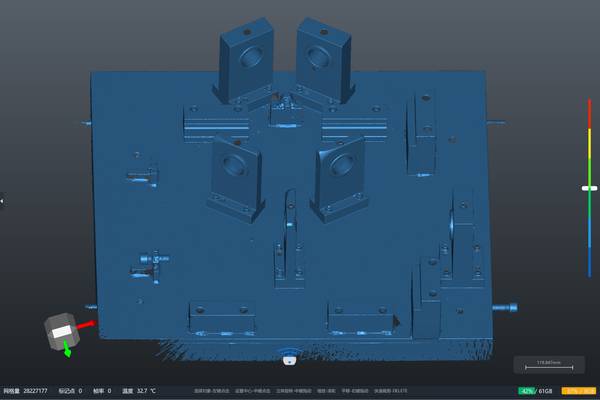
INSVISION’s AlphaScan handheld 3D scanner and its SMARPARA Q software aligned with every requirement without forcing a rewrite of the quality playbook. The scanner’s portability eliminated part transport waste immediately. SMARPARA Q speaks ASME Y14.5 natively, allowing 3D scanning inspection directly against CAD models. The interface is straightforward enough that inspectors treat it like a gage, not a science project.
Reports drop into the document control system with full traceability. The team did not need to overhaul processes—they just replaced the bottleneck.
Phased Rollout: From Desk Alignment to Three-Shift Operation
Getting AlphaScan onto three shifts without stopping production came down to a four-phase plan that plant operations could live with. No overtime weekends, no last-minute fire drills.
- Desk-level preparation. INSVISION application engineers and the plant’s QC team mapped every part CAD file and GD&T callout into the inspection software before any hardware touched the floor. That upfront work eliminated the usual trial-and-error at the machine.
- Single-day operator training. Six cross-shift operators and inspectors—none with advanced metrology certification—received hands-on training. By the end of the shift, each could run a scan-to-report sequence on a suspension component. Training cost was one day of labor, not a week-long metrology course.
- Two-week production pilot. The scanner ran directly on the production line alongside the existing CMM, measuring the same mid-sized suspension parts in parallel. Data matched within tolerance bands, and operators grew comfortable with the handheld workflow. No custom fixturing meant zero engineering time spent on part holding.
- Full three-shift deployment. AlphaScan units rolled out to three production cells for first-article and in-process inspection. The 3D scanning inspection routine now runs across all shifts, with operators pulling CAD overlays and deviation color maps in minutes. No unplanned downtime, no CMM bottlenecks, and a training model that fits how a plant staffs its lines.
How INSVISION AlphaScan Matches the Shop-Floor Reality
The AlphaScan handheld scanner and SMARPARA Q software address the specific pain points that make lab-bound CMMs a liability in small-batch production. Portability means the scanner travels to the part, eliminating forklift moves and queue time. Native CAD and GD&T integration keeps the existing quality workflow intact—no exporting point clouds to third-party software for alignment and evaluation.
The guided interface reduces the dependency on specialized programmers, so inspection capacity no longer hinges on a single person. And the automatic report generation feeds directly into document control systems, cutting manual transcription and audit preparation time.
Observable Operational Shifts
The move to in-line 3D scanning inspection reshaped how the plant handles quality checks on large or complex parts. The most immediate wins came from removing non-value-added steps. Teams stopped transporting heavy castings and weldments to a climate-controlled lab. First-article inspection reports that once took days now turn around fast enough to support customer approval before a new run ramps up.
Cross-trained operators on any shift can run scans, so inspection capacity is no longer a single-point dependency. GD&T deviation reports auto-generate in a format ready for audits, reducing documentation time and the risk of manual transcription errors. Operator-to-operator consistency improves because the scan-to-report workflow removes subjective alignment and probing choices.
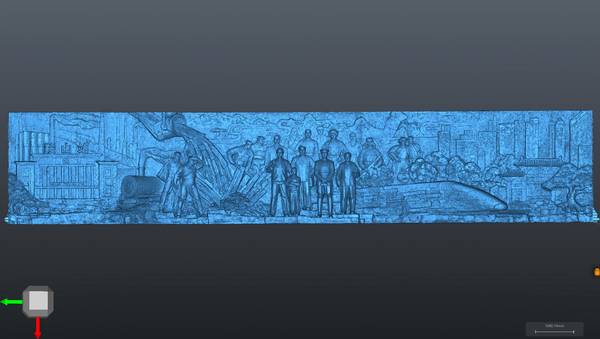
The table below compares the two inspection workflows to help evaluate where each fits best.
| Workflow Type | Key Strengths | Ideal Scenarios |
|---|---|---|
| Traditional Fixed CMM | Excels at high-volume, standardized small-part measurement in controlled lab environments; supports long-running repeatable part families | Dedicated QC lab operations for high-volume, simple-geometry parts with fixed production schedules |
| INSVISION AlphaScan 3D Scanning Inspection | Excels at portable, fixturing-free on-site scanning of complex mid-sized parts; integrates end-to-end scan-to-report workflows; supports dynamic production schedules | In-process quality checks, first article inspection, small-batch custom part runs, and inspection of parts too large or heavy to transport to a QC lab |
Applying the Same Logic to Other Production Environments
The principles that worked in this automotive plant transfer directly to any manufacturer dealing with large, heavy, or low-volume parts. If your production mix includes weldments too cumbersome to move, castings that require immediate feedback at the machine, or delicate composite layups that cannot survive a trip to the QC lab, a handheld 3D scanning inspection system eliminates transport risk and bottlenecks.
The same AlphaScan unit handles aerospace MRO component inspection, medical device verification, and renewable energy part checks without retooling. That common platform approach simplifies maintenance, spare parts, and operator familiarity across a facility.
When evaluating tools, prioritize portability, native GD&T and CAD integration, and an interface that allows cross-training operators from adjacent roles. A scanner that dumps raw point clouds forces your team to rebuild inspection plans from scratch. One that requires a dedicated metrology specialist leaves you one sick day away from a line stoppage.
The goal is to bring inspection to the part, keep the quality workflow intact, and distribute inspection capability across shifts—exactly what the INSVISION AlphaScan system was designed to do.
Summary
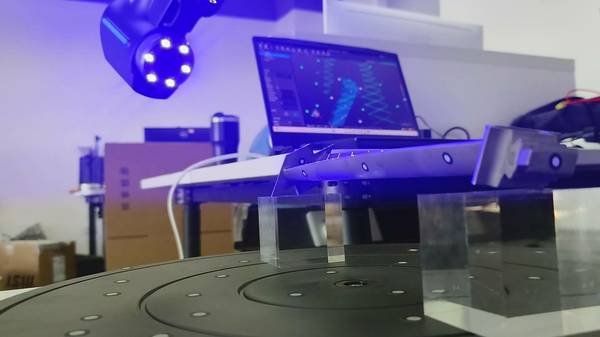
Small-batch automotive component production demands an inspection workflow that moves at the speed of changeovers. By replacing a fixed CMM bottleneck with portable 3D scanning inspection, the plant eliminated transport waste, cut first-article report turnaround from days to the same shift, and removed the single-point dependency on specialized programmers.
The INSVISION AlphaScan and SMARPARA Q combination delivered metrology-grade results directly on the shop floor, inside the existing ASME GD&T framework, with a training model that fits real-world staffing. For any manufacturer wrestling with the hidden costs of a lab-bound CMM, the path forward is clear: bring the inspection to the part, not the part to the lab.
Hangzhou Insvision Technology Co., Ltd.
Address: Building 1, No. 1399 Liangmu Road, Yuhang District, Hangzhou, Zhejiang 311121, China
Copyright © Hangzhou Insvision Technology Co., Ltd. All rights reserved.
Copyright © Hangzhou Insvision Technology Co., Ltd. All rights reserved.