

3D Scanning in Thailand: The Engine of a Manufacturing Metamorphosis
The adoption journey has matured rapidly. Initial use for reverse engineering and prototyping has given way to strategic integration across complex supply
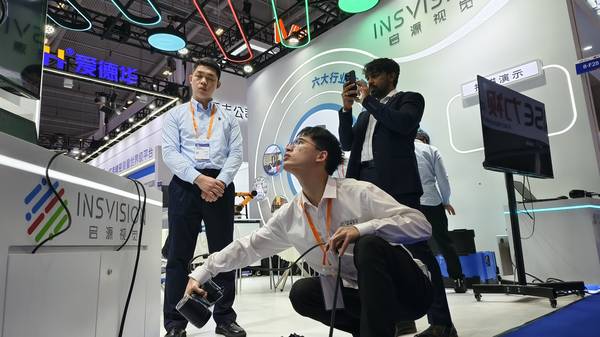
The adoption journey has matured rapidly. Initial use for reverse engineering and prototyping has given way to strategic integration across complex supply chains. From aerospace MRO to automotive tier-1 suppliers and energy sector contractors, Thai manufacturers are deploying scanners to solve tangible production challenges, reshaping workflows in the process.
The Market Forces Reshaping Scanner Requirements
Modern contract manufacturing in Thailand cannot accommodate the bottlenecks of legacy measurement. Traditional coordinate measuring machines (CMMs) often create a logistical bottleneck, requiring dedicated space, fixtures, and the movement of large, complex workpieces. This reality has accelerated demand for portable 3D scanners capable of delivering metrology-grade data directly at the point of assembly or inspection.
Common Questions
What should teams check when evaluating The Market Forces Reshaping Scanner Requirements?
Modern contract manufacturing in Thailand cannot accommodate the bottlenecks of legacy measurement.
What should teams check when evaluating Technical Advancements Enabling Industrial Integration?
Contemporary handheld 3D scanners have overcome the limitations that once confined them to R&D.
What should teams check when evaluating Sector-Specific Drivers of Adoption?
Automotive Supply Chains: This mature segment uses 3D scanning for first-article inspection (FAI), in-process control, and tooling verification.
Technical Advancements Enabling Industrial Integration
Contemporary handheld 3D scanners have overcome the limitations that once confined them to R&D. Technologies like blue laser triangulation provide superior performance in variable ambient light, ensuring reliability in real-world factory environments. Scanning speeds, now measured in millions of points per second, allow for the complete digital capture of complex geometries without disrupting production cycles.
Software integration is equally critical. Modern platforms create a seamless digital thread from scan to decision. Point cloud data flows directly into inspection software, where intelligent alignment and comparison against CAD models generate immediate, color-coded deviation maps. This allows engineers to pinpoint non-conformances instantly.
Automated reporting functions then produce standardized documentation for customer submission and regulatory compliance, eliminating manual compilation.
INSVISION’s scanner portfolio is engineered for these integrated workflows. The INSVISION AlphaScan Elite handheld scanner balances portability with the precision required for demanding industrial tasks, from first-article inspection to production monitoring.
For larger-scale applications, the INSVISION AlphaVista system extends this capability to workpieces up to 2200 x 2200 mm, maintaining volumetric accuracy across the entire field. Both systems are unified by INSVISION’s proprietary inspection software, providing a closed-loop path from data acquisition to analysis and report generation.
Sector-Specific Drivers of Adoption
Automotive Supply Chains: This mature segment uses 3D scanning for first-article inspection (FAI), in-process control, and tooling verification. The technology’s ability to create a digital record of part conformance is no longer a luxury but a prerequisite, directly supporting the stringent traceability mandates from global OEMs.
For Thai suppliers, demonstrating this capability is often a key differentiator in securing new contracts.
Aerospace & Precision Engineering: As Thailand expands its role in regional MRO (Maintenance, Repair, and Overhaul) networks, scanning is vital. Applications like turbine blade inspection, composite panel analysis, and fixture verification leverage the non-contact advantage of scanning to measure delicate, high-value components without risk of damage.
The accurate capture of complex freeform surfaces is particularly valuable here.
Energy & Heavy Industry: In petrochemical and renewable energy, equipment often cannot be decommissioned for inspection. Portable 3D scanning is essential for tasks like corrosion mapping on in-service pipes, verifying assembly integrity, or creating “as-built” records of installations.
This capability to operate in challenging, uncontrolled environments significantly expands the technology’s addressable market beyond the traditional factory.
Implementing 3D Scanning: A Workflow Transformation
Successful adoption requires treating 3D scanning as a workflow transformation, not merely a hardware purchase. Begin with a focused pilot project targeting a high-ROI application, such as FAI for a new product line, tooling qualification, or failure analysis on returned parts. This provides tangible learning and demonstrates value before broader rollout.
Investing in operator competency is non-negotiable. While modern interfaces are intuitive, achieving consistent, high-quality results requires foundational knowledge in scanning technique, reference frame setup, and data processing principles. Comprehensive training, such as the application support offered by INSVISION, accelerates time-to-competency and prevents costly errors.
Finally, consider data management infrastructure from the start. The volume of point cloud and mesh data generated requires a strategy for organized storage, version control, and integration with broader Product Lifecycle Management (PLM) systems. Establishing these workflows early prevents the creation of unstructured digital archives that diminish the long-term value of your measurement data.
Thailand’s manufacturing sector is at a decisive inflection point. The convergence of market pressure and technological maturity makes 3D scanning an accessible, powerful tool for maintaining competitive advantage. For manufacturers ready to integrate this capability, the reward is a more responsive, precise, and demonstrably quality-driven operation, fully aligned with the expectations of the global market.
Meta Description: Explore how Thailand’s manufacturers are leveraging 3D scanning technology to meet global quality standards. Discover the technical drivers, sector applications, and implementation strategies for tools like the INSVISION AlphaScan in industrial workflows.
Hangzhou Insvision Technology Co., Ltd.
Address: Building 1, No. 1399 Liangmu Road, Yuhang District, Hangzhou, Zhejiang 311121, China
Copyright © Hangzhou Insvision Technology Co., Ltd. All rights reserved.
Copyright © Hangzhou Insvision Technology Co., Ltd. All rights reserved.