

2026 Three D Scanner Trends Shifting From Lab Precision to Factory Floor Resilience
Discover the 2026 trends for the industrial three d scanner. Learn how environmental robustness, workflow integration, and hybrid metrology drive ROI on the factory floor.
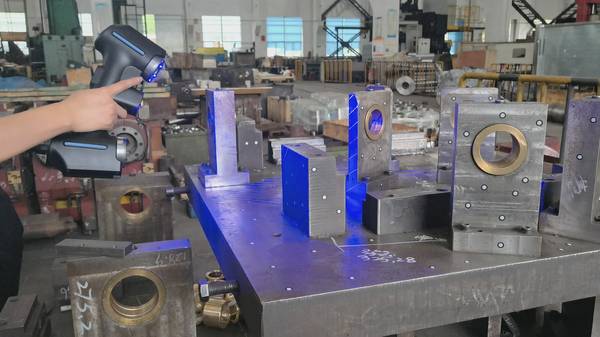
Several forces are shaping this trajectory. Global supply chains demand unprecedented quality consistency and traceability, pushing the three d scanner upstream and increasing its frequency of use. The manufacturing shift toward high-mix, low-volume production requires highly flexible measurement tools.
Furthermore, as Industrial IoT and digital twin applications mature within Industry 4.0 frameworks, high-precision 3D data transforms from a “result report” into “process fuel.” The efficiency and reliability of acquiring this data directly impact the efficacy of the entire digital system.
Trend 1: Environmental Robustness Becomes the New Performance Baseline
Accuracy metrics achieved under laboratory conditions are losing their reference value. Decision-makers prioritize stable output under real shop floor conditions—vibration, temperature fluctuations, dust, and complex lighting. A scanner rated for 0.020mm accuracy at a constant 20°C might deviate significantly under shop floor temperature swings, directly causing false rejects, rework, or delivery delays.
Selection Dimensions and Field Checks
| Focus Area | Decision Point | Deployment Note |
|---|---|---|
| Trend 1: Environmental Robustness Becomes the New Perfo… | Accuracy metrics achieved under laboratory conditions are losing their reference value. | Decision-makers prioritize stable output under real shop floor conditions—vibration, temperature fluctuations, dust, and complex lighting. |
| Trend 2: From Point Measurement to Process Data Collect… | The application of a three d scanner is expanding from isolated quality inspection points to full-process coverage, including reverse engineering, in… | This means scanning equipment must synchronize with production cadences, and its data output must directly drive downstream decisions. |
| Trend 3: Technology Convergence Drives Hybrid Measureme… | A single three d scanner technology struggles to handle all industrial scenarios. | In 2026, the convergence of handheld laser scanning, structured light, and even traditional contact probes is accelerating. |
| Trend 4: Service and Support Form the Core of Hidden Va… | As equipment penetrates core production processes, its downtime costs become exorbitant. | A supplier’s support framework—including on-site response times, remote diagnostic capabilities, spare parts inventory, and technical training—h… |
Technical Requirements: Equipment must feature wide-temperature operating capabilities, anti-vibration designs, and intelligent compensation algorithms for common shop floor ambient light or surface characteristics like high reflectivity or dark finishes.
Business Impact: This directly dictates first-pass yield, reduces production halts caused by measurement disputes, and ensures data consistency across different factories and regions, aligning with ISO/ASME standards.
Trend 2: From Point Measurement to Process Data Collection
The application of a three d scanner is expanding from isolated quality inspection points to full-process coverage, including reverse engineering, in-line inspection, assembly verification, and wear analysis. This means scanning equipment must synchronize with production cadences, and its data output must directly drive downstream decisions.
Technical Requirements: High scanning speed and rapid data processing are vital. Equipment must offer open APIs and standard data formats—such as high-density point clouds, STEP, and CAD comparison results—to integrate seamlessly with MES, QMS, and PLM systems.
Business Impact: This enables automated in-line inspection, shortens feedback loops, and provides a continuous data stream for predictive maintenance and process optimization.
Trend 3: Technology Convergence Drives Hybrid Measurement Solutions
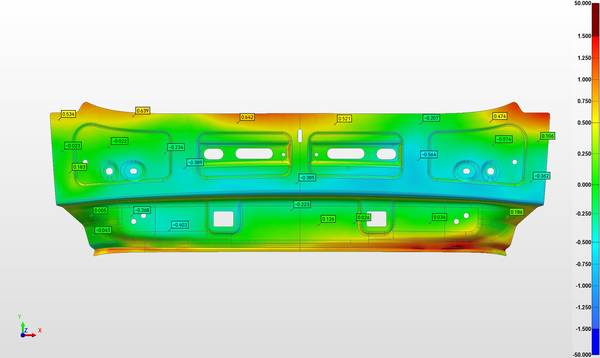
A single three d scanner technology struggles to handle all industrial scenarios. In 2026, the convergence of handheld laser scanning, structured light, and even traditional contact probes is accelerating. This hybrid metrology concept allows operators to select the optimal measurement method within the same platform or workflow based on workpiece characteristics, accuracy requirements, and site conditions.
Technical Requirements: Platforms must support multi-sensor fusion, and software must intelligently align and process data from different sources to generate unified inspection reports.
Business Impact: This enhances measurement flexibility, allowing one device to solve complex tasks that previously required multiple machines. It lowers total cost of ownership (TCO) and simplifies operator training.
Trend 4: Service and Support Form the Core of Hidden Value
As equipment penetrates core production processes, its downtime costs become exorbitant. A supplier’s support framework—including on-site response times, remote diagnostic capabilities, spare parts inventory, and technical training—has become a purchasing consideration equally important as technical specifications.
Technical Requirements: Suppliers must establish localized or rapid-response service networks, provide clear Service Level Agreements (SLAs), and offer remote assistance and preventive maintenance capabilities.
Business Impact: This maximizes equipment uptime, ensures production continuity, and keeps TCO within predictable limits.
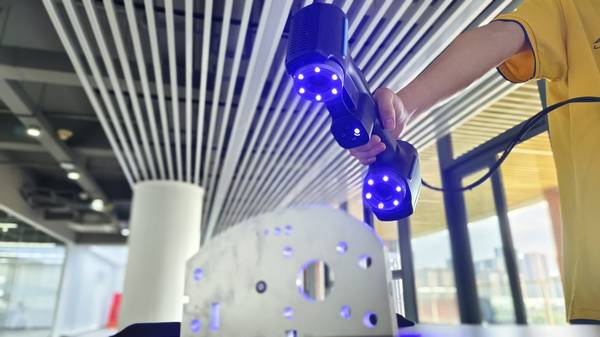
Facing these trends, manufacturing enterprises should adjust their evaluation and procurement strategies:
- Implement scenario-based validation: Require suppliers to conduct pilot tests in your actual production environment using your typical workpieces, rather than relying solely on standard demonstrations.
- Establish a Total Cost of Ownership model: Incorporate purchase price, training, integration, maintenance, and potential downtime costs into the evaluation framework.
- Prioritize data compatibility: Confirm that the data formats and transmission methods generated by the three d scanner system interface smoothly with your existing digital thread (CAD/CAM/MES).
- Audit service response capabilities: Verify the supplier’s service cases and average response times in your region, and embed these metrics into contract terms.
INSVISION Positioning
Amid these industry evolution directions, INSVISION focuses product development on bridging the gap between laboratory precision and shop floor reliability.
The wide-temperature operational stability emphasized by the INSVISION AlphaScan series handheld three d scanner directly addresses the demand for environmental robustness outlined in Trend 1, ensuring nominal accuracy is maintained even in shop floor environments ranging from -10°C to 40°C.
INSVISION equipment design balances high scanning speed with detail capture capabilities, focusing on generating standardized, integrable data outputs. This supports enterprises moving toward process data collection as described in Trend 2. Simultaneously, INSVISION meets market expectations for a robust service framework by building a regional technical support network and providing clear service commitments.
Key Focus Areas for 2026
For enterprises planning to deploy or upgrade three d scanner capabilities in 2026, focus closely on:
Accuracy validation reports under actual working conditions, rather than just specification sheets.
The openness of software platforms and support for automation scripts, which dictates future workflow scalability.
Real-world application cases and ROI analyses for hybrid measurement systems within the industry.
Conclusion
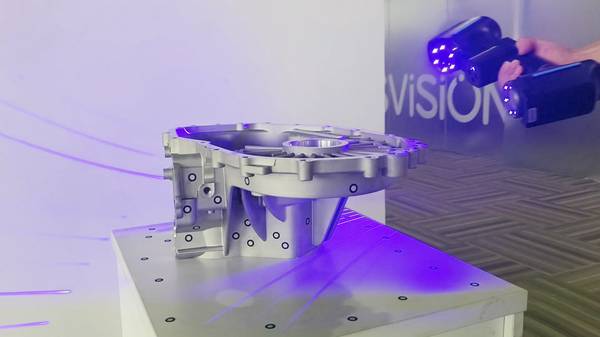
In 2026, the value assessment of 3D scanning technology is undergoing a profound pragmatic shift. Leading manufacturers no longer merely ask “how high is the accuracy?” They demand to know “what value can it consistently create in my shop floor, within my processes, and across my product lifecycle?” Navigating this shift requires enterprises to select technology partners with a comprehensive perspective, and it requires suppliers to deliver holistic solutions that transcend hardware parameters. Success will belong to teams that enable three d scanner data to continuously and reliably drive decisions in the noisy, variable real world.
Hangzhou Insvision Technology Co.,Ltd.
Address: Building 1, No. 1399 Liangmu Road, Yuhang District, Hangzhou, Zhejiang 311121, China