

Matching 3D Scanner Price Tiers to Industrial Scanning Task Requirements
3d scanner price: Core Industrial Scanning Task Classes That Drive 3D Scanner Price Variation The core reason 3D scanner price varies so dramatically across.
Core Industrial Scanning Task Classes That Drive 3D Scanner Price Variation
The core reason 3D scanner price varies so dramatically across industrial tools is not brand markup or software gimmicks. It comes down to the physical task the scanner must perform reliably, shift after shift. A scanner that checks a turbine blade root profile is solving a fundamentally different problem than one capturing an entire aircraft fuselage in a hangar.
Buyers who start from the task class, rather than the spec sheet, tend to make better capital decisions. Four task classes dominate Western manufacturing and industrial settings, and each one pulls the price point in a different direction.
Selection Dimensions and Field Checks
| Focus Area | Decision Point | Deployment Note |
|---|---|---|
| Core Industrial Scanning Task Classes That Drive 3D Sca… | The core reason 3D scanner price varies so dramatically across industrial tools is not brand markup or software gimmicks. | It comes down to the physical task the scanner must perform reliably, shift after shift. |
| Operational Constraints That Shape 3D Scanner Budget Al… | In a lean production environment, the base price of a 3D scanner rarely reflects the final investment. | What shifts the number is the set of constraints around the scanning station. |
| Routing Use Cases to Corresponding 3D Scanner Price Tie… | Most teams overspend on 3D scanning when they buy capability they will never use, or underspend and inherit workflow bottlenecks that quietly consume… | Routing the task class first is the fastest way to align a 3D scanner price tier with what actually happens on your floor. |
| Validating 3D Scanner Price Against Real-World Workflow… | Before a purchase order gets approved, the real question is whether the 3D scanner price holds up against the workflow it has to support. | Start with one representative aerospace MRO part, not a demo coupon. |
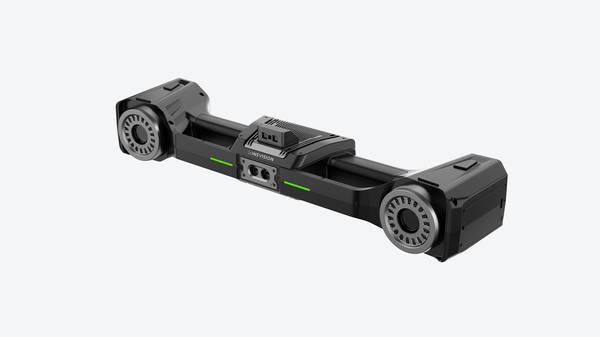
Precision small-part quality inspection covers medical devices, aerospace components, and precision machined parts. Here the scanner must resolve tight GD&T callouts on parts that fit in your hand or on a benchtop. Accuracy demands are the primary cost driver. A scanner rated to 0.020 mm, such as INSVISION‘s industrial 3D scanner configuration, is built around stable optics, controlled illumination, and calibration discipline.
You are paying for repeatable micron-level data that survives an ISO or ASME audit, not just a pretty point cloud. These systems often live in metrology labs or dedicated inspection cells, where temperature and vibration are managed.
Large-volume asset measurement shifts the problem from resolution to coverage. Aerospace MRO fuselage mapping, automotive body assembly checks, and large casting verification require scanners that can capture broad surfaces without losing reference.
The tracker in INSVISION’s industrial 3D scanner system, with a scanning area up to 2600 mm × 2200 mm and a tracker depth of field of 2300 mm, is engineered for exactly this condition. Cost rises because the system must hold accuracy across a much wider working volume, which demands more sophisticated tracking algorithms and sensor design.
Mobility still matters here, but accuracy over distance is what separates industrial tools from consumer-grade devices.
High-throughput inline production scanning serves automotive OEM line QA and consumer electronics manufacturing. Speed and repeatability dominate. A scanner that adds three seconds to takt time is a non-starter, regardless of accuracy. These systems are often mounted in fixtures, running automated pass/fail routines against CAD nominals.
The price reflects integration readiness, fast data processing, and the ability to survive thousands of cycles in a lean manufacturing environment. Buyers here evaluate cost per part inspected, not just the hardware invoice.
On-site mobile scanning covers energy infrastructure as-builts, heavy equipment maintenance, and field service work. The scanner must travel to the asset, handle imperfect lighting and unstable surfaces, and still produce usable data. Ruggedness, battery operation, and marker-free workflows add cost. INSVISION’s approach to this class prioritizes practical setup time and data confidence in less controlled environments.
Buyers in this group often weigh the cost of rework from bad field data against the scanner’s upfront price, which changes the value calculation entirely.
Operational Constraints That Shape 3D Scanner Budget Allocation
In a lean production environment, the base price of a 3D scanner rarely reflects the final investment. What shifts the number is the set of constraints around the scanning station. A shop floor with airborne coolant mist or temperature swings forces an IP-rated enclosure and thermal stability measures. That is not an upsell—it is what keeps measurement repeatable across shifts. Takt time alignment matters more than scan speed.
If the scanner cannot complete data capture within the cell’s cycle, the bottleneck moves downstream regardless of hardware cost. Data format compatibility also drives value. Teams working in CATIA, SolidWorks, or QA software aligned to ISO 10360 expect native or cleanly converted outputs. Reworking point clouds into usable CAD geometry consumes engineering hours.
Batch repeatability for high-volume production demands stable fixtures, defined scan paths, and software that automates routine inspection. Finally, Industry 4.0 integration—feeding data into MES or digital twin pipelines—adds interface engineering. When evaluating a 3D scanner price, buyers should map these constraints first.
INSVISION supports this evaluation by addressing integration, repeatability, and data handoff as part of the scanning workflow.
Routing Use Cases to Corresponding 3D Scanner Price Tiers
Most teams overspend on 3D scanning when they buy capability they will never use, or underspend and inherit workflow bottlenecks that quietly consume engineering hours. Routing the task class first is the fastest way to align a 3D scanner price tier with what actually happens on your floor.

Entry-tier industrial scanning works for low-volume, mobile field use. Think maintenance crews capturing worn pump housings or mounting flanges at a job site, where the deliverable is a clean mesh for reverse engineering or a go/no-go surface check. The constraint is not tight GD&T callouts; it is portability, battery operation, and tolerance for dusty, unpredictable environments.
A buyer here should not be forced into lab-grade hardware. INSVISION’s portfolio logic keeps this tier lean, so the 3D scanner price reflects mobility and field readiness rather than metrology overhead.
Mid-tier professional scanning fits precision shop floor inspection. Here the object is smaller, the environment controlled, and the questions harder: surface profile deviation, hole position, runout tolerance, first-article inspection against CAD. The scanner must hold accuracy across repeat setups and produce data that passes quality review without endless rework.
The value proposition is repeatability and measurement density. Paying more at this level buys cleaner point clouds on machined edges, better performance on dark or reflective surfaces, and less manual cleanup before comparison reporting. INSVISION positions this tier around inspection throughput, not raw scan speed alone.
High-performance specialized scanning addresses large-volume, high-accuracy applications. Aerospace MRO panels, energy-sector turbine casings, heavy fabrication weldments. The challenge is not just size but controlling dimensional drift across long scan paths. Marker conditions may be poor, and the part may deflect under its own weight or thermal load.
This tier justifies its price through accuracy retention over large fields of view and tracker-assisted coordinate control. For classes where a few tenths of a millimeter across two meters decides pass or fail, the scanner price is a secondary concern to measurement confidence.
Fully integrated automated scanning serves inline production environments. Takt time, batch repeatability, and minimal operator involvement drive the requirement. The scanner must trigger, capture, process, and flag deviations without breaking the production rhythm. The economic logic changes here: upfront cost is judged against inspection labor removed per shift and defects caught before downstream assembly.
INSVISION’s automated tier is for plants where the scanner becomes part of the cell, not a tool carried to the bench.
The practical step is to write down part size, site freedom, marker conditions, takt time, and batch repeatability. Those five factors point to one tier more reliably than any rough budget figure. Tiered design means you pay for the capability your task class demands, and you avoid funding performance you will never see in normal operation.
Validating 3D Scanner Price Against Real-World Workflow Value
Before a purchase order gets approved, the real question is whether the 3D scanner price holds up against the workflow it has to support. Start with one representative aerospace MRO part, not a demo coupon. Run a full scan and check deviation against the GD&T callouts the part actually carries. If the scanner cannot resolve a tight true position or profile tolerance under shop lighting, the quoted price stops mattering.
Next, time how long the scan data takes to move into the existing quality system. AS9102 first-article workflows do not tolerate manual rework loops. If an engineer spends an afternoon repairing mesh data or re-exporting files, that labor cost belongs in the scanner price calculation.
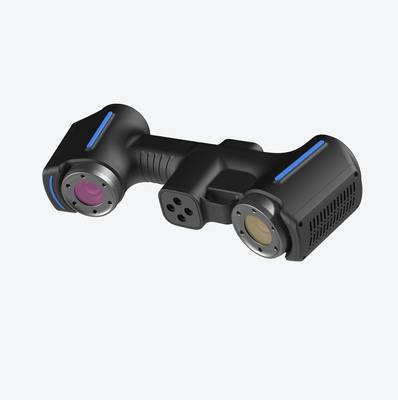
Training is another honest test. Hand the system to an inspector who has never used structured light equipment. If basic competence takes more than a day or two, the total cost of ownership shifts.
INSVISION supports this validation phase with application engineering help, running capability tests on your parts and workflows before procurement locks in. That support is part of what the 3D scanner price represents. Compare the outcome against manual gauging and fixed CMM bottlenecks. A lower upfront price that fails the sample part scan or drags out integration is not cheaper. Validate before you commit.
Procurement Checklist for Aligning 3D Scanner Price With Operational Goals
Most teams overpay for 3D scanning capability they will never use—or underbuy and discover the gap during a critical first-article inspection. The real issue is rarely the 3D scanner price itself. It is the absence of a structured link between what you are buying and what the production environment actually demands.
Start with minimum accuracy requirements tied to your GD&T callouts and industry quality standards. If your tolerances sit at ±0.1 mm, paying for higher-end volumetric accuracy may add no inspection value. Next, map mobility and site access. A scanner that works in a lab may not survive a casting cell or an aerospace MRO hangar. Quantify throughput targets against takt time and batch repeatability.
A slower system can still meet lean KPIs if your queue is not scanner-bound.
Confirm compatibility with existing CAD, PLM, and MES workflows before procurement sign-off. Data that requires manual rework downstream erases upfront savings. Finally, factor in long-term calibration, support, and upgrade costs—not just the purchase line item.

INSVISION pre-sales consultants work through this checklist with engineering, quality, and procurement teams to match capability to operational demand, so the 3D scanner price you approve is the one your process actually needs.
Hangzhou Insvision Technology Co., Ltd.
Address: Building 1, No. 1399 Liangmu Road, Yuhang District, Hangzhou, Zhejiang 311121, China
Copyright © Hangzhou Insvision Technology Co., Ltd. All rights reserved.
Copyright © Hangzhou Insvision Technology Co., Ltd. All rights reserved.