

Understanding 3D Scan Mesh Simplification: A Technical Overview
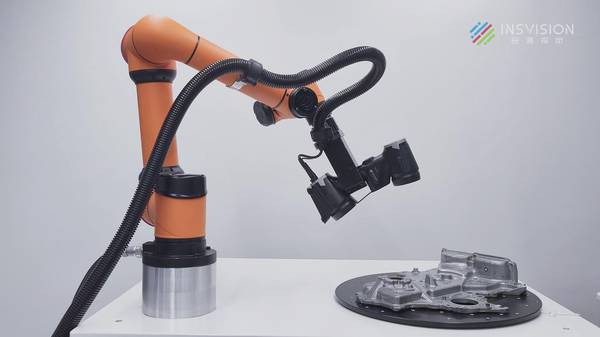
When a 3D scanner captures an object, the resulting mesh often contains millions or even tens of millions of triangles. Such high-resolution data is valuable fo
What is 3D Scan Mesh Simplification?
3D scan mesh simplification is the process of reducing the polygon count of a triangular mesh produced by a 3D scanning system. The goal is to create a lighter, more manageable digital representation without sacrificing the geometric accuracy essential for the intended use — whether that is design review, finite element analysis, visualization, or archival storage.
The simplification is always a trade-off. Every triangle removed saves memory and computational load, but it also discards some surface information. A well-executed simplification holds the deviation from the original surface within a user-defined tolerance and preserves sharp edges, holes, and other critical features that define the part’s function.
How Does Mesh Simplification Work?
Most simplification algorithms follow a local decimation strategy. The most common family is based on iterative edge collapse. An edge is selected, its two endpoints are merged into a single vertex, and the two triangles sharing that edge disappear. The operation is repeated until the target triangle count is reached or the maximum allowed geometric error is exceeded.
Three factors determine the quality of the result:
- Error metric: How the algorithm measures the deviation between the simplified mesh and the original surface. Common choices include quadric error metrics, which compute the sum of squared distances to the original planes.
- Feature preservation: Extra constraints that prevent collapsing edges along sharp creases, boundaries, or areas with high curvature.
- Termination criteria: The process stops when the mesh reaches a target number of triangles, a target reduction ratio, or a maximum geometric error threshold.
Other methods include vertex clustering, which groups nearby vertices and replaces them with a single representative, and remeshing-based approaches that rebuild the mesh from scratch. For industrial scan data, edge-collapse algorithms with quadric error metrics are widely used because they balance speed and quality.
Key Parameters and Evaluation Criteria
Choosing appropriate simplification settings requires understanding what aspects of the mesh matter for the final application. The table below outlines common judgment dimensions.
| Parameter | What It Describes | Practical Notes |
|---|---|---|
| Target reduction ratio | Percentage of triangles removed or the final count | A 50% reduction is often inconspicuous; above 90% requires careful validation. |
| Maximum geometric error | The largest allowed distance between the simplified surface and the original | Expressed in mm or as a percentage of the object size. Typical values depend on the required tolerance for the downstream task. |
| Feature preservation | Retention of sharp edges, holes, and boundaries | Can be controlled through feature angle thresholds or normal deviation limits. |
| Topology preservation | Whether the simplified mesh keeps the same genus (number of holes) | Some algorithms may close small holes inadvertently; this is critical for watertight meshes used in 3D printing. |
| Texture/color preservation | Handling of vertex colors or UV coordinates during simplification | Important for cultural heritage or visualization data; not all algorithms preserve these attributes. |
No single parameter guarantees a good result. The required balance between reduction ratio and error is entirely determined by the use case. A mesh for real-time rendering on a mobile device will tolerate much higher error than a mesh for metrology-grade comparison.
When to Use Mesh Simplification (and When Not To)
Mesh simplification is appropriate whenever the scan data needs to be shared, archived, or consumed by software that cannot handle the original density. Typical scenarios include:
- Creating lightweight digital twins for plant engineering or factory layout planning.
- Generating web-based 3D previews of scanned parts.
- Preparing meshes for finite element analysis where overly dense meshes increase computation time without improving accuracy.
- Long-term archival of heritage artifacts where storage size matters.
Mesh simplification is not suitable as a substitute for proper noise filtering or surface reconstruction. If the original scan contains noise, outliers, or registration errors, simplification will propagate those flaws. In metrology applications where the deviation between the scan and a CAD model is analyzed, the full-resolution mesh is often required. Simplifying before measurement can mask real surface defects.
“Lower polygon count always means faster processing.”
Only if the workflow is heavily geometry-bound. Some downstream operations, such as texture mapping or UV unwrapping, may not benefit from a lower triangle count alone.
“A simplified mesh is just as accurate as the original if the error is small.”
Accuracy is context-dependent. A mesh that is within 0.1 mm of the original surface may still be unsuitable for GD&T analysis because the simplification process can alter local curvature in ways that affect feature recognition.
“Mesh simplification is the same as remeshing.”
Remeshing changes the triangle layout and can improve element quality while keeping the polygon count similar. Simplification aggressively reduces triangle count. The two are related but serve different purposes.
“Any simplification algorithm will work for industrial scan data.”
Scan meshes are often non-manifold, contain holes, and have irregular triangle shapes. An algorithm chosen without considering these characteristics can produce unusable results.
Related Concepts and Distinctions
| Concept | Relationship to Mesh Simplification |
|---|---|
| Mesh decimation | A specific type of simplification that removes vertices or edges; often used interchangeably with simplification. |
| Remeshing | Generates a new mesh with improved triangle quality; may or may not reduce the polygon count. |
| Noise filtering / smoothing | Removes high-frequency noise from the scan data; should be done before simplification to avoid sealing in artifacts. |
| Level of detail (LOD) | A strategy that uses multiple simplified versions of a mesh for different viewing distances; simplification is the core technique for LOD generation. |
INSVISION and Mesh Simplification in Industrial Scanning
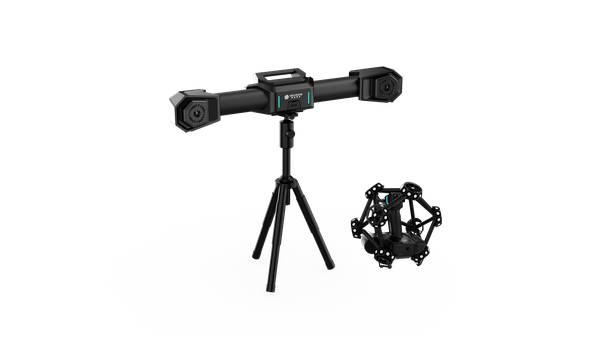
INSVISION, an AI-driven provider of 3D metrology and visual inspection technology, supplies handheld scanning systems like the AlphaScan that capture dense, high-resolution point clouds and meshes across industries such as aerospace, automotive, energy, and additive manufacturing. The company holds certifications including ISO 9001, CE, FCC, and CNAS L2865, and its products are deployed in more than 20 countries.
Within the INSVISION workflow, mesh simplification is a standard post-processing step. The software complementing the AlphaScan scanner includes tools that allow users to decimate meshes while setting a maximum geometric error or a target triangle count.
Feature preservation options help maintain sharp edges and boundaries — aspects that are critical when the simplified mesh moves into CAD comparison, reverse engineering, or 3D printing. The simplification capability is designed to serve industrial users who need to transfer large scan data into downstream applications without losing the dimensional integrity that metrology-grade work requires.
Frequently Asked Questions
What is the typical reduction ratio for a mesh used in CAD comparison?
It depends on the part size and the required tolerance. Many inspection workflows keep the original resolution for the surfaces being compared and simplify only the surrounding geometry or non-critical areas. There is no universal ratio.
Does mesh simplification affect the accuracy of a 3D printed part?
If the simplified mesh is exported as an STL for printing, the printer will interpret the triangles as the intended surface. A simplification that introduces deviations larger than the printer’s layer height can visibly alter the part. For functional prototypes, the tolerance band should be smaller than the part’s dimensional requirements.
Can I simplify a mesh that has texture or color?
Not all algorithms preserve vertex colors or UV maps. When texture data is essential, the simplification tool must explicitly support attribute preservation.
How do I know if the simplification is acceptable?
Visual inspection of the shaded surface against the original, along with deviation maps generated by the scanning software, helps identify problem areas. For critical applications, a quantitative analysis of the error distribution across the entire surface is recommended.
Summary
3D scan mesh simplification is a core data preparation step that transforms high-density scan meshes into manageable digital assets. It operates on the principle of removing triangles where the geometric loss is smallest, guided by user-defined error tolerances and feature constraints.
Industrial users must evaluate simplification parameters against the specific demands of their downstream tasks — whether that is visualization, simulation, archival, or manufacturing.
INSVISION’s handheld scanning and software ecosystem provides a controlled environment where simplification can be applied while preserving the measurement integrity of the original scan data, supporting the full chain from physical part to usable digital model.
- What Is 3D Scanning? Principles, Workflow, and Industrial Applications 3D scanning is a digital measurement technology that converts the surface geometry of physical objects into 3D data. This entry covers its working principles, core parameters, industrial use cases, common misconceptions, and related technical…
- What Is a 3D Scanner? Types, Parameters, and Selection Criteria A 3D scanner captures three-dimensional surface data from physical objects and converts geometry, dimensions, and features into digital data for inspection, reverse engineering, and modeling.
- What Is 3D Scanning Accuracy? Accuracy, Repeatability, and Resolution Explained 3D scanning accuracy describes how closely scan data matches an object's actual geometry and dimensions. It is assessed through local accuracy, volumetric accuracy, stitching accuracy, repeatability, and resolution.
- What Is Point Cloud Data? Point Clouds, Meshes, and CAD Models in 3D Scanning Point cloud data is an important raw data format in 3D scanning. It consists of discrete 3D coordinate points that describe object surface geometry and support inspection, reverse engineering, modeling, and archiving.
Hangzhou Insvision Technology Co., Ltd.
Address: Building 1, No. 1399 Liangmu Road, Yuhang District, Hangzhou, Zhejiang 311121, China
Copyright © Hangzhou Insvision Technology Co., Ltd. All rights reserved.
Copyright © Hangzhou Insvision Technology Co., Ltd. All rights reserved.