

What Is 3D Scanning? Principles, Workflow, and Industrial Applications
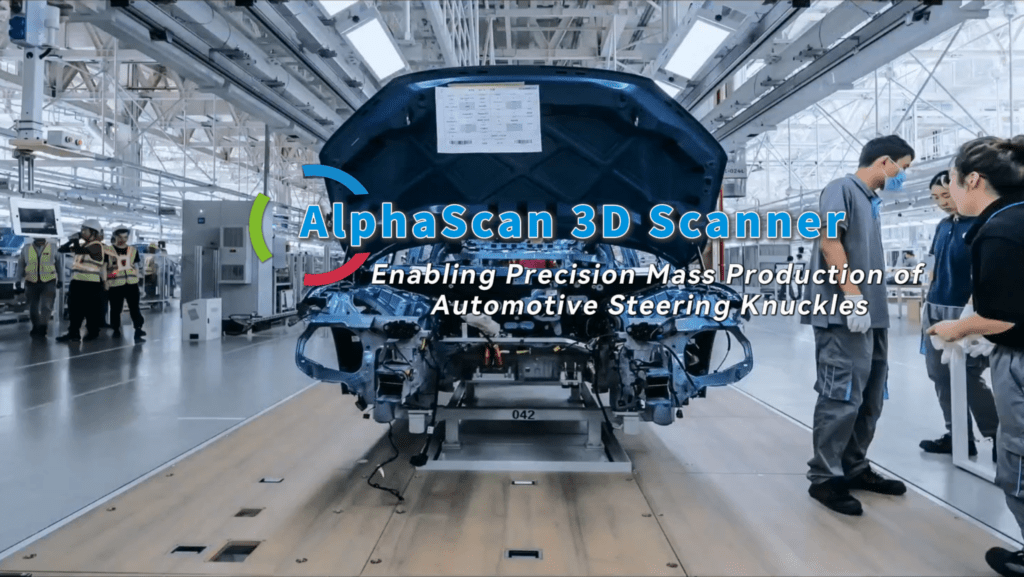
3D scanning is a digital measurement technology that converts the surface geometry of physical objects into 3D data. This entry covers its working principles, core parameters, industrial use cases, common misconceptions, and related technical concepts.
Definition
3D scanning is a digital measurement technology that converts the surface shape of physical objects into 3D data. This entry focuses on optical 3D scanning in industrial contexts, which collects surface information of objects via lasers, structured light, or camera imaging, and processes it through algorithms to generate point clouds, meshes, or 3D models usable for inspection and modeling.
Working Principles
The core logic of 3D scanning is based on optical measurement principles, combined with algorithms to achieve 3D data acquisition and reconstruction. The main workflow includes:
- Signal emission: Depending on device configuration (single/multiple laser sources, single/multiple structured light projectors), emit controllable detection signals (such as blue laser lines, blue structured light patterns) onto the surface of the scanned object;
- Signal acquisition: Use single or multiple high-resolution cameras to capture the detection signals reflected or scattered by the object surface, obtaining 2D image data with depth information;
- Data calculation: Convert 2D image features into 3D point cloud data via algorithms such as laser triangulation and structured light phase analysis;
- Global alignment: Achieve stitching of multi-frame point clouds and unification of global coordinates through technologies such as marker point matching and optical tracking and positioning, to reduce stitching errors in multi-view scanning;
- Post-processing and output: Perform processing such as denoising, simplification, hole filling, and feature extraction on the raw point cloud, and export 3D model data in standard formats that can be used in industrial processes such as reverse engineering and dimensional inspection.
Key Parameters and Evaluation Criteria
The core parameters of 3D scanning must be evaluated in combination with the requirements of specific scenarios, as different parameters correspond to different performance dimensions. The core parameters and evaluation criteria are as follows:
| Parameter | Definition | Evaluation Method |
|---|---|---|
| Scan Accuracy | The deviation between a single scan's collected points and the actual dimensions of the object, reflecting the accuracy of local measurement | Scan a calibrated standard gauge block or sphere repeatedly, and calculate the deviation between the measured value and the nominal value |
| Volumetric Accuracy | The overall cumulative deviation when scanning large-sized objects, which varies with the increase of object size | Scan a large-sized standard reference piece (such as a calibration rod), and measure the cumulative deviation of the overall dimensions |
| Scan Speed | The number of 3D measurement points completed per unit time, reflecting scanning efficiency | Use the officially calibrated number of measurements per second as the core reference, combined with verification in actual scenarios |
| Scan Field of View | The maximum 2D area that can be covered in a single scan, affecting the scanning efficiency of large-sized objects | Refer to the maximum scan length and width calibrated by the device; the actual coverable area needs to exclude edge distortion |
| Detail Reproduction Capability | The ability to capture and reproduce tiny geometric features (such as chamfers, edges, textures) | Scan a test piece with standard tiny features, and compare the deviation rate of feature dimensions |
| Environmental Adaptability | The tolerance to interferences such as light, vibration, and temperature fluctuations in industrial sites | Scan repeatedly under simulated industrial environments (such as workshop lighting, slight vibration), and calculate the accuracy fluctuation range |
Applicable and Inapplicable Scenarios
Applicable Scenarios
- Industrial manufacturing field: product reverse design, dimensional and tolerance analysis, mold inspection and repair, virtual assembly, digital twin construction;
- Large-scale industrial scenarios: on-site 3D scanning and inspection of aerospace components, complete vehicles/auto parts, energy equipment, and large ships;
- Complex feature scanning: digital acquisition of complex curved surfaces and mechanical dead angles (such as internal mold structures);
- Industrial-grade digitalization of cultural heritage (such as accurate data recording for cultural relic restoration).
Inapplicable Scenarios
- Non-industrial scanning applications for human bodies (including faces);
- Medical imaging diagnosis scenarios.
Common Misconceptions
- Misconception 1: Higher accuracy equals better practicality: The accuracy requirement for 3D scanning must match the specific scenario. Large-sized workpieces (such as ships) do not require micron-level accuracy, while precision molds require metrology-level accuracy. Additionally, accuracy is affected by object material, environment, and operation processes; discussing accuracy without context has no practical significance.
- Misconception 2: Handheld 3D scanners are only suitable for small objects: Handheld scanners with a large field of view configuration can cover large workpieces, and can be combined with optical tracking technology to improve global stitching stability, making them suitable for on-site large-sized scanning scenarios such as shipyards.
- Misconception 3: Raw scanned point clouds can be directly used for production: Raw point clouds require post-processing steps such as denoising, stitching, alignment, and hole filling to meet the requirements of industrial processes such as reverse engineering and dimensional inspection.
- Misconception 4: Automated scanning systems are suitable for all scenarios: Automated scanning systems are suitable for standardized inspection of batch and repeated workpieces. For small-batch customized scanning or scanning in complex on-site environments, handheld devices have greater flexibility advantages.
Related Concepts
- Point cloud data: A collection of discrete 3D coordinate points collected by 3D scanning, which is the basic data for reconstructing 3D models;
- Reverse engineering: The technical process of reconstructing a product's CAD model by obtaining object data through 3D scanning;
- Geometric Dimensioning and Tolerancing (GD&T): The process of detecting deviations in the dimensional and geometric tolerances of a product compared to design drawings based on 3D scanning data;
- Optical tracking system: A technical system used to achieve global coordinate alignment and positioning of 3D scanning equipment in large-sized scenarios;
- Structured light scanning: A scanning technology that analyzes the 3D topography of an object by projecting structured light patterns;
- Laser triangulation: A core measurement principle that calculates the 3D coordinates of an object using the angle difference of reflected laser lines;
- Metrology-level measurement: A measurement grade that meets the accuracy requirements of industrial precision measurement;
- Full 3D digitalization workflow: A full-link industrial digitalization process covering 3D scanning, data processing, and model application;
- Automated inspection system: A system that integrates 3D scanning equipment with devices such as robotic arms and turntables to achieve automatic scanning and inspection of batch workpieces;
Frequently Asked Questions
What core factors affect the accuracy of 3D scanning?
The accuracy of 3D scanning is usually affected by device calibration, camera or sensor resolution, measurement distance, the material of the measured surface, ambient lighting and vibration, scan pose coverage, and point cloud processing workflow. When evaluating accuracy, standard part testing, repeated measurement results, and specific working conditions should be considered, rather than relying solely on a single nominal value.
What is the difference in applicable scenarios between handheld and stationary 3D scanners?
Handheld 3D scanners are portable and flexible, require no fixed installation, and are suitable for on-site scanning (such as shipyard workshops), large-sized workpieces, objects in complex spatial positions, and small-batch customized scanning needs. Stationary 3D scanners (such as blue light scanning systems, automated scanning systems) have higher accuracy and stability, and are suitable for standardized inspection of batch repeated workpieces and precision measurement in laboratory environments. They have high operation efficiency but low scenario flexibility.
What core industrial processes can data generated by 3D scanning be applied to?
Point cloud and 3D model data generated by 3D scanning can be applied to core processes throughout the industrial manufacturing chain, including reverse engineering (reconstructing product CAD models), dimensional and tolerance analysis (detecting deviations between products and designs), mold repair and verification, virtual assembly (verifying the assembly compatibility of parts), digital twin construction (building virtual production scenarios), and quality traceability (recording dimensional data throughout the product lifecycle).
Summary
The value of 3D scanning lies in converting physical workpieces into measurable, comparable, and traceable 3D data. In industrial scenarios, it is commonly used for reverse engineering, dimensional inspection, deviation analysis, mold repair, and digital archiving. Actual performance depends on the measurement solution, device capability, measured surface condition, environmental conditions, and post-processing workflow.
- What Is a 3D Scanner? Types, Parameters, and Selection Criteria A 3D scanner captures three-dimensional surface data from physical objects and converts geometry, dimensions, and features into digital data for inspection, reverse engineering, and modeling.
- What Is 3D Scanning Accuracy? Accuracy, Repeatability, and Resolution Explained 3D scanning accuracy describes how closely scan data matches an object's actual geometry and dimensions. It is assessed through local accuracy, volumetric accuracy, stitching accuracy, repeatability, and resolution.
- What Is Point Cloud Data? Point Clouds, Meshes, and CAD Models in 3D Scanning Point cloud data is an important raw data format in 3D scanning. It consists of discrete 3D coordinate points that describe object surface geometry and support inspection, reverse engineering, modeling, and archiving.
- What Is Reverse Engineering? The Role of 3D Scanning in Reverse Modeling Reverse engineering uses 3D scanning and digital modeling to convert existing physical workpieces into editable CAD models for product modification, mold development, inspection, and additive manufacturing.
Hangzhou Insvision Technology Co., Ltd.
Address: Building 1, No. 1399 Liangmu Road, Yuhang District, Hangzhou, Zhejiang 311121, China
Copyright © Hangzhou Insvision Technology Co., Ltd. All rights reserved.
Copyright © Hangzhou Insvision Technology Co., Ltd. All rights reserved.