

Point Cloud Filtering
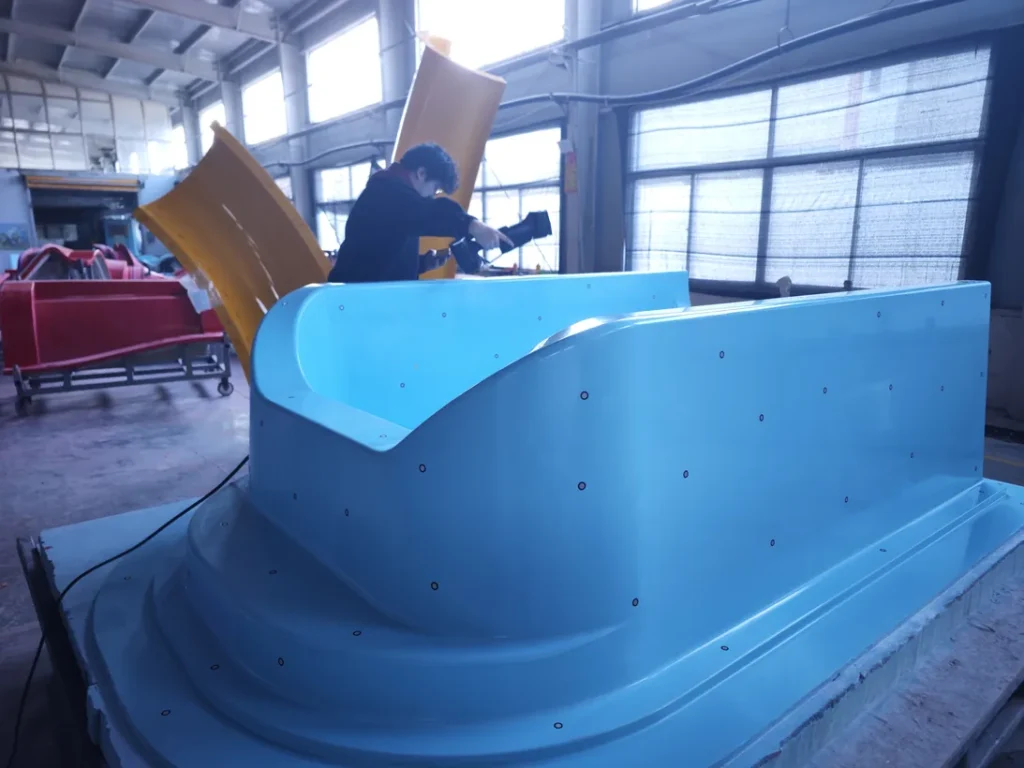
Point cloud filtering is a core preprocessing step in 3D scanning and digital geometry processing that removes erroneous, redundant, or noisy data from raw point cloud datasets captured by 3D scanning systems.
Definition
Point cloud filtering is a core preprocessing step in 3D scanning and digital geometry processing that removes erroneous, redundant, or noisy data from raw point cloud datasets captured by 3D scanning systems. The process produces a clean, geometrically accurate dataset optimized for downstream tasks including dimensional inspection, reverse engineering, mesh generation, and multi-scan alignment. It is a standard step in industrial 3D scanning workflows, as raw point clouds inherently contain extraneous data from hardware, environmental, and operational sources.
How It Works
Raw point clouds captured by structured light, laser, or photogrammetric scanning systems contain extraneous data from sources including ambient light interference, surface reflectivity variations, sensor noise, operator motion during handheld scanning, vibration in automated setups, and accidental capture of background objects such as scan stands or work surfaces. Point cloud filtering applies algorithmic rules or geometric tests to classify individual points as valid or extraneous, then removes or adjusts undesirable points to align the dataset with the true geometry of the scanned object.
Common filter categories include:
- Outlier removal filters (e.g., Statistical Outlier Removal, Radius Outlier Removal) that identify and delete isolated points that do not align with the main geometric cluster of the object
- Downsampling filters (e.g., voxel grid, uniform sampling) that reduce point count by retaining a representative subset of points, eliminating redundant data to speed up downstream processing without losing overall geometric fidelity
- Smoothing filters (e.g., bilateral, Laplacian) that adjust point positions to reduce high-frequency surface noise while preserving sharp edges and fine features
- Artifact-specific filters that target systematic noise such as specular reflection points from shiny metal surfaces or shadow points from structured light projection gaps
Key Parameters and Criteria
The performance of point cloud filtering is evaluated against use case-specific criteria, with values dependent on scanning hardware resolution, object material and geometry, scan environment, and downstream task requirements.
| Parameter | Meaning | Judgment Method |
|---|---|---|
| Outlier Removal Rate | The percentage of non-valid erroneous points (e.g., background points, random noise) successfully removed from the raw input point cloud | Compare pre- and post-filter point counts, cross-validated against the known point count of a calibrated reference artifact scanned under identical conditions |
| Post-Filter Geometric Deviation | The average or maximum positional difference between the filtered point cloud and the true physical geometry of the scanned object, measuring accidental removal or displacement of valid points | Align the filtered point cloud to a traceable reference CAD model or calibrated gauge artifact, then compute deviation statistics across the full dataset |
| Edge Retention Ratio | A quantitative measure of how well sharp edges, corners, and fine geometric features are preserved after filtering, relative to their state in the raw scan | Calculate the gradient magnitude of edges on known test features (e.g., calibrated step edges, corner artifacts) in both raw and filtered point clouds, then compute the ratio of post-filter to pre-filter edge sharpness |
| Downsampling Uniformity | The consistency of point spacing across the full filtered point cloud, critical for uniform measurement accuracy and mesh generation quality | Compute the nearest neighbor distance for all points in the filtered dataset, then evaluate the standard deviation of these distances relative to the target point spacing |
Suitable and Unsuitable Scenarios
Suitable Scenarios
- Industrial dimensional metrology and quality inspection, where residual noise would introduce measurement uncertainty and skew deviation calculations
- Reverse engineering workflows, where clean, feature-accurate point clouds are required to generate precise CAD models or production-ready meshes
- Large-scale digitization (e.g., heavy equipment, factory floor layouts, full vehicle scans), where redundant point data increases processing time and raises the risk of alignment errors
- 3D print model preparation, where surface noise would translate to visible artifacts or dimensional inaccuracies in the final printed part
- Multi-scan registration pipelines, where outlier points reduce the accuracy of alignment algorithms
Unsuitable Scenarios
- Scanning of highly porous, irregular, or intentionally textured surfaces (e.g., foam insulation, historical artifact surface patina), where standard outlier removal algorithms may misclassify intentional surface variation as noise
- Ultra-high-precision micro-scanning of features smaller than 2mm, where even conservative filtering can remove valid fine geometric detail
- Real-time dynamic scanning and tracking applications with strict low-latency requirements, where complex filtering algorithms introduce processing delays that disrupt real-time performance
- Specialized use cases such as dental scanning, consumer facial scanning, or medical imaging diagnosis, which require domain-specific filtering workflows distinct from standard industrial point cloud filtering
Common Misconceptions
- Aggressive filtering always produces higher-quality data: Overly aggressive filter settings remove valid fine features, sharp edges, and intentional surface texture, introducing geometric deviation that compromises inspection and reverse engineering accuracy. Optimal filter settings balance noise removal with feature preservation.
- All point cloud filters are interchangeable: Each filter type is designed to address specific noise or data characteristics. For example, statistical outlier removal is ineffective at eliminating systematic noise from specular reflections on shiny surfaces, which requires dedicated artifact-specific filters.
- Filtering is only necessary for low-quality scan data: Even high-precision industrial 3D scanners produce minor noise from environmental factors (e.g., ambient light, vibration) and surface properties (e.g., semi-transparent coatings, rough cast surfaces), requiring light, calibrated filtering to achieve rated measurement accuracy for critical applications.
- Manual filtering is inherently more accurate than automated filtering: While manual filtering allows for context-specific adjustments for highly unique objects, it is prone to human error, inconsistent application across large datasets, and significant time overhead. Rule-based and AI-powered automated filtering delivers consistent, repeatable results for standard industrial use cases, and is often validated against calibrated reference artifacts to ensure measurement integrity.
Related Concepts
- Point Cloud Registration: The process of aligning multiple overlapping point cloud scans into a single unified 3D model. Filtering is a standard preprocessing step for registration, as removing outliers reduces alignment error and speeds up algorithm convergence.
- Mesh Generation: The conversion of point cloud data into a polygonal surface mesh for visualization, simulation, or production. Filtered point clouds reduce mesh artifacts (e.g., holes, spurious polygons) and reduce processing time for mesh generation workflows.
- 3D Metrology: The practice of precise dimensional measurement of physical objects for quality control and validation. Point cloud filtering directly impacts measurement uncertainty, with filter settings calibrated to meet specific metrology tolerance requirements.
- Voxel Downsampling: A common point cloud filtering technique that divides a point cloud into 3D grid cells (voxels) and retains a single representative point per cell, reducing data size while preserving overall geometric structure.
- Structured Light 3D Scanning: A 3D scanning technology that uses projected light patterns and cameras to capture point cloud data. Raw structured light scans often contain noise from light reflection and shadow, making filtering a core post-processing step for this technology.
FAQ
Does point cloud filtering reduce the accuracy of 3D scan data?
When configured appropriately for the scanned object, scan quality, and downstream task, point cloud filtering improves effective accuracy by removing noise and extraneous data that would skew dimensional measurements or model generation. Improperly configured filters (e.g., overly aggressive outlier removal on fine-featured parts) can reduce accuracy by removing valid geometric points, so filter settings must be calibrated to specific use case requirements.
Can point cloud filtering eliminate all types of scan artifacts?
No, point cloud filtering is designed to address common, predictable artifacts including random sensor noise, isolated outlier points, and redundant data. Persistent artifacts from extreme surface reflectivity, very small hidden geometric features, or severe scan misalignment may require additional preprocessing steps, such as targeted manual artifact removal or re-scanning with adjusted hardware settings.
What is the difference between outlier removal and downsampling?
Outlier removal is a filter type that deletes non-valid points that do not correspond to the true geometry of the scanned object, such as background points or random sensor noise. Downsampling is a filter type that reduces the total number of valid points by retaining a representative subset of data, eliminating redundant points to speed up downstream processing without altering the overall geometric structure of the object. Both are common filtering steps, but address distinct data quality needs.
How do I select appropriate filter settings for industrial inspection use cases?
Filter settings for industrial inspection are selected based on three core factors: the required measurement tolerance of the inspection task (tighter tolerances require more conservative filter settings to avoid altering valid feature geometry), the surface and geometric properties of the part (e.g., rough cast parts can tolerate more aggressive filtering than precision-machined components with fine features), and the noise characteristics of the raw scan (e.g., scans of shiny metal parts require dedicated specular reflection filters in addition to standard outlier removal). Filter settings are typically validated against calibrated reference artifacts to ensure compliance with metrology requirements.
Summary
Point cloud filtering is a foundational preprocessing step in industrial 3D scanning and digital geometry processing, designed to remove erroneous, redundant, or noisy data from raw point cloud datasets while preserving critical geometric features and measurement integrity. Its performance is evaluated via standardized, use case-specific parameters including outlier removal rate, post-filter geometric deviation, edge retention ratio, and downsampling uniformity. When configured and applied correctly, point cloud filtering improves the reliability, accuracy, and efficiency of downstream tasks including 3D metrology, reverse engineering, mesh generation, and multi-scan registration, while improper configuration can lead to loss of critical geometric detail and increased measurement uncertainty.
- What Is 3D Scanning? Principles, Workflow, and Industrial Applications 3D scanning is a digital measurement technology that converts the surface geometry of physical objects into 3D data. This entry covers its working principles, core parameters, industrial use cases, common misconceptions, and related technical…
- What Is a 3D Scanner? Types, Parameters, and Selection Criteria A 3D scanner captures three-dimensional surface data from physical objects and converts geometry, dimensions, and features into digital data for inspection, reverse engineering, and modeling.
- What Is 3D Scanning Accuracy? Accuracy, Repeatability, and Resolution Explained 3D scanning accuracy describes how closely scan data matches an object's actual geometry and dimensions. It is assessed through local accuracy, volumetric accuracy, stitching accuracy, repeatability, and resolution.
- What Is Point Cloud Data? Point Clouds, Meshes, and CAD Models in 3D Scanning Point cloud data is an important raw data format in 3D scanning. It consists of discrete 3D coordinate points that describe object surface geometry and support inspection, reverse engineering, modeling, and archiving.
Hangzhou Insvision Technology Co., Ltd.
Address: Building 1, No. 1399 Liangmu Road, Yuhang District, Hangzhou, Zhejiang 311121, China
Copyright © Hangzhou Insvision Technology Co., Ltd. All rights reserved.
Copyright © Hangzhou Insvision Technology Co., Ltd. All rights reserved.