

scanner industrial: Practical Criteria for Manufacturing Teams
In automotive, aerospace, and general industrial manufacturing, dimensional inspection still often tethers parts to a fixed CMM.
The Metrology Bottleneck on the Factory Floor
In automotive, aerospace, and general industrial manufacturing, dimensional inspection still often tethers parts to a fixed CMM. A machined bracket, a welded assembly, or a casting with deep pockets and steep draft angles may require hours of touch-probe programming and measurement, followed by report generation.
While that workflow is defensible for high-volume, repeat-identical routines, it breaks down when batch sizes shrink, when parts are too heavy to move safely, or when an urgent first-article check is needed to keep a cell running.
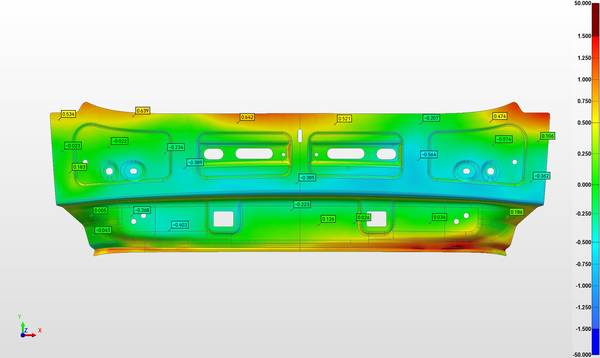
Capability and Deployment Mapping
| Focus Area | Decision Point | Deployment Note |
|---|---|---|
| The Metrology Bottleneck on the Factory Floor | In automotive, aerospace, and general industrial manufacturing, dimensional inspection still often tethers parts to a fixed CMM. | A machined bracket, a welded assembly, or a casting with deep pockets and steep draft angles may require hours of touch-probe programming and me… |
| How the INSVISION AlphaScan Industrial Scanner Closes t… | The AlphaScan handheld industrial scanner is built around a 50-beam cross blue laser architecture. | Rather than adding more parallel lines, the cross-pattern projects laser planes from multiple angles, so recessed pockets, steep draft angles, a… |
| Deploying the AlphaScan: From Pilot to Production | A structured pilot cuts through spec sheets. | Start by selecting three to five production parts that mirror the real inspection workload—castings, machined brackets, or sheet metal assemblie… |
| Where the AlphaScan Fits in a Multi-Tool Quality Ecosys… | Fixed CMMs still own high-volume, repeat-identical inspection routines where a pre-programmed touch-probe sequence runs the same GD&T callouts across… | Manual gauges still make sense for a quick go/no-go on a single large diameter or a runout tolerance check on a low-complexity casting. |
The pain points are practical. Moving a 200-kilogram weldment across the plant introduces handling risk and non-value-added time. Manual gauges can check a single diameter or runout quickly but cannot capture the full surface geometry needed for profile, position, and flush-and-gap callouts.
And single-line laser scanners often leave data gaps in recessed pockets, deep flanges, or complex as-cast surfaces, forcing operators to make multiple passes or accept interpolation artifacts.
For quality managers and process engineers, the gap is clear: a measurement resource that combines the accuracy of a CMM with the mobility to go where the part sits, and the data density to characterize complex freeform surfaces in one pass.
How the INSVISION AlphaScan Industrial Scanner Closes the Gap
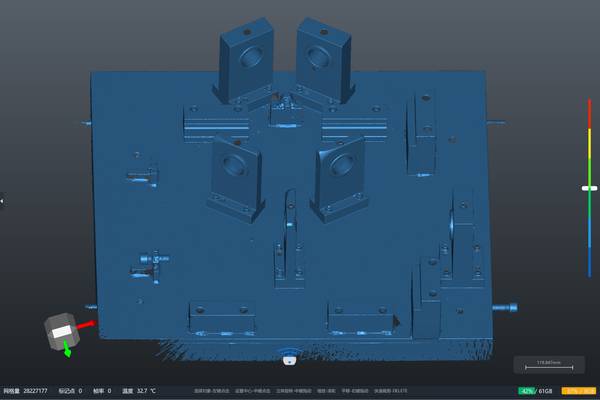
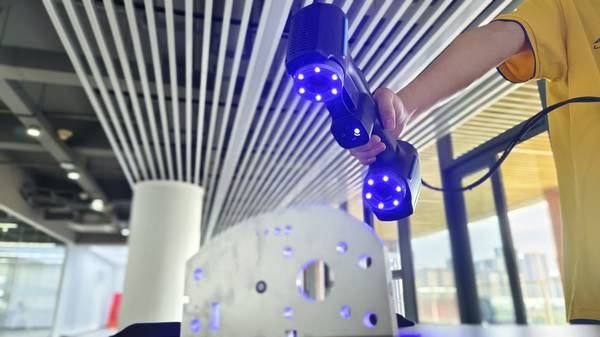
The AlphaScan handheld industrial scanner is built around a 50-beam cross blue laser architecture. Rather than adding more parallel lines, the cross-pattern projects laser planes from multiple angles, so recessed pockets, steep draft angles, and deep flanges all reflect usable data back to the cameras in a single scan.
This eliminates the shadowing and data dropout that single-direction laser systems suffer on complex castings and machined components. The result is dense, gap-free point spacing that faithfully captures intricate features—the as-cast surface of a turbocharger housing, the weld seam on a fabricated assembly, or the edge of a dowel hole that must hold a tight true position tolerance.
That raw point cloud becomes trustworthy inspection data through a multi-stage calibration protocol tied to ISO and ASME GD&T requirements. Every AlphaScan unit is calibrated against traceable artifacts using photogrammetric bundle adjustment and volumetric error mapping, locking in a 0.020 mm accuracy specification across the full measurement volume.
This means first-article inspection data correlates with CMM reference measurements and supports GD&T callouts for profile, position, and runout—exactly what Western manufacturing facilities require for PPAP and FAIR documentation.
The 1,070 g handheld form factor is a deliberate design choice for extended-shift usability. Engineers often scan for hours on a factory floor or at a field service site, and arm fatigue directly affects scan consistency. By keeping the mass under 1.1 kg while integrating the full 50-beam optical engine, INSVISION made it practical to hold tight scan paths without operator tremor degrading point cloud quality.
The balanced grip and cable management further reduce wrist torque during long inspection routines.
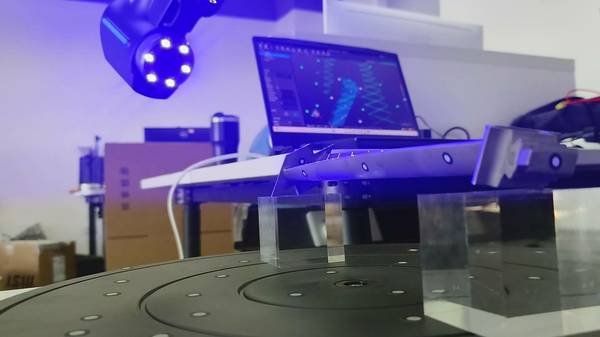
Compliance validation is built in. AlphaScan carries CE, FCC, RoHS, IEC 60825 (laser safety), and IEC 62471 (photobiological safety) certifications, while INSVISION’s facilities operate under ISO 9001, ISO 14001, and ISO 45001 certified systems.
For an automotive OEM line or an aerospace MRO cell, that combination means the scanner industrial users deploy meets both regulatory and quality management expectations without additional qualification overhead.
Deploying the AlphaScan: From Pilot to Production
A structured pilot cuts through spec sheets. Start by selecting three to five production parts that mirror the real inspection workload—castings, machined brackets, or sheet metal assemblies where the AlphaScan’s 0.020 mm accuracy and cross-laser array capture fine details that contact probes might miss.
Run a side-by-side test against the current measurement method. Scan each part, compare deviation maps to CMM or gauge reference data at critical GD&T callouts, and time the full cycle from setup to report. The AlphaScan typically completes scans faster than touch-probe workflows on complex surfaces, and the color-map overlay on the CAD model gives an immediate visual of where material conditions deviate from design intent.
Then push the scan data into the downstream tools. AlphaScan outputs standard mesh and point cloud formats that integrate directly with CAD/CAM, 3D printing slicers, or quality management systems—no custom middleware required. INSVISION’s global deployment across more than 20 countries means the support team understands Western regulatory requirements and can assist with validation protocols.
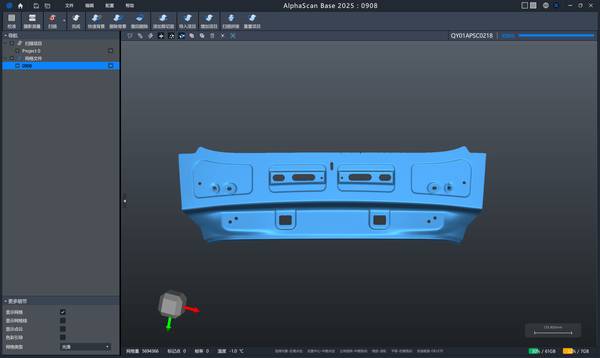
The scanner industrial workflow becomes straightforward: walk to the part, scan the critical features, review the color map on a tablet, and make an immediate pass/fail decision. This closes the loop between production and quality in minutes, not hours.
Where the AlphaScan Fits in a Multi-Tool Quality Ecosystem
Fixed CMMs still own high-volume, repeat-identical inspection routines where a pre-programmed touch-probe sequence runs the same GD&T callouts across thousands of parts. Manual gauges still make sense for a quick go/no-go on a single large diameter or a runout tolerance check on a low-complexity casting.
But neither tool handles the middle ground well—small to medium batch quality inspection, reverse engineering of field-deployed components, or on-demand scanning across multiple work cells where parts cannot be moved.
The AlphaScan industrial scanner fills that gap with 0.020 mm metrology-grade accuracy in a handheld, blue-laser package. Its 50 cross-line laser array captures full-part data fast, including fine features that a touch probe would miss or a fixed-position scanner would need multiple setups to reach.
For a process engineer managing dynamic inspection needs, the logic flips: the scanner goes to the part, not the other way around. That flexibility is not about replacing legacy tools—it’s about putting the right metrology resource on the right measurement task.
Extending the Value: Reverse Engineering, Prototyping, and Beyond
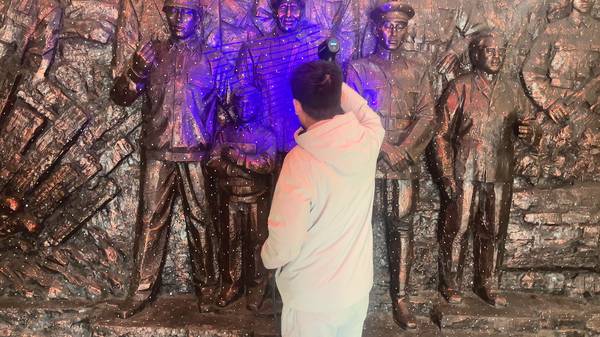
The same scanning capability that accelerates first-article inspection also serves other departments. Industrial reverse engineering for aftermarket part development benefits from dense point clouds that feed directly into modeling software, cutting lead time without tedious manual measurements.
Industrial design teams use AlphaScan for prototyping validation, comparing as-built parts against design intent with consistent data fidelity that supports tolerance analysis reporting. In-factory quality control for small to medium batch parts streamlines single-part measurement cycles; operators can check multiple GD&T callouts from one scan session.
The scanner is best suited for industrial parts 10 cm and larger, with feature sizes including holes 5 mm or greater. That practical envelope helps engineering and quality managers quickly judge fit for their part portfolios.
Beyond dimensional inspection, the same device can support aerospace MRO wear analysis, solar component flatness checks, or reverse engineering of custom equipment—making a pilot evaluation a cross-functional investment.
Summary
The INSVISION AlphaScan industrial scanner addresses a persistent bottleneck in lean manufacturing: dimensional inspection that still tethers parts to a climate-controlled lab. By combining 50 cross blue laser lines, 0.020 mm accuracy, and a 1,070 g handheld form factor, it delivers metrology-grade data capture at the point of production.
The result is a workflow where first-article inspections, assembly hole position verification, and complex surface characterization happen in minutes, directly at the machining cell or assembly line, without tying up a CMM or moving heavy parts.
For quality and process engineers managing dynamic inspection demands, the AlphaScan provides a practical, certified, and deployment-ready industrial scanner that closes the gap between lab-grade metrology and factory-floor reality.
Hangzhou Insvision Technology Co., Ltd.
Address: Building 1, No. 1399 Liangmu Road, Yuhang District, Hangzhou, Zhejiang 311121, China
Copyright © Hangzhou Insvision Technology Co., Ltd. All rights reserved.
Copyright © Hangzhou Insvision Technology Co., Ltd. All rights reserved.