

How to Evaluate 3D scanner to make stl files for Inspection
See how a 3D scanner to make STL files reduces rework, labor costs, and lead times. Learn the operational value of industrial 3D scanning for your facility.
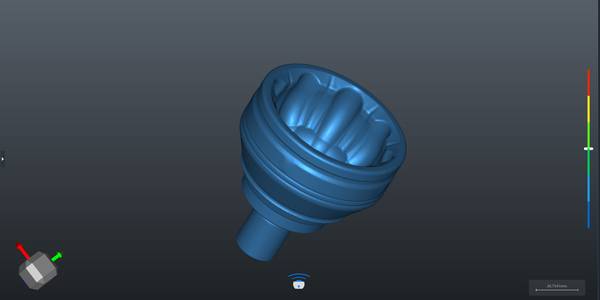
This article examines the cost structure behind traditional STL generation, identifies the specific workflow bottlenecks that inflate total cost of ownership, and provides a practical evaluation framework that plant managers, quality directors, and finance leads can use to assess the operational value of industrial 3D scanning.
The focus stays on efficiency, rework reduction, labor redeployment, delivery cadence, and quality traceability—the metrics that show up on a P&L, not just in a spec sheet.
The Hidden Operational Costs of Legacy STL File Generation
The real cost of generating an STL file isn’t the scanner purchase. It’s the operational waste buried inside workflows that rarely get audited. When you follow the thread from part measurement to a print‑ready STL, several line items surface.
Labor is the first and most visible drain. Traditional methods lean heavily on senior metrology engineers or CAD specialists who spend hours measuring parts with calipers, touch probes, or CMMs, then manually surface the geometry in CAD. That repetitive, high‑skill work pulls your best people away from design, analysis, and process improvement.
A 3D scanner to make STL files captures full‑field surface geometry in minutes and feeds dense point‑cloud data directly into mesh generation software. The skill shifts from data creation to data interpretation—a far more valuable use of engineering time.
Scrap and rework form a second, often underestimated cost center. An STL built from a few dozen hand‑measured points or a low‑density legacy scan frequently misses subtle contours, warpage, or wear patterns. The first 3D print doesn’t fit. The reverse‑engineered part fails a go/no‑go gauge. Reworking the model, reprinting, and re‑inspecting consumes material, machine hours, and trust.
High‑density point clouds from industrial scanning capture the as‑built reality, dramatically reducing the mismatch between the digital file and the physical part and improving first‑pass yield.
Delivery delays compound the damage. When an aerospace MRO shop can’t turn around a replacement part because the STL file keeps bouncing back from the print bureau, the aircraft stays grounded. Penalty clauses or lost future orders from a Tier 1 supplier missing a launch deadline dwarf any savings from buying a cheaper measurement tool. Speed matters, but repeatable speed matters more.
Compliance gaps are the cost nobody budgets for until an auditor arrives. In medical device manufacturing or ASME pressure vessel work, you need a traceable digital thread from the physical artifact to the STL to the final part. Hand‑sketched notes and unvalidated CAD conversions don’t hold up under ISO 13485 or AS9100 scrutiny.
A scanning system that logs scan parameters, processing steps, and operator identity gives quality managers the audit trail they need without adding administrative hours.
How a 3D Scanner to Make STL Files Addresses Root‑Cause Inefficiencies
Consider a legacy automotive bracket that needs an STL for aftermarket production. With manual measurement and CAD reconstruction, the process can stretch across days, with multiple STL revisions caused by surface mismatch. A handheld 3D scanner to make STL files captures the part in one pass on the production floor, and the integrated software delivers a watertight STL in under an hour.
The root cause of the inefficiency is the data‑capture gap: touch probes and photogrammetry miss freeform surfaces, require part setup, and depend on experienced operators to fill in the blanks. Industrial handheld scanning eliminates that gap by generating high‑density point clouds that auto‑mesh into accurate STLs with minimal manual intervention.
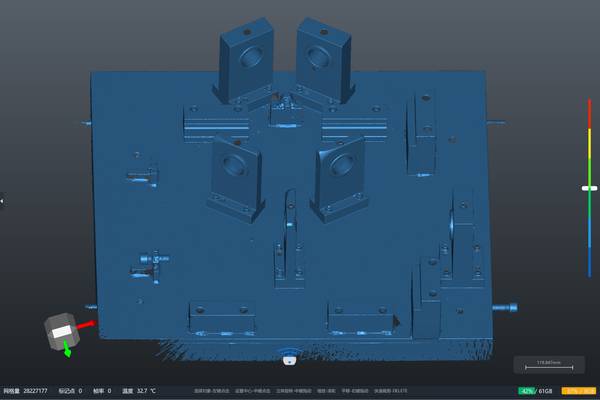
In aerospace MRO, this cuts time‑to‑file for turbine blade replication from days to a single shift. Medical device teams use the same workflow to create compliant STL documentation for implant components, reducing human error when digitizing complex organic shapes. AI‑driven processing handles alignment and hole‑filling automatically, so a technician with basic training can produce repeatable, production‑ready STLs.
The result is less reliance on specialized labor, shorter lead times, and the removal of rework loops that inflate total cost.
A TCO and ROI Evaluation Framework for 3D Scanning STL Solutions
The payback on a 3D scanner to make STL files rarely comes from the hardware line item alone. Procurement teams that anchor decisions on upfront capital miss the compounding effect of recurring cost reductions over a five‑year (or longer) asset lifecycle.
A structured TCO and ROI evaluation framework, built around your own facility’s labor rates, scrap costs, and order lead times, reveals that the true savings accumulate in areas most capital requests overlook.
Pre-Investment Checks
- It’s the operational waste buried inside workflows that rarely get audited.
- With manual measurement and CAD reconstruction, the process can stretch across days, with multiple STL revisions caused by surface mismatch.
- Procurement teams that anchor decisions on upfront capital miss the compounding effect of recurring cost reductions over a five‑year (or longer)…
- Instead of moving heavy or oversized parts to a metrology lab, the handheld blue‑laser unit goes to the production line.
The framework below is designed as a customizable worksheet. Populate it with internal data—no vendor‑supplied numbers—and run the calculation over the expected service life of the equipment. For industrial scanning systems with a lifecycle that routinely exceeds five years, even modest per‑job savings compound into a total cost of ownership advantage that stands up under standard capex approval criteria.
| Cost Category | Traditional STL Generation Cost Drivers | 3D Scanning Solution Cost Mitigation | Internal Metric to Use |
|---|---|---|---|
| Recurring Labor | Hours of skilled technician time spent on CMM programming, touch‑probe point collection, and manual surfacing from sparse data. One complex casting can tie up a metrology engineer for an entire shift. | Full‑field data capture reduces measurement time to minutes. The scan‑to‑STL workflow automates mesh generation, freeing senior staff for higher‑value tasks. | Fully burdened hourly rate of metrology/QA personnel × hours saved per job, annualized across typical job volume. |
| Rework and Scrap | Incomplete or low‑resolution measurement data leads to STL files that miss critical GD&T callouts. Parts machined or additively manufactured from these files fail first‑article inspection, driving rework loops, material waste, and scrapped components. | Dense point clouds capture surface geometry with sufficient resolution to resolve tight tolerances before toolpath generation or 3D printing. First‑pass yield improves measurably. | Cost of rework hours, material scrap value, and consumables per failed part × reduction in failure rate observed after implementation. |
| Compliance and Audit | Manual documentation of measurement setups, handwritten inspection reports, and traceability gaps that surface during ISO 9001 or AS9100 audits. Non‑conformance findings consume management attention and can delay certifications. | Digital records of every scan session, with timestamped point cloud data and automated reporting, simplify audit preparation and reduce the administrative burden of compliance. | Person‑hours spent preparing for and responding to quality audits, plus any costs from delayed certification milestones. |
| Opportunity Costs of Delayed Deliveries | When reverse engineering or inspection bottlenecks slow downstream processes, customer delivery dates slip. Expedited shipping, overtime, and lost repeat business are the hidden costs. | Faster, repeatable STL generation removes the bottleneck, allowing on‑time delivery and protecting revenue streams. | Value of orders at risk due to late delivery, cost of expedited freight, and overtime premiums incurred to recover schedules. |
Where INSVISION AlphaScan Changes the Operational Equation
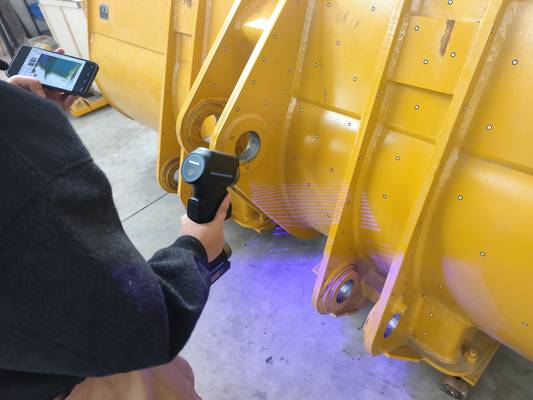
For procurement teams evaluating a 3D scanner to make STL files, the INSVISION AlphaScan shifts the total cost of ownership in three hard‑dollar areas: transport logistics, post‑processing labor, and workflow integration downtime. Instead of moving heavy or oversized parts to a metrology lab, the handheld blue‑laser unit goes to the production line.
That eliminates rigging costs, production stoppages, and the scheduling bottlenecks that come with centralized inspection.
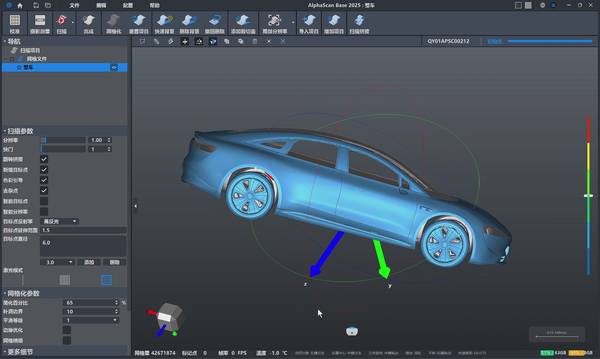
The scan data then runs through onboard AI and 3D algorithms that automate point‑cloud cleanup and mesh generation, producing a production‑ready STL with far less manual surfacing work than older scan‑to‑CAD pipelines require.
For additive manufacturing pre‑processing and industrial reverse engineering—where STL fidelity directly determines print success or tooling accuracy—that reduction in human touch time is a recurring cost saving, not a one‑time gain.
INSVISION built the AlphaScan to meet CE, FCC, and CNAS compliance standards, so it slots into ISO‑registered quality systems without triggering a separate qualification project. The end‑to‑end digital thread from capture to final STL output also feeds directly into PLM and QMS platforms, cutting out the data translation steps that typically add hours per part and introduce revision‑control risk.
When you map those savings across a year of first‑article inspections, legacy part digitization, or production‑line troubleshooting, the scanner’s payback period gets short enough to justify pulling the capital spend forward.
Phased Implementation Roadmap to Maximize Early ROI
How do you justify a capital equipment purchase when the full payback might take years? Structure deployment so that the first few months generate enough hard savings to cover the initial outlay, then use that momentum to fund broader rollout. With a 3D scanner to make STL files, a phased roadmap turns a line‑item expense into a self‑funding productivity program.
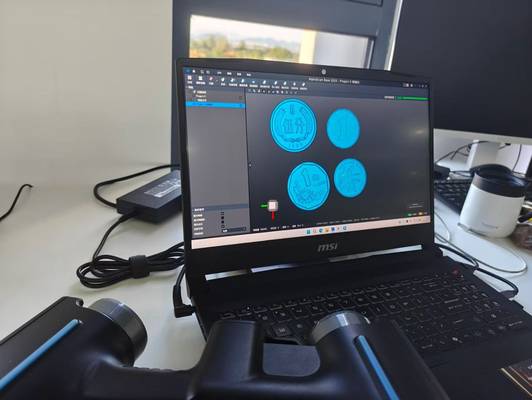
Phase 1 (0–3 months): Pilot on two high‑volume, low‑integration use cases. Reverse‑engineer legacy production tooling for automotive lines and create STL files for 3D‑printed facility maintenance spares. Both tasks typically consume days of skilled labor and outside service costs; bringing them in‑house with the AlphaScan delivers measurable time and cost reduction within weeks.
Track average STL generation time and labor hours allocated to STL creation to quantify immediate savings.
Phase 2 (3–6 months): Connect the AlphaScan’s STL output to your PLM and QMS. This creates a digital thread for every scanned part, supporting ISO 9001, AS9100, and FDA 21 CFR Part 820 traceability requirements. The KPI to watch here is rework rate on parts produced from scanned STLs—traceability cuts errors fast.
Phase 3 (6+ months): Scale standardized scanning workflows across additional lines. Aerospace MRO part replication, energy component reverse engineering, and other high‑mix applications benefit from enterprise‑wide STL creation consistency. Cumulative cost savings grow, and dependence on tribal knowledge shrinks. At each phase, report three core metrics to leadership: STL generation time, rework rate, and labor hours.
That’s how procurement turns a scanner into a documented, multi‑year ROI story.
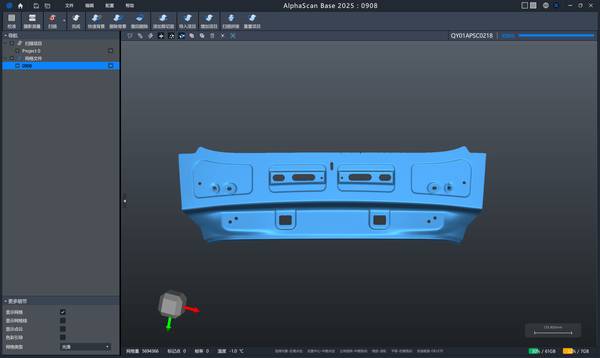
From Operational Waste to Strategic Asset
The decision to invest in a 3D scanner to make STL files is not a technology purchase—it’s an operational decision about where you want your engineering hours to go, how much rework you’re willing to tolerate, and how quickly you can respond to customer demand.
When the hidden costs of manual STL generation are made visible, the financial logic becomes clear: the scanner pays for itself by eliminating the waste that conventional workflows treat as unavoidable. By following a structured evaluation framework and a phased rollout, manufacturing leaders can turn a capital request into a documented, defensible source of margin improvement.
Hangzhou Insvision Technology Co., Ltd.
Address: Building 1, No. 1399 Liangmu Road, Yuhang District, Hangzhou, Zhejiang 311121, China
Copyright © Hangzhou Insvision Technology Co., Ltd. All rights reserved.
Copyright © Hangzhou Insvision Technology Co., Ltd. All rights reserved.