

INSVISION White Light Measurement Systems Deliver Lower Rework and Faster Production Lines
This article examines how portable white light measurement systems are closing that gap—not by replacing lab-grade metrology, but by bringing it to the poi
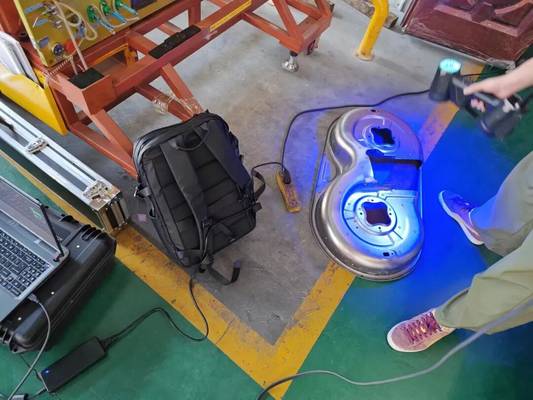
This article examines how portable white light measurement systems are closing that gap—not by replacing lab-grade metrology, but by bringing it to the point of work. We focus on the practical, cost-side implications: where inspection bottlenecks inflate labor hours, how delayed feedback drives rework and scrap, and what a factory leader can expect when a shop-floor-ready system becomes part of the daily production rhythm.
INSVISION’s engineering choices and field experience serve as a concrete reference for those evaluating whether on-site optical metrology can strengthen their own quality and delivery performance.
The Hidden Costs of Lab-Dependent Metrology
When a quality technician walks a part to a remote CMM or a fixed white light measurement system, the clock starts ticking on more than just the measurement cycle. The real costs accumulate in three areas that rarely appear on a single line item.
First, inspection queues create idle time. In aerospace MRO bays, large components may sit for hours waiting for the one lab-bound system that everyone shares. Automotive component inspectors see first-article timelines stretch because the metrology lab is booked solid. Photovoltaic part validation stalls while a handful of specialists triage work. Every hour a part waits is an hour of delayed decision-making on the line.
Second, delayed feedback multiplies rework and scrap. When dimensional data arrives a shift or a day after a process drifts, the number of nonconforming parts already produced can be substantial. Catching a hole position error on a bracket batch before it reaches assembly is a fundamentally different cost event than discovering it during a downstream fit check.
The longer the feedback loop, the larger the pile of suspect inventory.
Third, skilled labor becomes a bottleneck. Metrology technicians are in short supply, and their time is often consumed by routine measurement tasks that could be handled at the production cell. That dependency limits throughput and makes the entire quality workflow fragile—if the specialist is out, inspection stops.
How Shop-Floor White Light Measurement Changes the Equation
Portable white light measurement systems address these pain points by relocating high-accuracy data capture to the assembly station, the incoming inspection bench, or the MRO bay. The operational impact shows up in several distinct stages.
*Incoming inspection and supplier quality.* Instead of routing incoming components to a central lab, a quality technician can scan critical features at the receiving dock. Deviations are flagged in minutes, not hours. That speed prevents nonconforming material from entering the production stream and gives procurement teams the data they need for supplier conversations before the lot is consumed.
*In-process verification and first-article inspection.* On the shop floor, a lightweight handheld scanner lets operators check key characteristics during a production run. For first-article approval, the same device can generate a full deviation map against the CAD model without tying up a CMM. The result is a shorter closed-loop cycle: measure, analyze, adjust the process, and re-measure—all within the same shift.
This tight loop directly reduces the volume of parts produced under an unknown process state.
*Assembly and MRO fit validation.* Large components that are impractical to move—turbine housings, airframe structures, photovoltaic frames—can be measured in situ. Maintenance teams capture wear patterns and dimensional changes without disassembly and transport. The data feeds directly into repair-or-replace decisions, cutting downtime and avoiding unnecessary teardowns.
*Reverse engineering and legacy part digitization.* When no CAD model exists, a portable scanner captures the as-built geometry quickly. Engineering teams feed clean mesh data into their preferred CAD package, accelerating redesign cycles and eliminating manual measurement guesswork. This capability turns a metrology tool into a product development asset.
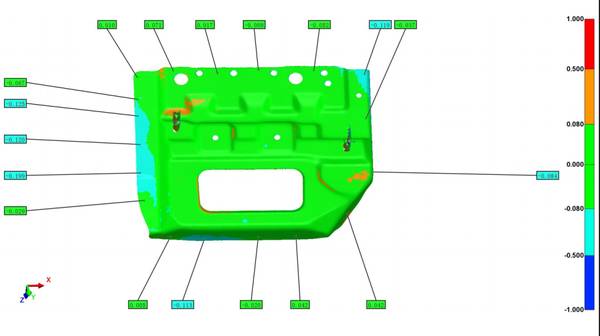
Across all these stages, the common thread is a shorter path from measurement to decision. That compression reduces labor hours spent on transport and queue management, lowers the scrap risk from delayed detection, and frees metrology specialists to focus on complex troubleshooting rather than routine data collection.
A Practical Framework for Evaluating Operational Value
Factory leaders who want to assess the potential impact of bringing white light measurement systems to the shop floor can use a simple self-evaluation. The table below outlines the key cost levers and the questions that reveal where the biggest gains might sit.
| Cost Lever | What to Examine | Observable Improvement Signals |
|---|---|---|
| Inspection cycle time | Time from part completion to measurement result available | Shorter queues; faster first-article sign-off; more inspections completed per shift |
| Rework and scrap | Number of parts produced between process drift and detection | Fewer nonconforming batches; lower material write-offs; reduced rework labor |
| Skilled labor utilization | Hours metrology specialists spend on routine data capture vs. analysis | Specialists redirected to high-value tasks; inspection tasks performed by production staff |
| Delivery cadence | Delays caused by inspection backlog or late discovery of dimensional issues | On-time shipment improvement; fewer production stoppages waiting for measurement data |
| Quality traceability | Effort required to produce audit-ready dimensional records | Automated report generation; digital records linked to serial numbers; faster customer audits |
No single number fits every factory. The exercise is to map the current state, identify the bottleneck that costs the most in time or material, and then test whether a portable metrology system can relieve that specific constraint. The goal is not to replace every CMM but to shift routine, high-frequency measurements closer to the work, where they can influence decisions in real time.
Where INSVISION’s Systems Create Perceptible Improvement
INSVISION engineered its white light measurement systems specifically for this shop-floor reality. The AlphaScan handheld 3D scanner weighs 1070 grams—light enough for an eight-hour shift—while delivering 0.020 mm metrology-grade accuracy through 50 cross blue laser lines.
That combination means a quality technician can capture detailed geometry from deep seams, narrow gaps, and occluded surfaces that frustrate fixed CMMs, without fatigue-induced variability.
The business impact surfaces in several concrete ways. For photovoltaic component inspection, where surface defects and dimensional drift directly affect energy output, the AlphaScan enables in-line checks that previously required a lab visit. Automotive OEM teams use it for first-article inspection and in-process control, cutting the backlog that often piled up waiting for specialized metrology staff.
Aerospace MRO operations measure large components on the hangar floor, eliminating transport time and giving maintenance planners faster wear-analysis data.
INSVISION’s commitment to backward compatibility further protects the operational investment. Software updates—including AI-powered point cloud cleaning, automated GD&T extraction, and digital traceability reporting—work with existing hardware and inspection routines. A system purchased three years ago still runs the latest software release.
That continuity avoids the rip-and-replace cycle that erodes long-term return on metrology equipment.
Certifications matter when quality managers need to trust a new brand. CE and FCC compliance confirm safety and electromagnetic compatibility for EU and North American markets. CNAS accreditation aligns the systems with global industrial metrology standards.
These credentials, combined with field performance across more than 20 markets, give procurement and quality teams the confidence to deploy the technology without disrupting existing ISO or ASME-aligned workflows.
Getting Started: Two Low-Risk Entry Points
For a factory leader who sees the logic but wants to validate it on their own floor, INSVISION recommends starting with a single high-bottleneck task rather than a wholesale change. Two entry points consistently deliver fast, observable feedback.
- Incoming component validation. Deploy a portable scanner at the receiving area for a supplier whose parts have caused recurring dimensional issues. Measure critical features on every lot before the material enters production. Track how many nonconforming lots are caught early and how much rework or line stoppage is avoided. This use case isolates the value of faster inspection without disrupting existing in-process workflows.
- First-article inspection on a constrained production line. Choose a part family where first-article approval is a known bottleneck. Use the handheld system to generate a full dimensional report at the machine or assembly station. Compare the elapsed time and the number of iterations needed to achieve sign-off against the previous lab-dependent process. The difference in turnaround time often justifies wider deployment on its own.
Once these initial applications demonstrate shorter queues and fewer late discoveries, scaling to additional cells or integrating the measurement data into SPC dashboards becomes a practical next step rather than a capital gamble.
Summary
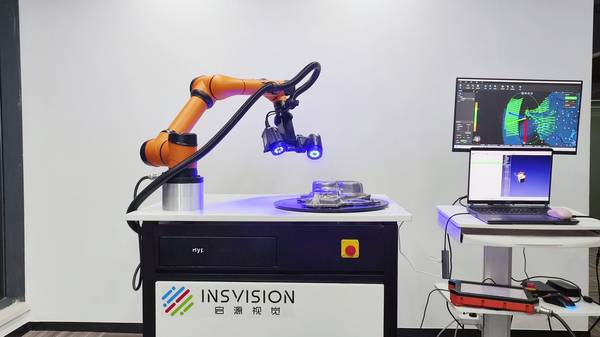
The pressure to reduce costs while improving quality is not going away. Portable white light measurement systems offer a direct path to relieve inspection bottlenecks, shrink rework, and make better use of scarce metrology talent—all without forcing factories to abandon their established quality frameworks.
INSVISION’s approach, built on metrology-grade accuracy in a handheld form factor and sustained through backward-compatible software evolution, gives manufacturing teams a way to start small, prove the value, and grow the capability at their own pace. The result is measurement confidence at the point of work, where it can actually change outcomes.
Hangzhou Insvision Technology Co., Ltd.
Address: Building 1, No. 1399 Liangmu Road, Yuhang District, Hangzhou, Zhejiang 311121, China
Copyright © Hangzhou Insvision Technology Co., Ltd. All rights reserved.
Copyright © Hangzhou Insvision Technology Co., Ltd. All rights reserved.