

INSVISION Handheld Scanner Measurement Reduces Rework and Speeds Production Decisions
Manufacturing operations today face a tightening vise. Labor shortages push experienced quality technicians into retirement faster than they can be replace
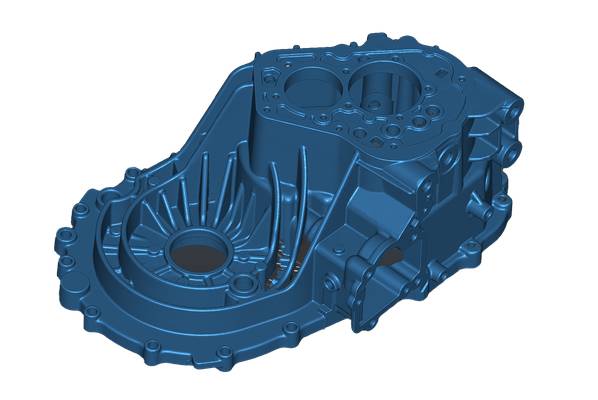
Manufacturing operations today face a tightening vise. Labor shortages push experienced quality technicians into retirement faster than they can be replaced. Customer tolerances shrink while delivery windows narrow. In this environment, every hour a part sits waiting for inspection is an hour of tied-up working capital and a risk of missed shipments.
Quality teams are caught between two imperfect choices: fast manual checks that introduce variability, or precise coordinate measuring machine (CMM) workflows that create queues stretching across shifts. Neither path supports the pace modern production demands.
The financial weight of these bottlenecks often hides in plain sight. Rework loops consume material, machine time, and labor that could be building conforming product. Scrapped parts erase margin already earned. Late deliveries trigger penalties or lost repeat business.
And when frontline operators lack a defensible measurement method, engineers spend hours troubleshooting problems that a reliable dimensional check could have caught in minutes. Handheld scanner measurement changes this equation by putting metrology-grade data directly into the hands of production teams, eliminating the wait and the guesswork.
Where Traditional Measurement Drains Margins
Walk through a typical high-mix production cell and you will see the same pattern. An operator picks up a caliper or a height gauge for a quick check on a complex GD&T callout. The measurement takes seconds, but the result depends heavily on technique, fixture setup, and interpretation. When the part is critical, it moves to the CMM queue. That queue might be four hours, or it might be two days.
During the wait, production continues—sometimes building additional nonconforming parts before the first deviation is caught.
The cost cascade is measurable. Rework hours accumulate. Material waste rises. Delivery schedules slip. Quality documentation becomes a scramble of handwritten notes and disconnected spreadsheets, making traceability audits painful and time-consuming. For plants pursuing ISO 17025 or ASME GD&T compliance, the gap between lab-grade capability and shop-floor reality grows wider every quarter.
The specialist metrology team becomes a bottleneck, and the frontline has no reliable scanner measurement alternative that can hold up under scrutiny.
How Handheld Scanner Measurement Changes the Cost Equation
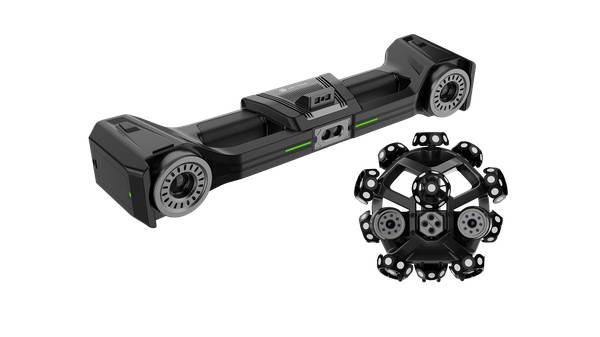
A production-grade handheld scanner measurement tool rewires these workflows by making high-density dimensional data available in seconds, not days. The operational impact shows up in several interconnected areas.
Measurement cycle time. Instead of moving parts to a lab and waiting for a CMM program to run, an operator scans the part at the workstation. A full surface point cloud is captured in minutes, and a deviation map against the CAD model appears immediately. First-article inspections that once took hours can be completed in a fraction of the time, allowing production to start sooner and with greater confidence.
Rework and scrap reduction. When every critical feature can be checked quickly, deviations are caught at the source. The feedback loop shrinks from days to minutes. Fewer nonconforming parts travel downstream, which means less rework labor, less material scrapped, and fewer disruptions to the production schedule. Even a modest reduction in rework hours frees capacity that can be redirected to revenue-generating output.
Labor flexibility. Traditional CMM operation and GD&T interpretation require specialized skills that are increasingly scarce. Handheld scanner measurement systems with intuitive software allow a trained production operator—not a dedicated metrologist—to perform complex inspections. This reduces dependency on a handful of experts and spreads quality ownership across the team.
When a senior inspector retires, the knowledge does not walk out the door; it lives in the scan data and the repeatable measurement process.
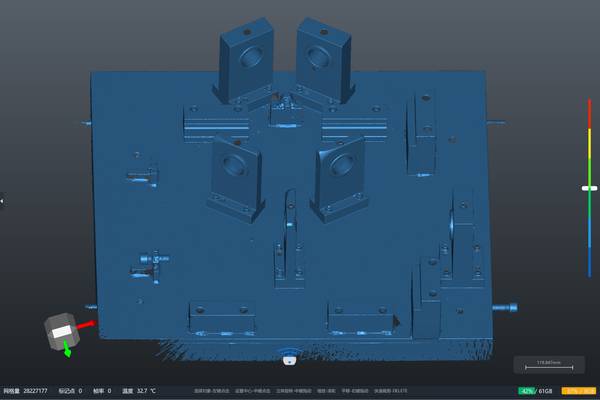
Delivery cadence and customer trust. Faster inspection means shorter overall lead times. Parts move through production and out the door without accumulating queue delays. When a customer questions a dimension, the manufacturer can pull up a full 3D scan report with traceable data, not a single-point measurement.
That level of transparency strengthens supplier relationships and can become a differentiator in contract negotiations.
Data as an operational asset. Every scan generates a rich digital record of the as-built part. Over time, this data reveals process drift, tool wear patterns, and fixture degradation before they cause a reject. Quality traceability moves from a reactive audit exercise to a proactive improvement tool.
The scan archive becomes a long-term asset that supports root cause analysis, supplier development, and continuous improvement initiatives.
Operational Value Framework: Assessing the Impact in Your Plant
Rather than relying on generic savings claims, operations leaders can evaluate the potential of handheld scanner measurement by examining their own cost drivers. The table below outlines a self-assessment structure that connects measurement workflow changes to observable operational outcomes.
| Cost Category | Traditional Cost Driver | Improvement Lever with Scanner Measurement | How to Assess in Your Facility |
|---|---|---|---|
| Inspection time per part | CMM queue delays, manual setup time | On-the-spot scanning, instant deviation maps | Compare current average queue + cycle time to a trial scan time for the same part family |
| Rework and scrap | Late detection of dimensional errors | In-process checks catch deviations early | Track rework hours and scrap cost before and after a pilot on a problematic part number |
| Labor allocation | Specialist metrologist bottleneck | Production operators perform routine inspections | Measure hours of metrology specialist time freed for higher-value tasks |
| Delivery lead time | Inspection wait adds to total throughput time | Parallel or in-line measurement removes the wait | Calculate the reduction in total order-to-ship time for parts that previously queued for CMM |
| Quality documentation effort | Manual report creation, paper records | Automated scan reports with traceable data | Estimate engineering and quality hours spent on report generation and audit preparation |
| Customer returns and concessions | Inadequate dimensional evidence | Full 3D surface data supports confident acceptance decisions | Monitor return rates and concession requests for dimension-related disputes |
This framework does not require a massive data collection project to begin. A focused pilot on a single high-rework part number or a bottleneck inspection station can provide enough operational data to build a business case.
Where INSVISION Fits: Metrology-Grade Accuracy Without the Lab Queue
INSVISION was founded by industrial metrology engineers who spent years embedded with Western automotive, medical device, and aerospace manufacturers. They saw the same frustration in every facility: metrology-grade measurement was locked inside specialist labs, and the production floor kept paying the price in delays, scrap, and rework.
The team built INSVISION to break that bottleneck—a handheld scanner measurement tool that delivers lab-grade accuracy in a form factor any production team member can pick up and trust.
The system captures dense point clouds with metrology-grade precision, enabling full GD&T evaluation against CAD models directly on the shop floor. Because the workflow does not require a dedicated CMM programmer or a climate-controlled lab, it shifts dimensional inspection from a centralized constraint to a distributed capability.
For plants operating under ISO or ASME standards, the traceable digital reports provide defensible documentation without the administrative lag that often accompanies lab-based measurements.
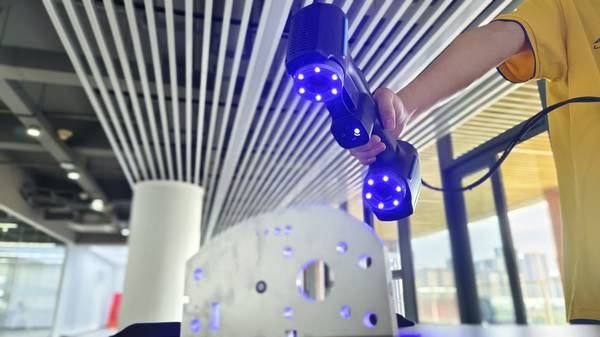
INSVISION’s design philosophy targets the operational realities of a production environment. The handheld form factor allows access to features that are difficult to fixture on a CMM. The software presents deviation maps in a visual format that operators and engineers can interpret immediately, shortening the time from scan to decision.
By removing the queue and the specialized operator requirement, INSVISION helps manufacturers turn quality inspection from a cost center into a production rhythm that supports on-time delivery and continuous improvement.
Getting Started: Two or Three High-Impact Scenarios
Operations teams do not need to overhaul their entire quality system at once. The fastest path to measurable operational improvement is to deploy handheld scanner measurement in a few targeted scenarios where the cost of delay and rework is most visible.
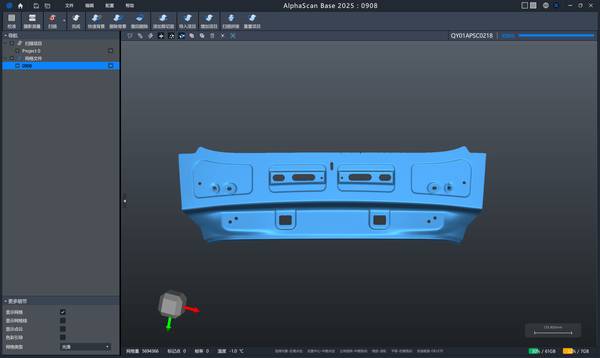
First-article inspection. New part introductions and engineering changes often stall while the first piece waits for CMM capacity. Using a handheld scanner measurement system for first-article checks accelerates the approval cycle, allowing production to ramp sooner and reducing the risk of building nonconforming inventory during the wait.
In-line spot checks for complex features. Select a part family with tight GD&T callouts that currently requires frequent CMM verification. Train a production operator to perform periodic scans at the cell. The immediate feedback catches process drift early, reducing the volume of parts that need rework and freeing the CMM for the most demanding tolerance verifications.
Supplier incoming inspection. Parts arriving from external suppliers often undergo sampling inspection that can miss batch-level deviations. A quick handheld scan of incoming components provides a full surface comparison to the CAD model in minutes, flagging issues before the parts enter production. This reduces the downstream cost of discovering a supplier quality problem after machining or assembly has already added value.
Each of these scenarios can be piloted with minimal disruption. The operational data gathered—reduced inspection hours, fewer scrapped parts, shorter lead times—builds the internal case for broader deployment.
From Cost Center to Competitive Advantage
The pressure to deliver higher quality at lower cost will not ease. Plants that continue to treat dimensional measurement as a lab-only function will find their margins squeezed by rework, their schedules dictated by inspection queues, and their best people tied up in tasks that technology can now handle at the point of production. Handheld scanner measurement offers a practical way to reverse that dynamic.
It compresses the time from doubt to decision, reduces the waste that follows late detection, and builds a digital record that strengthens both internal process control and external customer confidence. For operations leaders looking to protect margins and improve delivery performance, the question is not whether scanner measurement can make a difference, but which bottleneck it should address first.
Hangzhou Insvision Technology Co., Ltd.
Address: Building 1, No. 1399 Liangmu Road, Yuhang District, Hangzhou, Zhejiang 311121, China
Copyright © Hangzhou Insvision Technology Co., Ltd. All rights reserved.
Copyright © Hangzhou Insvision Technology Co., Ltd. All rights reserved.