

Portable 3D Scanners for Modeling Are Redefining Industrial Digital Workflows in 2026
The shift toward decentralized production, shorter product lifecycles, and tighter quality mandates is pulling 3D scanning out of the metrology lab and dir
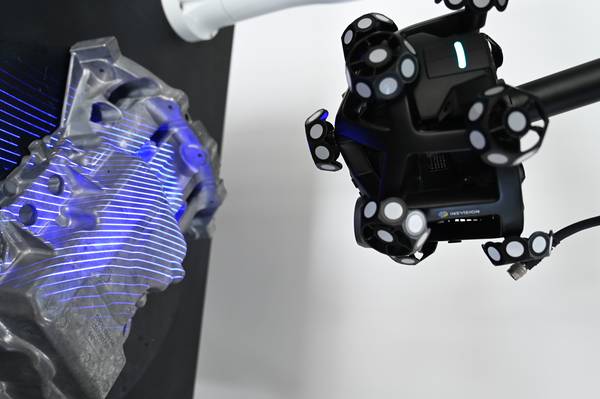
The shift toward decentralized production, shorter product lifecycles, and tighter quality mandates is pulling 3D scanning out of the metrology lab and directly onto the shop floor. In 2026, a portable 3D scanner for modeling is no longer a specialized reverse engineering accessory.
It has become a core component of digital manufacturing workflows, driven by the need to capture as-built geometry where the work happens and feed that data into design, simulation, and inspection systems without delay.
This evolution reflects more than incremental accuracy gains. It signals a convergence of AI-powered data processing, CAD-embedded inspection, and the demand for real-time decision-making across distributed teams. Manufacturers that treat scanning as a standalone measurement task risk falling behind those that embed it into a continuous digital thread.
What Is Driving the Shift
Several forces are accelerating adoption of portable 3D scanners for modeling. Reshoring and supply chain localization have shortened the distance between design and production, but they have also increased pressure to validate parts and tooling on site. Moving large castings, weldments, or composite structures to a climate-controlled metrology lab is costly and slow.
A portable scanner that delivers metrology-grade results in a shop environment eliminates that bottleneck.
Practical Workflow
- What Is Driving the Shift — Several forces are accelerating adoption of portable 3D scanners for modeling.
- Trend 1: Shop-Floor Metrology Replaces Lab-Only Measureme… — The first major trend is the migration of high-accuracy scanning from controlled environments to production areas.
- Trend 2: AI Compresses the Gap Between Scan and Usable Mo… — Raw point cloud data is not a model.
- Trend 3: CAD-Integrated Workflows Close the Inspection Lo… — A 3D scanner for modeling proves its value only when the data flows seamlessly into the software engineers already use.
At the same time, the push toward model-based definition and digital twin strategies demands that physical reality flow back into the CAD model quickly. When a first-article inspection or a wear analysis on a legacy part can be completed in hours rather than days, engineering teams iterate faster and production lines restart sooner.
These operational realities, not just technology curiosity, are turning portable 3D scanners for modeling into a standard line item in capital equipment budgets.
Trend 1: Shop-Floor Metrology Replaces Lab-Only Measurement
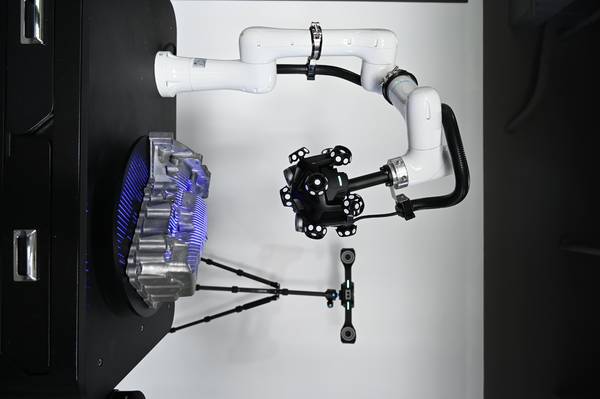
The first major trend is the migration of high-accuracy scanning from controlled environments to production areas. A 0.02 mm precision specification means little if the instrument cannot maintain that accuracy amid temperature swings, dust, and vibration.
Modern portable scanners are designed to operate reliably from -5°C to 40°C, removing the need for dedicated staging areas and allowing quality checks to happen at the machine tool, on the assembly line, or at the receiving dock.
Technical requirements: Ruggedized hardware, wide operating temperature range, battery-powered operation, and stability across varying ambient conditions.
Business impact: Reduced part handling, faster first-article inspection turnaround, and the ability to capture as-built conditions without disrupting production flow. INSVISION portable scanners, for example, are built to handle shop floor conditions directly, so quality data is generated where deviations occur, not hours later in a lab.
Trend 2: AI Compresses the Gap Between Scan and Usable Model
Raw point cloud data is not a model. Converting millions of points into a watertight mesh, extracting features, and aligning scans has traditionally consumed hours of an engineer’s time. AI-accelerated mesh generation and automated feature recognition are changing that equation.
Algorithms now handle noise filtering, hole filling, and primitive extraction in minutes, delivering a production-ready mesh or CAD-compatible surface with minimal manual intervention.
Technical requirements: On-board or software-side AI processing, automated deviation mapping, and intelligent feature recognition that identifies planes, cylinders, and freeform surfaces without user guidance.
Business impact: Engineers shift from data cleanup to interpretation and decision-making. Reverse engineering projects that once took days can be completed in a single shift. INSVISION systems incorporate AI-driven mesh generation that cuts post-processing hours, letting teams focus on design intent and tolerance analysis rather than point cloud housekeeping.
Trend 3: CAD-Integrated Workflows Close the Inspection Loop
A 3D scanner for modeling proves its value only when the data flows seamlessly into the software engineers already use. Too many teams discover after purchase that a scanner’s native output requires translation steps that introduce errors and delay. The trend is toward direct, lossless integration with major CAD and inspection platforms.
Technical requirements: Native support for IGES, STEP, DXF, and DWG formats, plus direct plug-ins for SolidWorks, CATIA, NX, and similar environments. Built-in GD&T tooling and deviation analysis modules that allow tolerance callouts to be validated inside a single software ecosystem.
Business impact: Cross-team collaboration accelerates because design, quality, and manufacturing engineers work from the same data set. When a scanner also carries PTB validation on its inspection software and CE, FCC, and CNAS markings on hardware, the entire toolchain meets traceability requirements that aerospace, automotive, and medical device customers increasingly demand.
INSVISION scanners ship with native format support and integrated GD&T analysis, so quality engineers can close the loop between scan and tolerance callout without leaving their primary software environment.
Trend 4: One Platform Serves Multiple Departments
Early adopters often justified a 3D scanner for a single use case—reverse engineering a legacy die or inspecting a complex casting. Today, the same portable scanner is expected to handle tooling validation, assembly guidance, wear analysis, and even incoming quality checks. This cross-functional utilization improves return on investment and simplifies training and support.
Technical requirements: Versatile scanning modes that handle a range of surface finishes and geometries, software scalability from simple dimensional checks to full surface deviation maps, and the ability to export data in formats suitable for both design and quality departments.
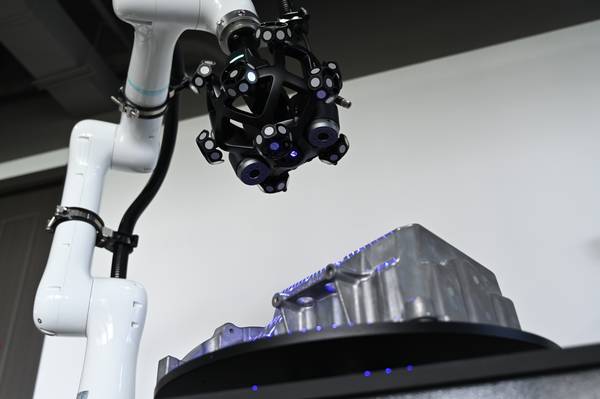
Business impact: Lower total cost of ownership and a stronger business case for capital expenditure. When a single INSVISION system supports first-article inspection, reverse engineering, and periodic tooling recertification, utilization rates rise and the scanner becomes a shared production resource rather than a departmental silo.
Trend 5: Certification and Traceability Become Non-Negotiable
Regulated industries no longer treat scanner certification as a nice-to-have. Aerospace, medical device, and automotive supply chains now expect hardware certifications and software validation as part of the qualification package. Without them, even a technically capable scanner may be rejected during a supplier audit.
Technical requirements: CE, FCC, and CNAS markings on the hardware, plus PTB or equivalent validation on inspection software modules. Audit trails that document measurement traceability.
Business impact: Faster regulatory acceptance, reduced compliance risk, and the ability to serve customers who demand certified measurement processes. INSVISION’s adherence to these certification standards means the toolchain is ready for production-level traceability from day one.
Actionable Steps for Manufacturing Teams
For teams evaluating a 3D scanner for modeling in 2026, the decision should start with workflow integration, not just specifications. Key steps include:
- Map the scanner’s output to existing CAD and inspection software. Prioritize native format support and direct plug-ins over file translation workarounds.
- Test AI processing capabilities on real parts. Evaluate how much manual cleanup is required to go from scan to usable mesh or CAD surface.
- Verify environmental ruggedness. Confirm the scanner can hold its accuracy across the temperature and vibration conditions of your actual shop floor.
- Check certification credentials. If your customers require traceable measurements, ensure the hardware and software carry the necessary markings and validations.
- Run a pilot on a high-value workflow—first-article inspection, legacy part reverse engineering, or tooling recertification—to measure time savings and quality improvements before scaling across departments.
Where INSVISION Fits in These Trends
INSVISION’s portable 3D scanners for modeling are engineered to support the shift toward integrated, shop-floor metrology. Native compatibility with IGES, STEP, DXF, and DWG formats, combined with direct workflows into SolidWorks, CATIA, and NX, addresses the data translation barrier that stalls many scanning deployments.
AI-accelerated mesh generation and automated feature recognition reduce the time from scan to actionable model. Built-in GD&T tooling and deviation analysis modules allow quality engineers to complete tolerance evaluations inside a single software environment. And with CE, FCC, CNAS, and PTB validation, the platform meets the traceability demands of regulated supply chains without additional third-party qualification.
Near-Term Developments Worth Watching
The next phase of evolution will likely see tighter coupling between portable 3D scanners for modeling and digital twin platforms. As manufacturers build living virtual replicas of production lines, the ability to feed as-built scan data directly into simulation environments will enable real-time process adjustments.
Augmented reality interfaces that overlay scan results onto physical parts for assembly verification are also moving from pilot projects to production floors. Teams that build scanning competency now will be positioned to adopt these capabilities as they mature.
Summary
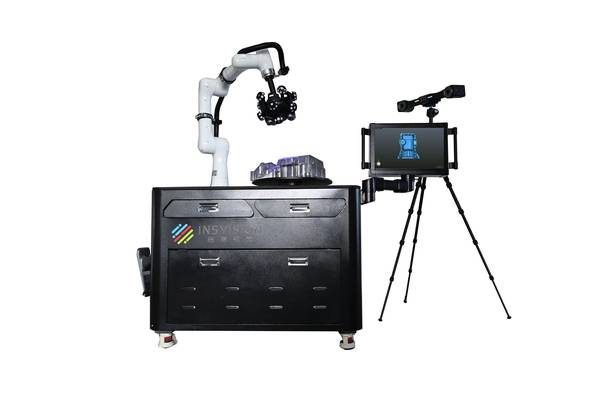
The portable 3D scanner for modeling has moved from a specialized measurement tool to a strategic asset in industrial digital workflows. In 2026, the conversation is no longer about whether to adopt scanning, but how to integrate it into the digital backbone of design, quality, and production.
Manufacturers that align their evaluation criteria with CAD integration, AI-driven processing, environmental resilience, and certification readiness will capture the full value of this technology—faster iterations, tighter quality loops, and a more responsive production system.
Hangzhou Insvision Technology Co., Ltd.
Address: Building 1, No. 1399 Liangmu Road, Yuhang District, Hangzhou, Zhejiang 311121, China
Copyright © Hangzhou Insvision Technology Co., Ltd. All rights reserved.
Copyright © Hangzhou Insvision Technology Co., Ltd. All rights reserved.