

The Precision Engine: How Structured Light Patterns Power Modern Industrial 3D Scanning
For manufacturers navigating the demands of Industry 4.0 and lean production, dimensional verification is a critical bottleneck.
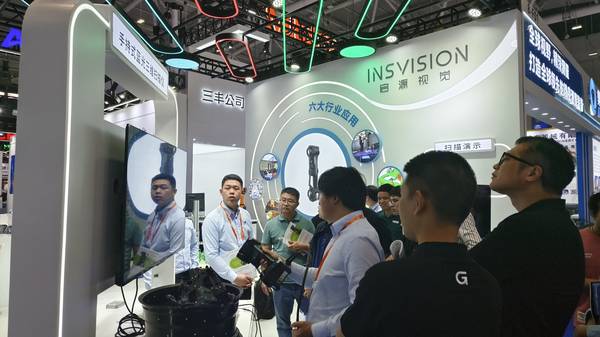
For manufacturers navigating the demands of Industry 4.0 and lean production, dimensional verification is a critical bottleneck. Traditional touch-probe methods and manual inspection are too slow for complex geometries and incompatible with 100% inspection goals. This is where structured light pattern 3D scanning transitions from a laboratory tool to a production-floor essential.
At its core, this technology projects a precise, computer-generated pattern of light onto a target object. High-resolution cameras capture the pattern’s distortion as it contours the surface. Sophisticated algorithms then analyze this distortion to construct a dense, accurate point cloud—a digital twin of the physical part.
This non-contact method captures millions of data points in seconds, providing a complete surface map rather than a sparse set of measured points.
Transforming Core Manufacturing Processes with Structured Light
The operational value of structured light scanning is realized in specific, high-stakes industrial scenarios.
Selection Dimensions and Field Checks
| Focus Area | Decision Point | Deployment Note |
|---|---|---|
| Transforming Core Manufacturing Processes with Structur… | The operational value of structured light scanning is realized in specific, high-stakes industrial scenarios. | Confirm against part conditions, inspection tempo, and data-output requirements. |
| Deploying Structured Light Scanning on the Factory Floor | Successful integration hinges on practical deployment. | Modern systems are engineered for industrial environments, not just climate-controlled labs. |
| Quantifying the Operational Impact | The shift from sampling to full-field inspection delivers measurable returns across key performance indicators. | As global supply chains demand greater transparency and documented quality, proven metrology tools become a strategic advantage. |
- First-Article and In-Process Inspection: In aerospace or automotive manufacturing, validating a first-off part against its CAD model is paramount. A structured light system like the INSVISION AlphaVista performs a full GD&T (Geometric Dimensioning and Tolerancing) analysis in minutes, not hours. It generates a color-coded deviation map, instantly highlighting areas out of tolerance—be it a subtle warpage on a composite panel or a critical bore diameter on an engine block. This allows for rapid tooling adjustments and prevents non-conforming parts from entering assembly.
- Reverse Engineering and Digital Legacy: Many operational facilities rely on legacy components for which original drawings or tooling no longer exist. Structured light scanning creates a definitive digital foundation. By capturing the exact geometry of a worn or obsolete part, engineers can reconstruct a CAD model for reproduction via CNC machining or additive manufacturing. The technology is particularly effective for complex free-form surfaces, undercuts, and blended contours that are challenging for other methods.
- Tool and Mold Validation: For injection molding or die-casting, tool wear directly impacts part quality and production costs. Periodically scanning the tool itself allows for proactive maintenance. Manufacturers can quantify wear on critical sealing faces or erosion in fine details before it leads to part rejection, scheduling refurbishment during planned downtime.
Deploying Structured Light Scanning on the Factory Floor
Successful integration hinges on practical deployment. Modern systems are engineered for industrial environments, not just climate-controlled labs. The INSVISION AlphaVista, for example, operates in a wide temperature range, making it suitable for foundry or post-machining inspection areas. Deployment typically follows a streamlined workflow:
- Part Preparation: The component is placed on a stable fixture or turntable. For optimal results, a matte spray may be applied to highly reflective surfaces.
- Data Capture: Using a handheld scanner or automated setup, an operator guides the unit over the part. Real-time visualization shows the growing point cloud and identifies any unscanned areas, ensuring completeness in a single session.
- Analysis and Reporting: Software automatically aligns multiple scans and registers the data to the nominal CAD coordinate system. Engineers then run standard analyses—deviation, cross-section, wall thickness—and generate audit-ready reports that integrate directly with Quality Management Systems (QMS) for full traceability.
Quantifying the Operational Impact
The shift from sampling to full-field inspection delivers measurable returns across key performance indicators.
- Quality & Risk Mitigation: By inspecting 100% of critical features, manufacturers detect systemic defects—like consistent casting porosity or machining drift—that statistical sampling could miss. This prevents costly downstream failures, warranty claims, and brand reputation damage.
- Throughput & Productivity: Reducing inspection time from hours to minutes compresses lead times and reduces work-in-progress inventory. It enables inspection to keep pace with production flow, supporting just-in-time manufacturing principles.
- Empowered Workforce: Intuitive software with real-time visual guidance standardizes the inspection process, reducing dependency on highly specialized metrology experts and minimizing training overhead.
As global supply chains demand greater transparency and documented quality, proven metrology tools become a strategic advantage. INSVISION’s structured light scanning technology, with its CE, FCC, and CNAS certifications and global deployment, provides the accuracy, speed, and traceability required for modern precision manufacturing.
It moves quality control from a necessary cost center to a integrated, value-driving component of the digital production thread.
Hangzhou Insvision Technology Co.,Ltd.
Address: Building 1, No. 1399 Liangmu Road, Yuhang District, Hangzhou, Zhejiang 311121, China