

Optical Measuring Machines Turn Measurement Bottlenecks into Operational Value
Most plant managers treat dimensional inspection as a fixed overhead—a cost center buried in the quality budget.
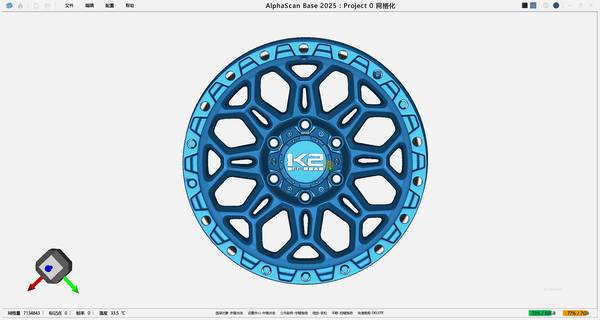
Most plant managers treat dimensional inspection as a fixed overhead—a cost center buried in the quality budget. That assumption quietly drains more cash than anyone tracks. When every production part must shuttle to an offline lab for contact metrology, a bottleneck forms that cascades through the entire schedule. Machines sit idle waiting for first-article approval. Shipments slip while parts queue for final inspection.
And the true cost of that delay rarely appears on a variance report.
This article examines how optical measuring machines change that equation. It moves beyond technical specifications to the operational levers that matter to finance and operations teams: inspection throughput, rework avoidance, labor utilization, delivery cadence, and the long-term asset of traceable quality data.
The goal is not to sell a device, but to provide a clear, repeatable way to evaluate whether faster, shop-floor measurement can strengthen your production economics.
The Hidden Costs of Slow, Offline Inspection
Traditional contact metrology creates a chain of delays and indirect costs that compound over time. Understanding them is the first step toward building a business case for change.
Shuttle time and queue delays. Parts travel from the machine tool to a climate-controlled lab, often on a cart and across the plant. Once there, they join a queue behind other urgent inspections. A casting that took 45 minutes to machine may wait four hours for its dimensional report. During that wait, the machining center cannot run the next part with confidence, and production planning loses flexibility.
Specialized labor dependency. CMM programming and operation demand skilled metrology technicians. These roles command premium wages and are hard to backfill. When the lead inspector is out, inspection throughput drops immediately. Optical measuring machines reduce this dependency by automating scan paths and generating reports with less manual intervention, allowing a broader pool of operators to run routine inspections.
Data latency and transcription errors. Manual data entry from a CMM report into an ERP or quality system introduces lag and mistakes. A transposed digit on a true position callout can trigger a costly internal nonconformance or, worse, ship a defective part. Even when errors are caught, the rework loop consumes engineering time and material.
Delayed feedback to production. When dimensional drift is discovered days after machining, the shop may have already produced a full batch of nonconforming parts. Early detection, ideally at the machine or in a nearby inspection cell, limits the scrap and rework exposure to a handful of pieces rather than a full shift’s output.
These costs are real but often fragmented across departmental budgets. The next section maps how optical measuring machines address them at specific points in the production workflow.
Where Optical Measuring Machines Change the Cost Equation
An optical measuring machine replaces physical touch probes with high-speed cameras, structured light, or laser scanning. The immediate effect is a dramatic reduction in cycle time, but the operational value extends into several interconnected areas.
Incoming Inspection: Stop Defects Before They Enter Production
High-value castings, forgings, and fabricated weldments often arrive with dimensional variation that only surfaces during machining. A manual layout inspection on a large casting can consume hours of a senior inspector’s time.
An optical measuring machine, such as INSVISION’s AlphaVista system, can complete a full-frame scan of a casting over 500 mm in under 15 minutes and generate a color-mapped deviation report before the next shift begins. This speed allows 100% dimensional verification of critical incoming parts, reducing the defect escape rate that leads to expensive in-process rework.
First-Article Inspection: Compress the Approval Window
First-article inspection (FAI) is a gate that holds up production release. Traditional CMM programming for a complex part with dozens of GD&T callouts can take a full day. Optical systems accelerate FAI by capturing millions of points in a single scan and automatically extracting features against the CAD model.
The result is a complete dimensional report in a fraction of the time, enabling production to ramp up sooner and with greater confidence. For contract manufacturers, faster FAI also means quicker customer approvals and improved cash-to-cash cycles.
In-Process Measurement: Move Inspection to the Shop Floor
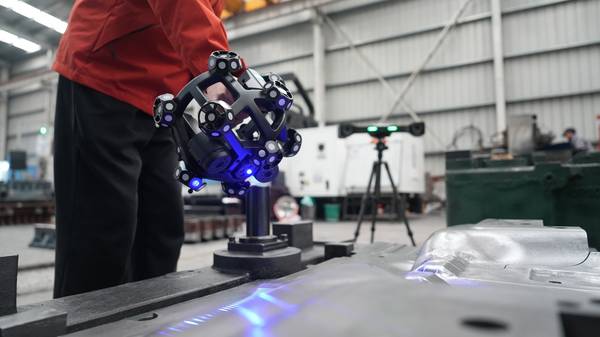
The most significant operational shift comes from relocating measurement out of the lab and next to the machine tool. An optical measuring machine built for industrial environments can operate in ambient light and moderate temperature swings, delivering metrology-grade results without a dedicated enclosure.
Operators can check critical dimensions between cycles, adjust offsets immediately, and avoid producing an entire batch of out-of-tolerance parts. This closed-loop feedback reduces scrap, rework, and the machine downtime associated with waiting for lab results.
Final Inspection and Quality Traceability
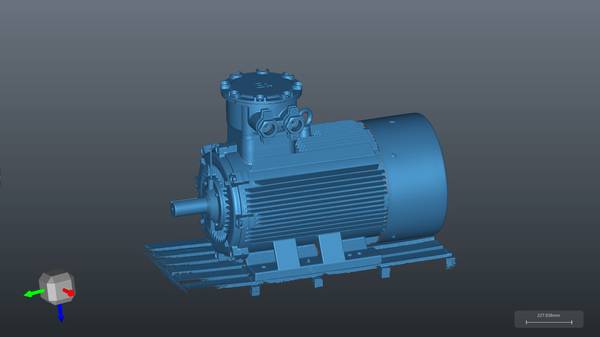
At the end of the line, optical measuring machines generate a digital twin of every inspected part. That data becomes a permanent quality record, searchable by serial number, date, or production batch. When a customer questions a dimension, the manufacturer can retrieve the full point cloud and deviation map instead of digging through paper reports.
This traceability strengthens customer trust and can reduce the administrative cost of quality disputes and audits.
A Procurement-Aligned Framework to Calculate ROI
An optical measuring machine delivers measurable return only when procurement and finance teams can isolate and quantify existing workflow costs before deployment. The following framework provides a repeatable method to capture real input data and project defensible improvements—without relying on vendor-supplied savings claims.
30-Day Benchmark Protocol
Before populating any ROI model, establish a baseline using a 30-day observation window. Designate one quality engineer to log:
- Inspection cycle time per part number, from part arrival at the lab to report delivery.
- Number of parts inspected per day and the resulting queue length.
- Rework incidents traceable to measurement delays or transcription errors, including labor and material costs.
- Machine downtime events where the root cause was waiting for inspection results.
- Expediting costs (overtime, premium freight) incurred to recover schedule slippage linked to inspection bottlenecks.
Cost Category Mapping
Map the logged data into four cost categories that resonate with operations leadership:
| Cost Category | What to Measure | How an Optical Measuring Machine Reduces It |
|---|---|---|
| Inspection labor | Hours spent on setup, scanning, and reporting per part | Cycle time reduction frees technician capacity for higher-value tasks; routine scans can be run by operators |
| Rework and scrap | Material, labor, and machine time consumed by nonconforming parts produced during the inspection lag | In-process measurement catches drift early, limiting scrap to single pieces rather than full batches |
| Machine utilization | Lost machining hours due to waiting for first-article approval or in-process checks | Faster measurement shortens the feedback loop, keeping spindles turning |
| Delivery penalties and expediting | Overtime, air freight, and customer concessions caused by late shipments | Predictable inspection throughput stabilizes the production schedule and reduces firefighting |
Building the Projection
For each part family under consideration, compare the baseline cycle time with the projected optical measurement cycle time provided by the vendor and validated through a benchmark part trial. Multiply the time delta by the annual inspection volume to estimate labor savings. Add the avoided rework costs based on historical defect rates and the value of recovered machine hours.
The resulting annualized figure becomes the core of the capital expenditure justification.
INSVISION supports this process with on-site time studies and application engineering that help manufacturers build a credible, data-backed business case rather than relying on generic industry averages.
INSVISION’s Operational Impact: From Scan to Schedule
INSVISION’s optical measuring machines—including the AlphaScan, AlphaVista, and X-Track systems—are engineered to integrate into production workflows, not just quality labs. Their value appears in the operational rhythm of the plant.
AlphaVista handles large-format components such as castings, weldments, and composite structures. Its full-frame scanning capability turns an hours-long layout inspection into a sub-15-minute routine, freeing floor space and reducing the bottleneck at incoming and final inspection.
X-Track brings optical measurement directly to the production line. By tracking the part and sensor position in real time, it eliminates the need to fixture every component precisely. Operators can scan parts in situ, receive immediate dimensional feedback, and make corrections without breaking the production cadence.
This capability is especially valuable for manufacturers running high-mix, low-volume production where changeover time is a critical cost driver.
AlphaScan provides high-resolution, metrology-grade scanning for smaller, intricate parts where GD&T requirements are tight. Its speed and automation reduce the reliance on senior metrology programmers for routine first-article and in-process checks.
Across all three systems, the common thread is a shift from offline, batch-oriented inspection to inline, event-driven measurement. The operational result is not just a faster measurement cycle, but a more predictable production schedule, lower rework costs, and a quality record that builds customer confidence.
Low-Risk Implementation: Three Entry Points for Early ROI
A full-scale deployment is rarely the right first step. Three focused entry points allow a plant to capture measurable value within weeks while building internal capability.
- Incoming inspection of high-value components. Start with castings, forgings, or purchased subassemblies where dimensional errors cascade into expensive machining rework. Deploy an optical measuring machine at receiving to verify critical features on every part. The immediate benefit is a reduction in defect escapes and the associated disruption to the production schedule. This scenario typically shows the fastest payback because the cost of a bad casting discovered during machining is many times higher than catching it at the dock.
- First-article inspection on a single production family. Select a part family with complex GD&T requirements and a history of lengthy FAI cycles. Use the optical system to generate full dimensional reports and compare the throughput against the existing CMM-based process. Document the reduction in machine idle time and the faster release to production. This controlled pilot builds confidence among quality and manufacturing engineers and generates the data needed to expand the deployment.
- In-process measurement at a bottleneck machining cell. Identify a machine center where operators frequently wait for lab results before continuing a run. Place an optical measuring machine adjacent to the cell and train operators to perform critical dimensional checks between cycles. The goal is to close the feedback loop and eliminate the wait. Even a modest reduction in machine downtime at a bottleneck operation can deliver disproportionate throughput gains.
Each entry point generates its own cost data, which feeds back into the ROI framework and strengthens the case for broader adoption.
A Measurement Investment That Pays Back in Production Rhythm
Optical measuring machines are often evaluated through a narrow quality lens. The larger opportunity lies in their ability to remove a persistent operational bottleneck that slows production, inflates labor costs, and erodes delivery reliability.
By moving measurement from an offline lab to the point of production, manufacturers can shorten the feedback loop between machining and inspection, reduce rework exposure, and build a digital quality record that serves both internal continuous improvement and external customer assurance.
The most effective way to evaluate that potential is not through a generic ROI calculator, but through a structured, 30-day benchmark of your own inspection workflows. The numbers that emerge will tell you whether an optical measuring machine belongs in your capital plan—and where to deploy it first for the fastest operational return.
Hangzhou Insvision Technology Co., Ltd.
Address: Building 1, No. 1399 Liangmu Road, Yuhang District, Hangzhou, Zhejiang 311121, China
Copyright © Hangzhou Insvision Technology Co., Ltd. All rights reserved.
Copyright © Hangzhou Insvision Technology Co., Ltd. All rights reserved.