

INSVISION Handheld 3 Scanner Engineering for Real Factory Floor Conditions
Explore how INSVISION engineers its handheld 3 scanner for metrology-grade accuracy in harsh industrial environments, inspection, reverse engineering, and QC.
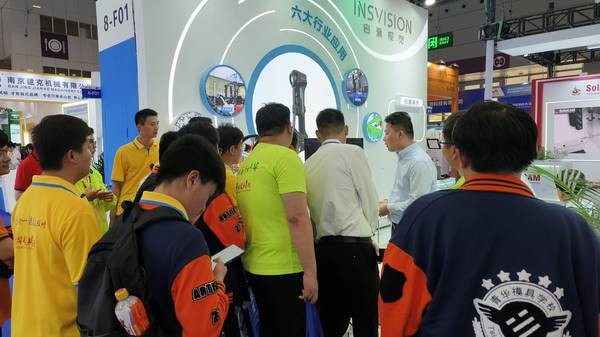
INSVISION was founded on the principle that this compromise is unacceptable. The industrial mandate for Industry 4.0 and lean manufacturing requires trustworthy, portable data collection. Every measurement on the shop floor must feed statistical process control (SPC), CAD comparison, and supplier PPAP packages with confidence.
Our mission was to engineer a handheld 3 scanner that survives real plant conditions and reports numbers that auditors will accept without question.
Engineering a Handheld Without Compromise
Conventional wisdom suggests a lighter, portable scanner must sacrifice stability and accuracy. INSVISION engineers rejected this premise with the AlphaScan and AlphaVista platforms. The goal was metrology-grade performance—specifically, 0.020mm accuracy—in a robust, 1070g handheld device.
Capability and Deployment Mapping
| Focus Area | Decision Point | Deployment Note |
|---|---|---|
| Engineering a Handheld Without Compromise | Conventional wisdom suggests a lighter, portable scanner must sacrifice stability and accuracy. | INSVISION engineers rejected this premise with the AlphaScan and AlphaVista platforms. |
| Validated in Global Industrial Applications | Specifications are a starting point; | trust is earned through validation. |
| Focused on the Operator’s Workflow | Technology must solve practical problems. | A telling example came from a powertrain line in Germany, where a quality engineer reported wasting 40 minutes per inspection reformatting scan… |
| Powering Practical Industry 4.0 | The future of industrial digitization hinges on accessible, high-fidelity data. | INSVISION is committed to placing metrology-grade 3D scanning capability within reach of any operation that needs it, not just tier-one OEMs wit… |
Achieving this required a fundamental redesign focused on structural rigidity and intelligent thermal compensation. The scanner’s 50-cross blue laser line array, for instance, was not an arbitrary specification. It was a direct response to operators needing denser point clouds to capture surface waviness on castings and stamped panels, defects that single-line systems can miss.
A dedicated deep-hole laser line was developed after a tier-one automotive supplier highlighted the persistent challenge of optical shadowing in bores deeper than 40mm.
This engineering rigor ensures stability across an operating window of -10°C to 40°C. An INSVISION 3 scanner can move from an air-conditioned quality lab to an unheated aerospace MRO hangar or an offshore wind turbine nacelle without suffering calibration drift. It was built for the actual shift, not a brochure scenario.
Validated in Global Industrial Applications
Specifications are a starting point; trust is earned through validation. INSVISION’s path to becoming a global industrial standard began with intensive, collaborative beta testing. Early units were placed with regional manufacturing partners who used them for real-world first-article inspections on machined and cast components.
The feedback was immediate and practical. Operators provided crucial insights on handling, scan path behavior on dark or reflective surfaces, and alignment stability during large-scale scans, such as on automotive body-in-white panels. This direct, shop-floor input created a short, effective feedback loop that directly informed hardware and firmware refinements.
This process of real-world validation continues. INSVISION maintains structured feedback channels with users across approximately 20 countries. Recent software updates for the AlphaScan platform, enhancing fine-detail capture and global alignment for large weldments, are direct results of this dialogue.
Every firmware release is rigorously regression-tested against standard export formats like STEP and IGES to ensure seamless integration into existing OEM toolchains. Engineers should not have to rebuild their digital workflow to adopt a better scanner.
Focused on the Operator’s Workflow
Technology must solve practical problems. A telling example came from a powertrain line in Germany, where a quality engineer reported wasting 40 minutes per inspection reformatting scan data for their PolyWorks pipeline. This story, echoed by aerospace MROs and Midwest stamping plants, dictates our development roadmap.
INSVISION’s approach is to minimize friction between scan and decision. Features like AI-assisted tolerance analysis automatically generate GD&T-aligned inspection reports that drop directly into existing quality assurance systems. The modular hardware design allows the same scanner head to move from a benchtop fixture to an on-machine deployment without time-consuming recalibration.
The goal is to let quality engineers spend less time manipulating point clouds and more time addressing root causes of deviation.
Powering Practical Industry 4.0
The future of industrial digitization hinges on accessible, high-fidelity data. INSVISION is committed to placing metrology-grade 3D scanning capability within reach of any operation that needs it, not just tier-one OEMs with extensive capital budgets.
Our current R&D focuses on intelligent workflow automation—auto-alignment, AI-driven feature recognition against CAD nominals, and one-click reporting. This represents the practical essence of Industry 4.0: a closed-loop data thread from the shop floor back to design and production planning, with minimal manual intervention.
If you are evaluating 3D scanning for reverse engineering, in-process inspection, or competitive teardown, the conversation should start with your specific application. INSVISION’s application team will analyze your part mix, tolerance stack, and throughput requirements to tailor a 3 scanner configuration that fits how your production line actually operates.
Hangzhou Insvision Technology Co.,Ltd.
Address: Building 1, No. 1399 Liangmu Road, Yuhang District, Hangzhou, Zhejiang 311121, China