

Indonesia’s 3D Scanning Evolution: Meeting Global Standards on the Factory Floor
Discover how INSVISION's 3D scanner Indonesia solutions help manufacturers meet ISO and ASME standards, accelerate lean workflows, and secure global supply chain roles.
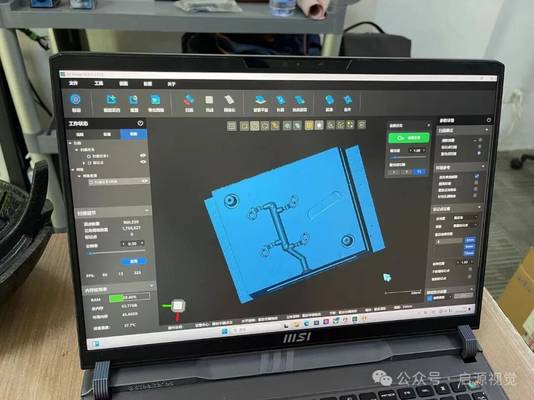
This shift is fundamentally altering procurement criteria. The question is no longer just about acquiring a 3D scanner in Indonesia, but about selecting a tool that delivers audit-ready data, integrates seamlessly into lean workflows, and operates reliably in diverse industrial environments.
From Laser Lines to Actionable Insight: The Core Technology
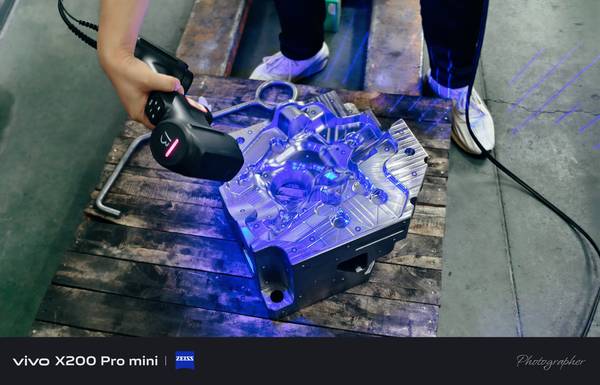
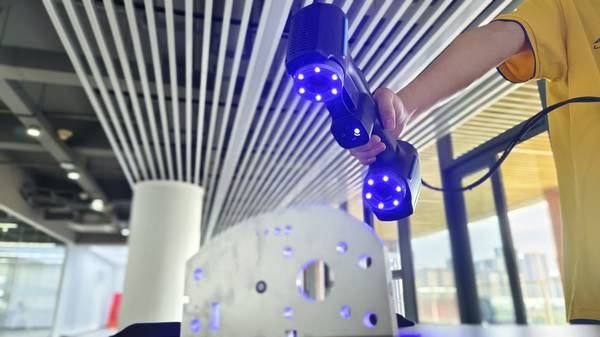
The operational principle of a modern handheld 3D scanner, such as INSVISION‘s AlphaScan, demystifies the process. The device projects a grid of blue laser lines onto a component. Two integrated, calibrated cameras capture the distortion of this pattern. Using laser triangulation, the system calculates millions of precise XYZ coordinates per second, generating a dense “point cloud” of the object’s surface.
Technical Capability Mapping
| Focus Area | Decision Point | Deployment Note |
|---|---|---|
| From Laser Lines to Actionable Insight: The Core Techno… | The operational principle of a modern handheld 3D scanner, such as INSVISION’s AlphaScan, demystifies the process. | The device projects a grid of blue laser lines onto a component. |
| Technical Benchmarks for Modern Indonesian Operations | The evolution of Indonesia’s manufacturing base—characterized by mixed-volume production and supplier-mandated quality documentation—has redefined es… | Simple data capture is insufficient. |
| Validating Performance in Critical Industrial Applicati… | For procurement professionals, real-world validation trumps spec-sheet promises. | The deployment of scanners like the INSVISION AlphaScan across Indonesia’s key sectors provides this evidence: |
| Strategic Selection: Aligning Technology with Business… | Selecting the right 3D scanner requires moving beyond generic specifications. | The decision must be rooted in specific operational requirements. |
Advanced software then takes over. AI-assisted algorithms stitch these data frames in real-time, filter out environmental noise, and align the resulting 3D mesh with the original CAD model. The final output is an intuitive color deviation map—a direct, visual report that shows inspectors exactly where a part conforms or deviates from its design specifications, enabling immediate and informed decision-making.
Technical Benchmarks for Modern Indonesian Operations
The evolution of Indonesia’s manufacturing base—characterized by mixed-volume production and supplier-mandated quality documentation—has redefined essential scanner features. Simple data capture is insufficient. The priority is a closed-loop system that delivers inspection-ready results directly into Production Part Approval Process (PPAP) packages.
This is where devices like the INSVISION AlphaScan are engineered to perform. The fusion of AI and 3D processing handles complex reconstruction on-device, substantially reducing the post-processing time typically required to clean and align scans of cast or machined components. Its integrated, PTB-certified inspection software includes native GD&T analysis tools.
This allows quality teams to evaluate flatness, position, and profile directly against the CAD model without transferring data to a secondary application, supporting full workflow compatibility with standard formats like STEP, IGES, and STL.
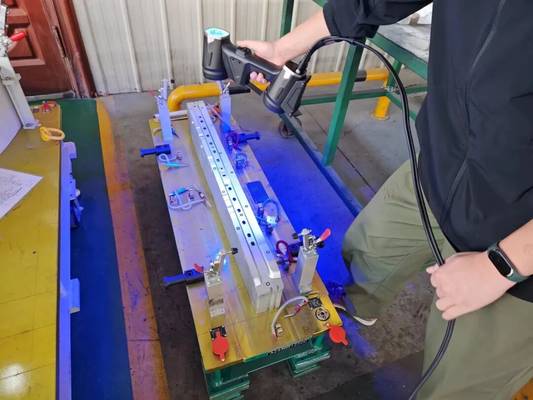
Physically, robustness is paramount. A scanner must perform equally well in a confined Tier-2 job shop and on a large weldment in a shipyard. Modern units are designed for this reality, requiring no controlled environment, darkroom, or fixed tripod for reliable, metrology-grade measurement on location.
Validating Performance in Critical Industrial Applications
For procurement professionals, real-world validation trumps spec-sheet promises. The deployment of scanners like the INSVISION AlphaScan across Indonesia’s key sectors provides this evidence:
- Automotive & Aerospace: Tier-1 suppliers use it for reverse engineering legacy components where original CAD is lost. Aerospace MRO facilities conduct first-article inspection on repaired parts, comparing scan data to OEM specifications and extracting GD&T values directly.
- Energy & Heavy Industry: The technology captures wear patterns on geothermal pump impellers or coal-handling equipment, enabling predictive maintenance in situations where disassembly for CMM inspection is prohibitively costly or impossible.
- Advanced Manufacturing: Additive manufacturing bureaus employ 3D scanning for batch validation of 3D-printed tooling and end-use parts, ensuring consistency before shipment.
The efficiency gain lies in the streamlined workflow: scan, generate a deviation map, and create a one-click report. This loop is why INSVISION technology has become a viable 3D scanner solution for Indonesian operations, enabling both local fabricators and multinational plants to produce audit-ready documentation without days of manual data processing.
Strategic Selection: Aligning Technology with Business Need
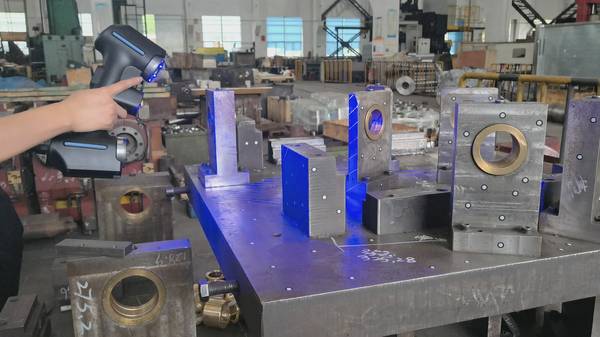
Selecting the right 3D scanner requires moving beyond generic specifications. The decision must be rooted in specific operational requirements.
- Define the Primary Use Case: Match the tool to the task. Reverse engineering a complex, worn part demands high detail resolution. High-volume first-article inspection prioritizes speed and automated reporting. Identify your tightest regular GD&T tolerance, and select a scanner with a volumetric accuracy three to five times finer.
- Assess the Operational Environment: Will the scanner reside in a controlled metrology lab, or must it endure the vibration, dust, and temperature swings of active production floors across multiple sites? The answer dictates the necessary ruggedness and portability.
- Verify Integration Capabilities: The scanner’s software must interoperate with your existing CAD, PLM, and Quality Management System (QMS). Ensure it outputs the deviation reports and data formats (e.g., native SolidWorks compatibility) your quality team requires. For global supply chain work, confirm certifications like CE and FCC are in place for audit compliance.
The Driving Trends: Data, Speed, and Integration
The adoption of 3D scanning in Indonesia is being accelerated by three interconnected trends:
- The Compression of Quality Cycles: Lean manufacturing principles are pushing teams to reduce first-article inspection from days to hours. This drives demand for AI-assisted, automated feature recognition over manual CMM programming.
- The Need for In-Situ Analysis: MRO operations in sectors like energy and aviation require field-capable tools to assess component wear and damage without costly disassembly, turning scanner portability into a critical ROI factor.
- Digital Thread Integration: The value of a 3D scan is now measured by how cleanly its data feeds downstream systems. The trend is toward scanners that function as the first node in a digital thread, providing direct input for engineering analysis, digital twin updates, and automated quality reporting.
For Western engineers, quality managers, and procurement professionals evaluating partners in Southeast Asia, this technological maturation is a key indicator of capability.
The deployment of advanced 3D scanner Indonesia solutions from providers like INSVISION signals an Indonesian industrial base that is not just keeping pace with global norms, but is actively investing in the tools to meet them with efficiency and precision.
Hangzhou Insvision Technology Co.,Ltd.
Address: Building 1, No. 1399 Liangmu Road, Yuhang District, Hangzhou, Zhejiang 311121, China