

A Manager’s Guide to Using a 3D Scanner for Cars to Lower Cost and Rework
Discover how a 3D scanner for cars lowers rework, reduces cycle time, and drives lean manufacturing. A manager's guide to operational ROI with INSVISION.
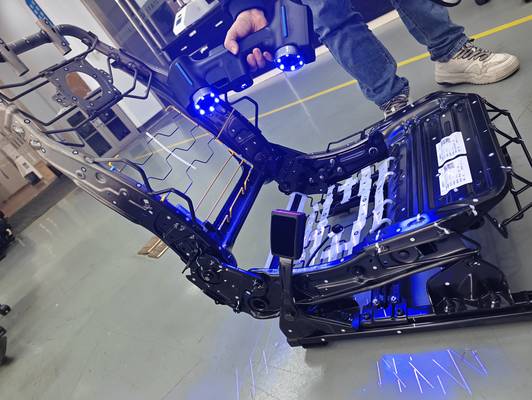
This creates a hidden cost structure, not just in equipment, but in delayed decisions, unplanned downtime, and scrap. This guide shifts the perspective from evaluating a 3D scanner for cars as a pure technical instrument to assessing it as a strategic tool for operational efficiency within Industry 4.0 frameworks.
We will outline how modern automotive 3D scanning integrates into core workflows to deliver tangible business value.
Identifying the Core Cost Drivers in Traditional Workflows
The true cost of quality and verification extends beyond the price of a measuring device. Key pain points include:
- Measurement Cycle Bottlenecks: Offline CMM inspection or manual templating creates a queue, delaying the release of parts to the next production stage and slowing the overall feedback loop for process adjustments.
- Rework and Scrap Costs: Defects discovered late in the process, such as after assembly or paint, incur exponentially higher rework costs compared to catching them at the stamping, welding, or sub-assembly stage.
- Skilled Labor Dependency and Variability: Consistent results depend on highly trained operators, creating a staffing challenge and introducing human error into critical dimensional reporting.
- Data Silos for Continuous Improvement: Disconnected datasets from spot checks make it difficult to perform statistical process control (SPC) or create a digital thread for tracing a defect back to a specific tool, fixture, or batch.
The Operational Efficiency Path: How 3D Scanning Addresses These Costs
Integrating a metrology-grade 3D scanner for cars transforms these pain points into controlled, data-driven processes.
- Inline/At-Line Inspection → Reduced Cycle Time & Faster Feedback
- Pain Point: Waiting days for CMM results stalls production decisions.
- Improvement Path: Deploying a portable or automated 3D scanner for cars directly on the shop floor allows for immediate first-article inspection (FAI) and in-process checks. Critical dimensions and GD&T can be verified in minutes, not days.
- Observable Value: Drastically shortened measurement-to-decision time, enabling faster part approval and more responsive process tuning.
- Comprehensive Surface Analysis → Proactive Rework Reduction
- Pain Point: Spot-checking misses subtle surface deviations, leading to assembly issues or aesthetic rejects discovered late.
- Improvement Path: Full-field automotive 3D scanning captures the entire part surface, generating color deviation maps that instantly visualize warping, springback, or fit issues against the CAD master.
- Observable Value: Early identification of forming or welding distortions allows for corrective action before parts move downstream, directly reducing scrap and costly late-stage rework.
- Digital Workflow Integration → Lowered Labor Burden & Enhanced Consistency
- Pain Point: Manual data recording and report generation are slow and inconsistent.
- Improvement Path: Automated scanning routines and integrated software (like INSVISION‘s all-in-one platforms) guide operators through inline 3D inspection for automotive, automate reporting, and archive results directly to a central database.
- Observable Value: Reduced training time for reliable operation, minimized human error in reporting, and freeing skilled metrologists for analysis rather than data collection.
A Framework for Calculating Operational Value
To evaluate a 3D scanner for cars and its business impact, move beyond the purchase price. Build a Total Cost of Ownership (TCO) and Return on Investment (ROI) model that includes these operational factors:
| Evaluation Dimension | Key Questions for Your Team | Potential Impact Area |
|---|---|---|
| Acquisition & Integration | Does the price include processing software? What is the cost and timeline for integration into our quality management system (QMS)? | Upfront capital outlay, IT/engineering labor. |
| Operational Efficiency | How much faster is a full scan vs. our current method for automotive manufacturing 3D scanning? Can it be used by existing floor technicians? | Reduced labor hours per inspection, faster throughput. |
| Quality Cost Avoidance | How might earlier defect detection reduce scrap rates? Can scan data help us resolve root causes faster? | Lower material waste, reduced rework labor, less production downtime. |
| Ongoing Costs | Are there annual software licenses or mandatory calibration fees? What is the typical service response time? | Predictable operational expenditure (OpEx), cost of unscheduled downtime. |
| Data & Asset Value | Does the system create reusable digital assets (e.g., CAD for reverse engineering, historical SPC data)? | Future value in tooling refurbishment, process optimization, and digital twin initiatives. |
Where INSVISION Delivers Tangible Operational Improvements
INSVISION focuses on minimizing friction in the adoption and daily use of 3D scanning. This translates to specific operational benefits:
- Reduced Implementation Time: Systems like the INSVISION AlphaScan are engineered for shop-floor use, with intuitive, all-in-one software that significantly shortens the operator training curve. This gets the technology delivering value faster.
- Streamlined Workflow from Scan to Report: The integrated software stack handles alignment, analysis, and reporting in a single environment, eliminating the cost and complexity of managing multiple proprietary software licenses and the data transfer errors that can occur between them.
- Support for Scalable Deployment: From portable units for flexible tooling inspection to automated solutions for high-volume part verification, the technology stack is designed to grow with your application needs, protecting your initial process and data investment.
Recommended Implementation Strategy: Start with Focused, High-ROI Scenarios
A successful rollout begins with a controlled pilot that demonstrates clear value. We recommend starting with one of these well-contained applications:
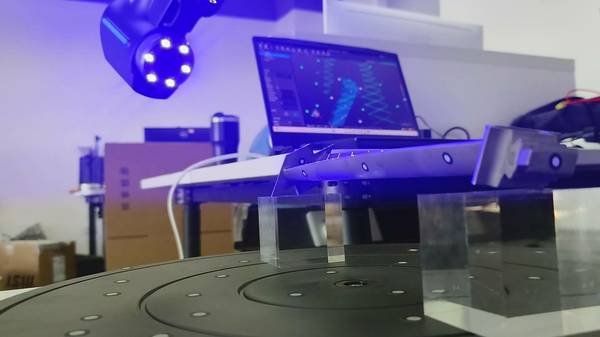
- First-Article Inspection (FAI) for New Tooling: Replace lengthy CMM programming and manual reports with a 3D scanner for cars. This delivers immediate value by accelerating the approval of new molds, dies, or fixtures, getting production started sooner.
- Root-Cause Analysis for Chronic Fit/Finish Issues: Apply scanning to diagnose recurring assembly problems—such as door gap inconsistencies or panel flushness. The comprehensive deviation data provides unambiguous evidence to drive corrective actions with tooling or process engineers.
- Reverse Engineering for Legacy or Digital-Only Parts: Digitize physical components for which CAD models are outdated or nonexistent. This creates a vital digital asset for reproduction, repair, or integration into a digital twin, extending the lifecycle of existing assets.
Conclusion
Within strict ISO/ASME frameworks, incremental gains in efficiency and quality directly strengthen the bottom line. A 3D scanner for cars, evaluated through the lens of operational cost and workflow integration, is more than a measuring device—it is an enabler for leaner manufacturing, more predictable quality, and data-driven decision-making.
By starting with a targeted use case and a clear framework for measuring operational impact, production and quality leaders can build a compelling case for an investment that pays dividends in reduced waste, accelerated cycles, and enhanced manufacturing agility.
Hangzhou Insvision Technology Co.,Ltd.
Address: Building 1, No. 1399 Liangmu Road, Yuhang District, Hangzhou, Zhejiang 311121, China