

A Manager’s Guide to Laser Profilometer Price and Operational Value in Precision Manufacturing
Evaluating laser profilometer price goes beyond the initial tag. Learn how 3D scanning delivers ROI by reducing scrap, rework, and inspection bottlenecks.
Introduction: The Drive for Cost Reduction and Efficiency in Manufacturing
For manufacturing leaders, the pressure to optimize cost structures while maintaining stringent quality standards is constant. Aligned with Lean manufacturing principles, the challenge is no longer just about producing more, but about producing smarter—minimizing waste, maximizing throughput, and ensuring every operational investment delivers a clear return.
Scenario Snapshot
A practical way to read the article is through this scenario:
- Introduction: The Drive for Cost Reduction and Effi…: For manufacturing leaders, the pressure to optimize cost structures while maintaining stringent quality standards…
- Cost Pain Points: Inefficiencies in Traditional Mea…: The financial drain of conventional inspection is multifaceted.
- Cost Reduction Pathways: 3D Scanning Across Product…: Implementing a laser profilometer reshapes these cost centers by transforming a manual, point-based process into a…
A significant, yet often opaque, cost center lies within the measurement, inspection, and rework cycle. Traditional manual methods create bottlenecks, introduce human variability, and delay critical data needed for process control.
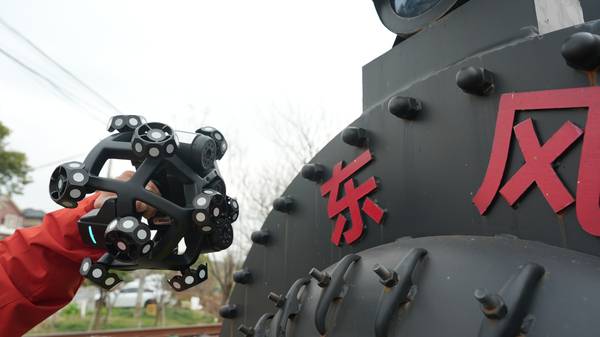
This analysis moves beyond a technical specification sheet to examine the operational and financial logic behind integrating 3D laser scanning for measurement. We will dissect how the true laser profilometer price is defined not merely by its initial hardware tag, but by its impact on efficiency, rework rates, labor allocation, and overall production velocity.
Cost Pain Points: Inefficiencies in Traditional Measurement, Inspection, and Rework
The financial drain of conventional inspection is multifaceted. It extends beyond the hourly wage of a quality technician. The industrial laser profilometer price must be weighed against these ongoing operational leaks.
- Cycle Time Inefficiency: Manual data collection with calipers or CMM touch probes is sequential and slow. A complex part might require dozens of individual measurements, creating a queue that delays the release of batches to subsequent operations or shipping.
- Hidden Rework and Scrap Costs: Discrepancies discovered late in the production process are exponentially more expensive. A component failing final inspection may require disassembly, re-machining, or result in total scrap, consuming materials, machine time, and labor already invested.
- Skilled Labor Dependency and Variability: Consistent results rely on highly trained personnel. Fatigue, interpretation differences, and training gaps can lead to measurement drift, risking false passes or unnecessary fails against ISO/ASME standards.
- Data Silos and Reactive Quality: Paper-based logs or disconnected digital records make trend analysis difficult. Quality becomes a checkpoint activity rather than a proactive, data-driven process for root cause analysis and preventive action.
Cost Reduction Pathways: 3D Scanning Across Production Stages
Implementing a laser profilometer reshapes these cost centers by transforming a manual, point-based process into an automated, area-based data stream.
- Stage: First-Article Inspection and In-Process Checks
- Pain Point: Time-consuming setup and measurement limit frequency, increasing risk of prolonged deviation.
- Improvement Method: Non-contact scanning captures high-density data points in seconds, enabling full-surface deviation analysis against the CAD nominal. First-article inspection (FAI) reports are generated automatically.
- Observable Value: Drastically reduced FAI time enables more frequent in-process checks. Early detection of tool wear or fixture drift prevents batch-level defects.
- Stage: Rework and Scrap Management
- Pain Point: Lack of comprehensive data makes rework decisions guesswork. Is the part salvageable? Where exactly is the excess material?
- Improvement Method: High-resolution 3D scans create a precise “as-built” digital twin. Deviation maps visually pinpoint out-of-tolerance areas for targeted correction, or provide data for adaptive re-machining.
- Observable Value: Reduced scrap rates by accurately determining rework feasibility. Minimized over-correction saves material and machining time.
- Stage: Labor Deployment and Skill Utilization
- Pain Point: Skilled technicians spend excessive time on repetitive data collection rather than analysis.
- Improvement Method: Automating the data capture phase frees personnel to focus on interpreting results, investigating outliers, and improving process parameters.
- Observable Value: Better utilization of skilled labor. Reduced training overhead for basic measurement tasks and lower risk of human error in data acquisition.
Operational Value Calculation Framework
To evaluate the laser profilometer price and its associated ROI, move beyond hardware costs. Build a simple model based on your own operational data to assess the true cost of a laser profilometer versus its financial return:
| Evaluation Dimension | Key Questions | Data Source |
|---|---|---|
| Efficiency Gains | What is the current time per inspection stage (FAI, in-process, final)? How many inspections per week? | Production logs, quality department records. |
| Rework/Scrap Costs | What is the average cost (material + labor + overhead) of one scrapped part? What is the monthly volume of rework/scrap attributed to measurement-related issues? | Cost accounting, scrap tickets. |
| Labor Impact | How many hours per week are dedicated to manual measurement tasks? What is the fully burdened hourly rate for that technician? | Time studies, payroll and overhead calculations. |
| Delivery Cadence | Do inspection bottlenecks delay order release? Can faster inspection enable more production runs or faster response to engineering changes? | On-time delivery metrics, production scheduling meetings. |
Where INSVISION Delivers Measurable Operational Improvements
INSVISION aligns hardware and software with these operational goals. The value is realized in predictable deployment and sustained accuracy.
For procurement teams assessing laser profilometer price, INSVISION addresses the total cost of ownership by providing clear, tiered pricing models that bundle critical post-purchase elements. This transparency allows for accurate budget forecasting, contrasting with models where calibration, software updates, and integration support appear as recurring hidden costs.
Operationally, INSVISION systems are engineered for shop-floor environments, delivering metrology-grade data without the need for a controlled lab. This means the tool can be deployed directly at the incoming inspection station, the machining cell, or the assembly line—wherever the data gap exists.
The ability to generate immediate, actionable reports (like color deviation maps or GD&T summaries) turns measurement from a gatekeeping function into a continuous feedback loop for production teams.
Implementation Strategy: Initial Actionable Scenarios
When justifying the laser profilometer price, a phased implementation minimizes disruption and demonstrates quick wins.
- Target a High-Cost Rework Loop: Identify a part with a historically high scrap or rework rate. Implement the laser profilometer at the final inspection point pre-assembly. The full-field data will precisely diagnose the failure mode, informing whether the fix is a supplier conversation, a machine calibration, or a targeted rework procedure. The ROI is directly tied to reducing the monthly cost of that specific failure.
- Automate a Bottleneck Inspection: Choose the most time-consuming first-article inspection in your workflow. Replace the manual checklist with an automated 3D scan program. Measure the time saved per FAI and multiply by the frequency. This frees up skilled labor and accelerates the release of new batches into production.
- Digitize Supplier Component Validation: For critical purchased components, replace sample-based checks with full inspection for key dimensions using a fixed scan station. This creates an objective, data-rich record for supplier quality discussions, potentially reducing incoming defects and associated line-down risks.
Strategic Takeaway
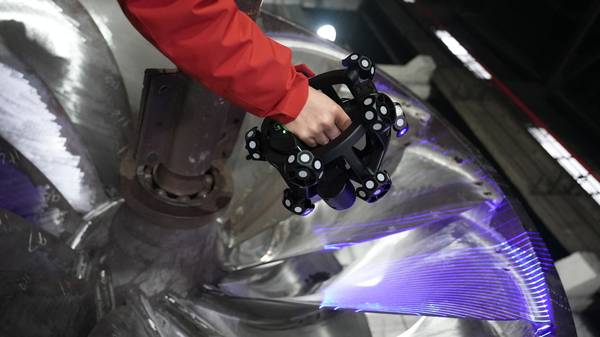
The strategic question for manufacturing leaders is not merely the laser profilometer price, but “what is the cost of not knowing?” The operational value of advanced 3D measurement is quantified in recovered capacity, avoided waste, and accelerated throughput.
By framing the 3D laser profilometer investment through the lens of specific cost centers—inspection cycle time, rework, and labor deployment—the business case shifts from a capital expense for a quality tool to an operational investment in Industry 4.0 flow, predictability, and continuous improvement. The goal is to turn quality data from a retrospective cost into a proactive asset.
Hangzhou Insvision Technology Co., Ltd.
Address: Building 1, No. 1399 Liangmu Road, Yuhang District, Hangzhou, Zhejiang 311121, China
Copyright © Hangzhou Insvision Technology Co., Ltd. All rights reserved.
Copyright © Hangzhou Insvision Technology Co., Ltd. All rights reserved.