

Exposure in 3D Scanning
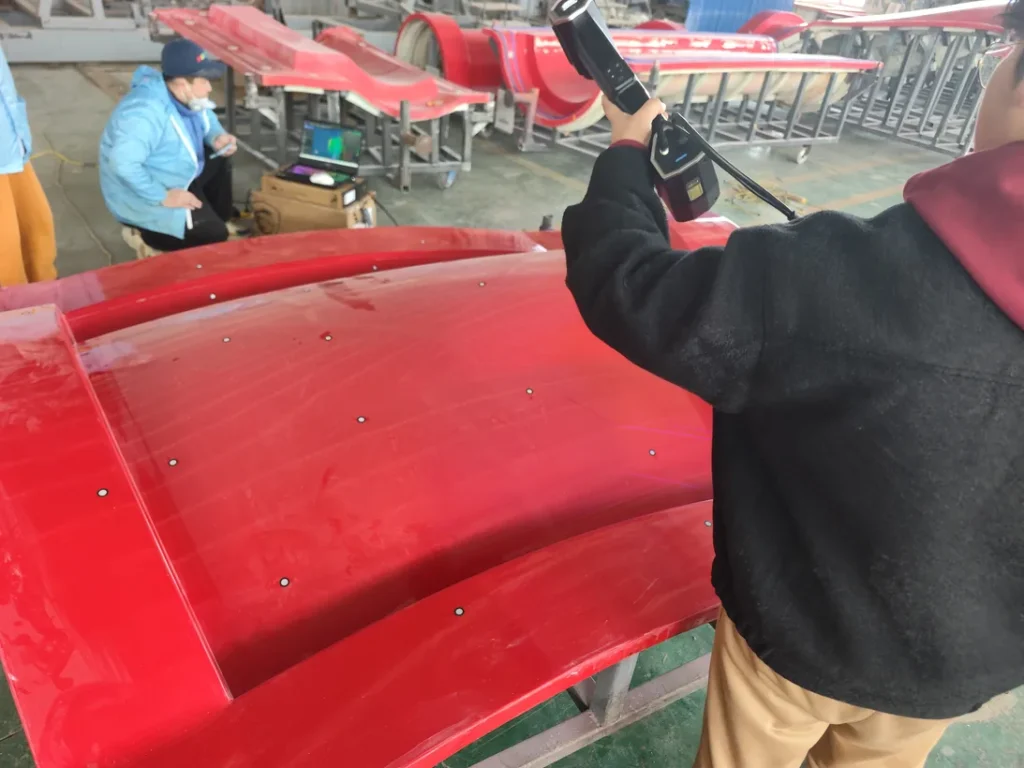
Exposure in 3D scanning refers to the set of parameters that control the amount of reflected light captured by an optical 3D scanning system’s imaging sensors during a single data acquisition frame.
Definition
Exposure in 3D scanning refers to the set of parameters that control the amount of reflected light captured by an optical 3D scanning system’s imaging sensors during a single data acquisition frame. A foundational acquisition setting for all optical scanning modalities (including laser, structured light, and optical tracking systems), exposure directly influences the quality, completeness, and geometric accuracy of resulting 3D point cloud and mesh data.
How It Works
All optical 3D scanning systems operate by projecting light (either discrete laser lines, coded structured light patterns, or broad-spectrum illumination) onto a target object, then capturing the light reflected off the object’s surface via one or more imaging sensors. Exposure controls two primary variables in this process: the duration each sensor is active to collect incoming light (exposure time), and the amplification applied to the sensor’s electrical output signal to boost dim reflections (sensor gain).
During acquisition, insufficient exposure leads to dim, noisy raw data, with missing points in low-reflectivity or shadowed regions of the object. Excessive exposure causes blooming, a phenomenon where bright reflected light spreads across adjacent sensor pixels, washing out fine surface features, edge details, and projected pattern boundaries. For dynamic scanning workflows (e.g., handheld scanning, automated scanning of moving parts), exposure time must also be calibrated to the speed of relative movement between the scanner and object to avoid motion blur artifacts. Many industrial 3D scanning systems support both manual exposure tuning and automatic exposure modes, with high-end systems offering dynamic per-frame or per-region exposure adjustment for complex targets.
Key Parameters and Criteria
Optimal exposure values are not universal; they depend on the target object’s material, surface finish, size, and geometric complexity, as well as ambient lighting conditions, working distance, and scanning system hardware. Core performance parameters for exposure in industrial 3D scanning are defined as follows, with standardized judgment criteria aligned to industrial use case requirements:
| Parameter | Meaning | Judgment Method |
|---|---|---|
| Exposure Time | Duration each imaging sensor is active to capture reflected light from the target object during a single acquisition frame. | Verify that fine surface features (e.g., 0.5mm ridges, small holes) are visible in raw capture data without uniform dark noise; no motion blur present for handheld or dynamic scanning workflows. |
| Sensor Gain | Amplification applied to the sensor's light signal to boost dim reflected light, independent of exposure time. | Check for absence of digital grain or intensity artifacts in high-gain captures; ensure signal amplification does not obscure small surface defects or marker edges for tracking systems. |
| Dynamic Exposure Range | The system's ability to adjust exposure values for different regions of a single field of view to compensate for varying surface reflectivity or lighting conditions. | Confirm consistent data capture across mixed-material objects (e.g., a part with both matte plastic and polished metal sections) without missing data on low-reflectivity areas or blooming on high-reflectivity areas. |
| Frame-to-Frame Exposure Consistency | Degree of uniformity in exposure values across consecutive acquisition frames during continuous scanning. | Validate that overlapping scan regions align without intensity-based misalignment errors; no gaps or duplicate data artifacts caused by sudden exposure shifts between frames. |
Suitable and Unsuitable Scenarios
Suitable Scenarios (where calibrated, adjustable exposure control is critical)
- Scanning objects with mixed surface properties, such as components combining matte plastic, rubber, and polished metal sections
- High-precision small-part scanning where sub-millimeter features or micro-defects must be captured reliably
- Dynamic scanning workflows, including handheld scanning and automated in-line scanning of moving parts, where motion blur risk is present
- Scanning in variable ambient lighting environments, such as unconditioned factory floors or outdoor industrial sites
Unsuitable Scenarios (where granular exposure adjustment provides no meaningful operational benefit)
- Routine scanning of uniformly matte, low-reflectivity objects with consistent dimensions and surface properties in controlled laboratory environments
- Low-resolution scanning applications with minimal accuracy requirements, such as large-scale site surveying where centimeter-level precision is sufficient
- Scanning workflows where a temporary matte coating is uniformly applied to all target objects, eliminating reflectivity variability
Common Misconceptions
- Misconception: Longer exposure times always improve scan data quality.
Fact: Excessively long exposure causes blooming on high-reflectivity surfaces, motion blur during dynamic scanning, and reduces overall capture speed for batch processing workflows, negating any potential quality gains.
- Misconception: Automatic exposure modes are sufficient for all industrial 3D scanning use cases.
Fact: Automatic exposure typically calibrates to the average brightness of the full field of view, which can lead to underexposure of dark, low-reflectivity sub-regions or overexposure of small high-reflectivity features on complex parts, requiring manual tuning for high-precision applications.
- Misconception: Exposure settings only impact the visual appearance of scan data, not geometric accuracy.
Fact: Over- or underexposure distorts the edges of projected light patterns and tracking markers, introducing systematic geometric errors in 3D reconstruction that reduce measurement accuracy for dimensional inspection and reverse engineering applications.
- Misconception: Exposure settings can be transferred directly between different 3D scanning systems.
Fact: Optimal exposure values depend on a system’s sensor size, light source type (e.g., blue laser, white structured light), calibration profile, and working distance, so settings are not interchangeable even between devices from the same manufacturer.
Related Concepts
- Structured Light 3D Scanning: A non-contact scanning modality that projects coded light patterns onto target objects, where exposure directly impacts the accuracy of pattern detection and 3D reconstruction.
- Optical Tracking: A system that uses reflective or active markers to track the position of scanners or target objects, where exposure settings control marker detection reliability and tracking stability.
- High Dynamic Range (HDR) Scanning: A scanning technique that captures multiple exposures per acquisition frame, combining data from bright and dark regions to extend the system’s effective dynamic exposure range for complex, mixed-reflectivity targets.
- Motion Blur: An acquisition artifact caused by excessive exposure time relative to the speed of movement between the scanner and target object, leading to distorted point cloud data and reduced measurement accuracy.
- Blooming: An overexposure artifact where bright light from high-reflectivity surfaces spreads across adjacent sensor pixels, obscuring fine edge details and distorting projected pattern boundaries.
FAQ
How do I adjust exposure for scanning high-reflectivity metal parts?
For high-reflectivity metal surfaces, start by reducing base exposure time and avoiding excessive sensor gain to minimize blooming. For systems that support dynamic multi-exposure or HDR scanning modes, enable these features to capture consistent data across both reflective and less reflective regions of the part. For use cases where surface coating is permitted, applying a thin temporary matte coating can reduce reflectivity variability, simplifying exposure calibration.
Does exposure affect the dimensional accuracy of 3D scan measurements?
Yes. Underexposure reduces the signal-to-noise ratio of captured light pattern data, leading to random point cloud noise and reduced measurement precision. Overexposure distorts the edges of projected patterns or tracking markers, introducing systematic geometric errors that can significantly impact the dimensional accuracy of final scan data for inspection and reverse engineering applications.
Can I use the same exposure settings for scanning small precision parts and large workpieces?
No. Optimal exposure settings depend on working distance, field of view, and the surface area of the target object. Large workpieces scanned at longer working distances may require higher exposure times or gain to compensate for reduced reflected light intensity across the wider field of view. Small, high-detail parts scanned at close working distances typically require lower exposure to avoid overexposing fine sub-millimeter features.
What is the difference between exposure time and sensor gain?
Exposure time controls how long an imaging sensor is active to collect incoming reflected light during a single acquisition frame. Sensor gain amplifies the electrical signal produced by the sensor after light capture. Increasing exposure time generally produces higher-quality signal with less digital noise, but increases the risk of motion blur during dynamic scanning workflows. Increasing gain can brighten dim captures without extending frame acquisition time, but may introduce digital grain that reduces point cloud quality and precision.
Summary
Exposure is a core acquisition parameter for all optical 3D scanning systems, controlling the amount of reflected light captured by imaging sensors during data collection. Optimal exposure settings vary based on target object properties, scanning environment, workflow type, and system hardware, with direct impacts on point cloud completeness, feature capture, and dimensional accuracy. Proper exposure calibration, paired with appropriate use of dynamic or multi-exposure modes for complex use cases, is a critical practice to ensure reliable, high-precision 3D scanning results for industrial applications.
- What Is 3D Scanning? Principles, Workflow, and Industrial Applications 3D scanning is a digital measurement technology that converts the surface geometry of physical objects into 3D data. This entry covers its working principles, core parameters, industrial use cases, common misconceptions, and related technical…
- What Is a 3D Scanner? Types, Parameters, and Selection Criteria A 3D scanner captures three-dimensional surface data from physical objects and converts geometry, dimensions, and features into digital data for inspection, reverse engineering, and modeling.
- What Is 3D Scanning Accuracy? Accuracy, Repeatability, and Resolution Explained 3D scanning accuracy describes how closely scan data matches an object's actual geometry and dimensions. It is assessed through local accuracy, volumetric accuracy, stitching accuracy, repeatability, and resolution.
- What Is Point Cloud Data? Point Clouds, Meshes, and CAD Models in 3D Scanning Point cloud data is an important raw data format in 3D scanning. It consists of discrete 3D coordinate points that describe object surface geometry and support inspection, reverse engineering, modeling, and archiving.
Hangzhou Insvision Technology Co., Ltd.
Address: Building 1, No. 1399 Liangmu Road, Yuhang District, Hangzhou, Zhejiang 311121, China
Copyright © Hangzhou Insvision Technology Co., Ltd. All rights reserved.
Copyright © Hangzhou Insvision Technology Co., Ltd. All rights reserved.