

3D Scanner Resolution: What It Means and INSVISION Resolution Specifications
Learn what 3D scanner resolution describes and see the supported resolution values across INSVISION 3D scanners, from 0.01 mm handheld models to the 0.5 mm AlphaVista large-format scanner.
3D scanner resolution describes the spacing and density of captured surface points and the level of detail represented in the resulting point cloud. For manufacturing and engineering teams evaluating INSVISION equipment, the practical starting point is the two-tier resolution range: fine-detail handheld and tracked scanners offer resolution at the 0.01 mm level, while the AlphaVista large-format scanner offers resolution up to 0.5 mm. The detailed model-by-model values are listed in the product-family section below.
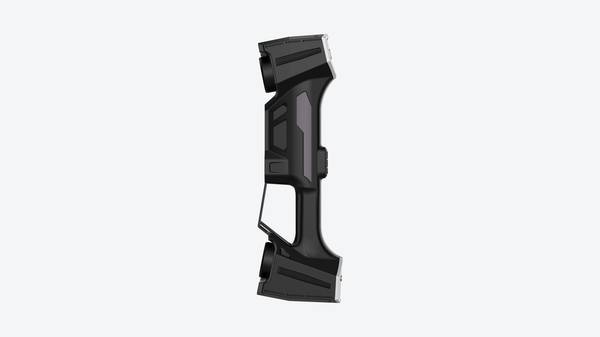
What 3D scanner resolution describes
Spatial resolution in 3D point-cloud capture concerns the spacing and density of captured points and the detail represented in the data. It is not the same as accuracy. Accuracy describes agreement between captured dimensions and the true object dimensions. A scanner can produce a dense point cloud with fine point spacing while its dimensional accuracy remains a separate specification. Reading resolution as an accuracy guarantee is a common misstep, so the two terms should be kept apart when evaluating equipment.
INSVISION 3D scanner resolution values by product family
The supported resolution values are bound to specific product families. Within the AlphaScan family, the AlphaScan S1 and AlphaScan Elite S1 both offer resolution up to 0.01 mm. The BetaScan family follows the same pattern, with the BetaScan S1 and BetaScan Elite S1 also offering resolution up to 0.01 mm. For tracked scanning, the V-Track system provides a minimum resolution of 0.01 mm. The AlphaVista large-format scanner sits in a different tier, with resolution up to 0.5 mm. These exact values are the applicable reference points for each model scope.
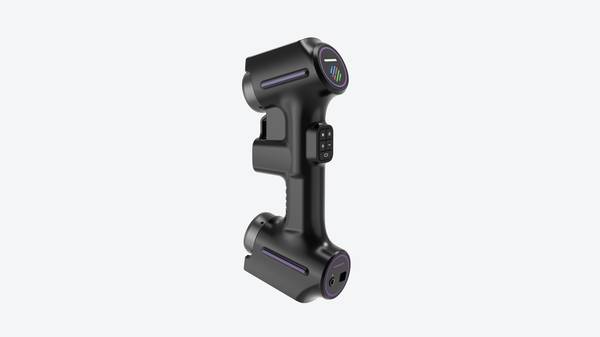
How to use resolution when selecting a 3D scanner
Resolution is most useful as a task-matching signal rather than a standalone quality rating. The fine-detail tier suits small parts, fine features, and precision inspection or reverse-engineering work. The large-format tier suits AlphaVista applications where covering large surfaces efficiently is the primary need.
Resolution alone does not establish accuracy or feature resolvability, so it should be reviewed alongside the other specifications that define a scanner's performance for a given part.
Hangzhou Insvision Technology Co., Ltd.
Address: Building 1, No. 1399 Liangmu Road, Yuhang District, Hangzhou, Zhejiang 311121, China
Copyright © Hangzhou Insvision Technology Co., Ltd. All rights reserved.
Copyright © Hangzhou Insvision Technology Co., Ltd. All rights reserved.