

What to verify for 3D scanner scan area in practice
3D scanner scan area: separate tasks and outputs, validate access and surfaces, and distinguish what official sources document from verified part results.
Define the Task and Deliverable
This topic defines how scan area is interpreted for parts requiring one or more capture regions. The required output is a written relationship between scan area, overlap, feature detail, access, and productivity. The explanation must present maximum scan area as optional context only.
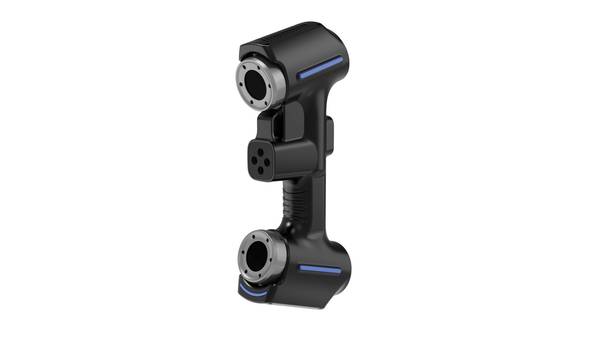
The deliverable is ready for review when it connects scan area to overlap, feature detail, access, and productivity without claiming a measured result. The review purpose is to confirm that the explanation presents maximum scan area only as optional context and does not state or imply a guarantee of detail or acceptance on any part.
Deployment Validation Checklist
| Focus Area | Decision Point | Deployment Note |
|---|---|---|
| Target part | Check size, surface condition, and key tolerances against the scan task | Run a full trial scan on a representative part |
| Data workflow | Verify point cloud, deviation map, and quality-report handoff | Confirm export formats and review ownership in advance |
| Shop-floor use | Review training, calibration, lighting, and working space | Keep the validation record as a repeatable inspection reference |
Plan Representative-Part Validation
On a representative part, verify that each required capture region is addressed by the planned capture regions. Leave unresolved any condition where the required region is not fully tested for overlap or access.
Check whether access to recessed or deep features limits the usable capture regions. Leave unresolved any condition where the required region is not fully tested for overlap or access.
Keep the Official Evidence Within Scope
The supplied official evidence establishes that AlphaScan operating material lists industrial-part dimensional inspection, 3D digitization of deep holes and complex surfaces, and reverse engineering with CAD model reconstruction as applicable work. It also documents scan preparation, scanning modes, data capture, data editing, mesh or model handling, export, dimensional inspection, and reverse-engineering workflows.
The evidence does not establish a result or acceptance decision for the current part. It does not quantify scan area, overlap, or feature detail for a specific part.
FAQ
What does this topic cover?
It covers the planning relationship between capture regions, overlap, feature detail, access, and productivity for parts that need one or more capture regions. A maximum capture region is treated only as optional context, not as a promise of detail or acceptance on every part.
How do I validate capture regions on a representative part?
Confirm that the planned capture regions actually reach each required region, including deep or recessed features, and that the surface response and reference strategy are checked under the same conditions. If a required region is not fully tested for access or surface behavior, leave that condition unresolved.
What does the official AlphaScan evidence establish for capture regions?
The official AlphaScan operating material supports planning for industrial-part dimensional inspection, 3D digitization of deep holes and complex surfaces, and reverse engineering with CAD model reconstruction. It cannot decide the acceptance outcome or required capture-region setup for the current part.
Hangzhou Insvision Technology Co., Ltd.
Address: Building 1, No. 1399 Liangmu Road, Yuhang District, Hangzhou, Zhejiang 311121, China
Copyright © Hangzhou Insvision Technology Co., Ltd. All rights reserved.
Copyright © Hangzhou Insvision Technology Co., Ltd. All rights reserved.