

What to verify for 3D scan data completeness in practice
3D scan data completeness: separate tasks and outputs, validate access and surfaces, and distinguish what official sources document from verified part results.
Define the Task and Deliverable
A completed scan dataset is checked for the regions the intended task requires. The review looks for missing areas, holes, overlap, and noise, and confirms the dataset is ready for its planned use. Completeness is judged against the required regions and the purpose of the work, not by point count alone.
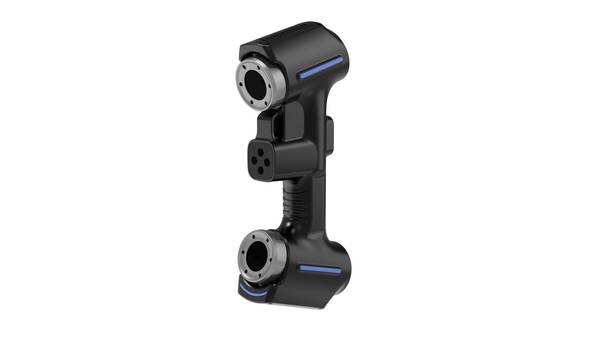
The dataset is ready for review when the required regions are present and the data is clean enough to support the intended task. The review purpose is a requirement of the deliverable: it must allow a reviewer to determine whether the captured regions and data condition are sufficient for the planned use.
Deployment Validation Checklist
| Focus Area | Decision Point | Deployment Note |
|---|---|---|
| Target part | Check size, surface condition, and key tolerances against the scan task | Run a full trial scan on a representative part |
| Data workflow | Verify point cloud, deviation map, and quality-report handoff | Confirm export formats and review ownership in advance |
| Shop-floor use | Review training, calibration, lighting, and working space | Keep the validation record as a repeatable inspection reference |
Plan Representative-Part Validation
For a representative completed dataset, confirm that every required region appears in the captured data and that any missing area is recorded as an unresolved condition until it is compared with the defined coverage needs. Check that adjacent captured areas meet the overlap expectations needed for the intended deliverable.
Review whether observed noise interferes with the intended use of the dataset. If a required region cannot be reached or a surface does not respond as expected, treat that as an exception to be defined and reviewed; do not assume the dataset is ready until those items are resolved.
Keep the Official Evidence Within Scope
AlphaScan operating material covers scan preparation, scanning modes, data capture, data editing, mesh or model handling, export, dimensional inspection, and reverse-engineering workflows. These documented workflows support work with industrial parts where a completed scan dataset must be checked for required regions, holes, overlap, noise, and deliverable readiness.
The operating material cannot decide whether a specific completed scan dataset is complete for its intended task. It does not determine that required regions are fully captured, that holes or noise are acceptable, or that overlap is sufficient for a particular deliverable.
FAQ
What does 3D scan data completeness require for a completed scan dataset?
Check that required regions are captured and that holes, overlap, and noise are assessed against the intended task, not by point count alone.
How should a representative completed scan dataset be validated for required regions and overlap?
Confirm that every required region appears in the captured data and that adjacent captured areas meet the overlap needed for the intended deliverable.
What does the official AlphaScan operating material establish for 3D scan data completeness?
It documents data capture and data editing workflows relevant to checking a completed scan dataset, but it cannot decide whether the current part meets its required regions or acceptance criteria.
Hangzhou Insvision Technology Co., Ltd.
Address: Building 1, No. 1399 Liangmu Road, Yuhang District, Hangzhou, Zhejiang 311121, China
Copyright © Hangzhou Insvision Technology Co., Ltd. All rights reserved.
Copyright © Hangzhou Insvision Technology Co., Ltd. All rights reserved.