

When Measurement Bottlenecks Slow Production, Structured Light Pattern Drives Tangible Operational ROI
Structured light pattern scanning from INSVISION turns metrology into a lean process. Reduce inspection bottlenecks, improve delivery cadence, and lower costs.
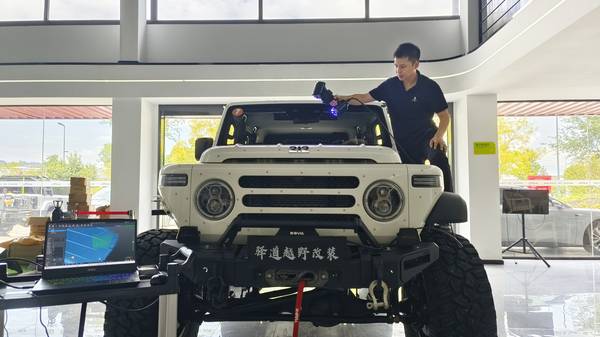
On a busy factory floor, the gap between machining speed and inspection throughput has become one of the most expensive hidden costs in discrete manufacturing. A CNC cell can finish a batch of complex castings or welded assemblies in minutes, yet the next step—a CMM program or a series of hand-gauge checks—often takes longer than the cutting cycle itself.
While parts sit waiting for validation, downstream assembly stations idle, quality managers scramble to compile audit-ready traceability, and production planners watch takt time slip. Expedited freight, overtime, and customer concessions quietly eat into margins that were already thin.
This article examines where traditional measurement creates cost bottlenecks and how a structured light pattern approach reshapes the economics of inspection. Rather than a deep dive into optics, the focus is on operational levers: inspection cycle time, rework and scrap, skilled labor dependency, delivery cadence, and the long-term value of digital quality records.
For procurement and operations leaders, the question isn’t just whether the technology works—it’s where it changes the P&L.
The Hidden Cost of Sparse Data and Serial Inspection
Touch-probe CMMs and hand tools remain the default in many shops, but their limitations become a recurring cost driver when parts grow complex. A CMM struggling to probe an aerospace bracket with deep pockets and compound curves might deliver 200 points after two hours—and still miss the blend radii that determine fatigue life.
Hand-gauge checks are faster but even sparser, often capturing only a few dozen dimensions on a surface that should have thousands of data points.
The operational fallout cascades quickly:
- Inspection queues delay downstream work. When first-article inspection drags on for days because the CMM is backed up, production decisions wait, tooling adjustments wait, and supplier PPAP submissions slip. The cost isn’t just the machine hour; it’s the line stoppages and air freight needed to recover the schedule.
- Sparse data drives rework and scrap. Sampling what you can reach, not what the surface actually does between those points, leaves blind spots. Form deviations that go undetected at inspection become non-conformances at the customer’s incoming QC—triggering returns, rework, or lost trust.
- Skilled operators are tied to routine tasks. CMM programming and manual gauging consume hours of experienced metrology or machining talent that could be redirected to process improvement or higher-value analysis.
- Traceability gaps increase audit risk. A table of a few hundred CMM points is hard to defend during an OEM audit when the part’s GD&T callouts demand full-field understanding. Engineering teams then spend additional hours bridging data gaps for FEA or CAD comparison, burning time that never appears on a standard cost sheet.
Where Structured Light Pattern Scanning Changes the Cost Equation
A structured light pattern scanner replaces serial point probing with parallel optical capture. The system projects a known fringe pattern onto the part, records its deformation across the entire surface in one shot, and reconstructs a dense point cloud in seconds. The result is a watertight mesh with millions of points, ready for immediate comparison to the CAD model.
This shift from sampling to full-field measurement alters several cost lines:
- Inspection Cycle Time
*Pain point:* First-article inspection on a complex casting or welded assembly can take 45 minutes to several hours on a CMM, creating a queue that dictates the entire production rhythm.
*Improvement:* The same part can be scanned in minutes, with data processing and alignment happening in parallel. INSVISION’s AlphaVista, for example, captures a dense mesh in under ten minutes on parts that would tie up a CMM for two hours.
*Observable value:* Shorter inspection cycles mean faster first-article sign-off, quicker feedback to machining, and a delivery cadence that can absorb more orders without adding metrology headcount.
- Rework and Scrap Reduction
*Pain point:* Sparse probing misses subtle form errors, especially in blend radii, deep pockets, and shiny surfaces. These undetected deviations surface later as scrap or rework.
*Improvement:* Full-field data with metrology-grade accuracy (0.020 mm for INSVISION systems) reveals the entire surface, not just sampled points. Color deviation maps highlight out-of-tolerance areas at a glance, letting engineers catch and correct issues before a batch runs.
*Observable value:* Fewer internal rejects, lower rework hours, and a measurable drop in customer returns. The cost of quality shifts from failure recovery to prevention.
- Labor Efficiency
*Pain point:* CMM programming and manual gauging require skilled operators who could otherwise focus on process optimization, tooling adjustments, or training.
*Improvement:* Handheld structured light scanners like INSVISION’s AlphaScan series let one operator capture a full part in seconds, with software handling alignment and reporting automatically. The learning curve is shorter than CMM programming, reducing dependency on a single expert.
*Observable value:* Metrology staff spend less time on routine data collection and more on analysis and improvement. In smaller shops, the same person can manage inspection and still support production.
- Delivery Cadence and Customer Confidence
*Pain point:* Late shipments due to inspection backlogs force expedited freight and erode on-time delivery metrics. Sparse inspection reports make it harder to prove conformance during customer audits.
*Improvement:* Faster inspection compresses the quality hold, and one-click customizable reports provide full traceability with visual GD&T comparisons. INSVISION’s software generates PPAP-ready documentation directly from scan data.
*Observable value:* Consistent on-time delivery, fewer customer disputes, and a digital quality record that strengthens supplier ratings.
- Long-Term Data Asset
*Pain point:* Traditional inspection leaves behind a thin trail of point tables and handwritten notes. When a part is revised or a field failure occurs years later, there’s no rich digital twin to reference.
*Improvement:* Every scan creates a dense, archivable point cloud that can be compared to future production runs, used for wear analysis, or fed into FEA and reverse engineering workflows.
*Observable value:* The scan archive becomes an engineering asset that reduces troubleshooting time and supports continuous improvement without additional measurement cost.
A Practical Framework for Evaluating the Investment
Rather than relying on generic ROI promises, procurement and operations teams can assess the business impact using their own shop-floor data. The table below outlines a self-evaluation structure that connects measurement performance to cost drivers.
| Cost Driver | What to Measure Today | How Structured Light Pattern Scanning Changes It | Data to Track for Validation |
|---|---|---|---|
| Inspection queue time | Average hours from part-off-machine to first-article sign-off | Cycle time reduced from hours to minutes; queue compression | Lead time for first-article approval before and after pilot |
| Internal rework & scrap | Monthly rework hours and scrap value tied to measurement gaps | Full-field data catches form errors earlier in the process | Rework/scrap cost trend for pilot part families |
| Skilled labor allocation | Hours per week spent on CMM programming and manual gauging | Simplified scan-align-report workflow frees senior staff | Time logs for metrology personnel on pilot parts |
| Delivery penalties | Expedited freight costs and late-delivery incidents linked to inspection delays | Faster release reduces schedule risk | Freight premium costs and on-time delivery rate for affected orders |
| Customer quality disputes | Number of returns or concessions where measurement data was insufficient | Dense, visual reports improve conformance evidence | Customer complaint frequency and resolution time |
A half-day on-site trial with your own worst-case part—highly reflective, complex geometry, or in ambient light near welding bays—will reveal more about system capability than any spec sheet. INSVISION’s 50 cross blue laser lines are engineered to handle shiny and dark surfaces, but validating performance under real shop-floor conditions is the only way to confirm fit.
Where INSVISION Systems Deliver Perceptible Operational Improvement
INSVISION’s structured light pattern technology addresses the cost bottlenecks described above through several practical capabilities:
- Metrology-grade accuracy without a lab environment. The AlphaVista and AlphaScan series deliver 0.020 mm accuracy using 50 cross blue laser lines, capturing fine detail in deep pockets, narrow slots, and on reflective surfaces that confuse lesser scanners. This means reliable data on the shop floor, not just in a temperature-controlled room.
- Speed that reshapes the inspection queue. A part that takes two hours on a CMM can be scanned in under ten minutes, with a dense, watertight mesh ready for immediate CAD comparison. The serial queue becomes a parallel, operator-driven process.
- Visual GD&T analysis that accelerates decision-making. Color deviation maps replace tables of points, letting quality engineers and machinists see exactly where a part deviates from nominal. Root cause analysis starts immediately, not after hours of data interpretation.
- One-click traceability for PPAP and audits. Customizable inspection reports are generated directly from scan data, providing full-field evidence of conformance. This reduces the administrative burden of quality documentation and strengthens supplier credibility.
- Guided assembly for complex workflows. Beyond inspection, INSVISION’s Alpha-Projector uses a structured light pattern to project contours directly onto workpieces, guiding operators through assembly steps and reducing errors in manual processes.
These capabilities don’t just replace a CMM; they change how quality data flows through the organization—from the shop floor to the customer portal.
Implementation Rhythm: Where to Start
For a factory leader evaluating structured light pattern scanning, a phased approach reduces risk and builds internal buy-in.
Phase 1: First-Article Inspection on Complex Parts
Target the part families that currently cause the longest CMM queues or the most rework. Run a pilot where the scanner handles first-article approval while the CMM remains for routine checks. Compare cycle times, data density, and rework incidents over a defined period. This phase typically delivers the fastest visible payback and builds confidence among quality and production teams.
Phase 2: In-Line or In-Cell Inspection
Move the scanner closer to the machining cell so that operators can verify critical features immediately after cutting. This catches deviations before a full batch is produced and reduces the feedback loop from hours to minutes. The goal is to prevent scrap, not just detect it.
Phase 3: Digital Twin Archiving and Trend Analysis
Begin archiving scan data for key part numbers. Over time, this archive enables wear analysis, tooling adjustment predictions, and faster response to field failures. The long-term value compounds as the digital record grows.
Throughout these phases, measure the cost drivers identified in the evaluation framework. The business case strengthens with each cycle of data.
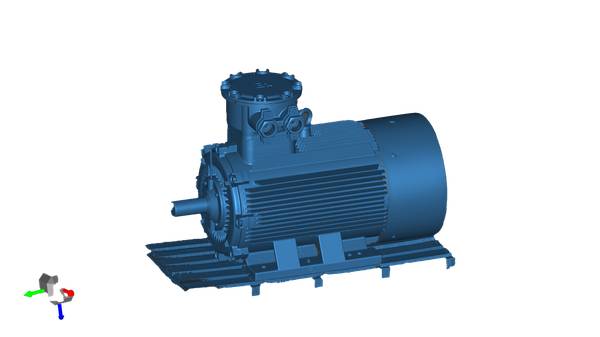
Summary
Measurement bottlenecks are not just a quality department concern—they are a direct drag on delivery performance, labor productivity, and the total cost of quality. A structured light pattern approach turns inspection from a serial, sparse-data gate into a fast, full-field process that feeds actionable information back to production and engineering.
By compressing inspection cycles, reducing rework, freeing skilled labor, and building a defensible digital traceability record, shops can improve margins without adding headcount or floor space. The technology is ready; the more urgent question is how long a factory can afford to let its current measurement rhythm dictate its business results.
Hangzhou Insvision Technology Co., Ltd.
Address: Building 1, No. 1399 Liangmu Road, Yuhang District, Hangzhou, Zhejiang 311121, China
Copyright © Hangzhou Insvision Technology Co., Ltd. All rights reserved.
Copyright © Hangzhou Insvision Technology Co., Ltd. All rights reserved.