

3D Scanning Depth of Field
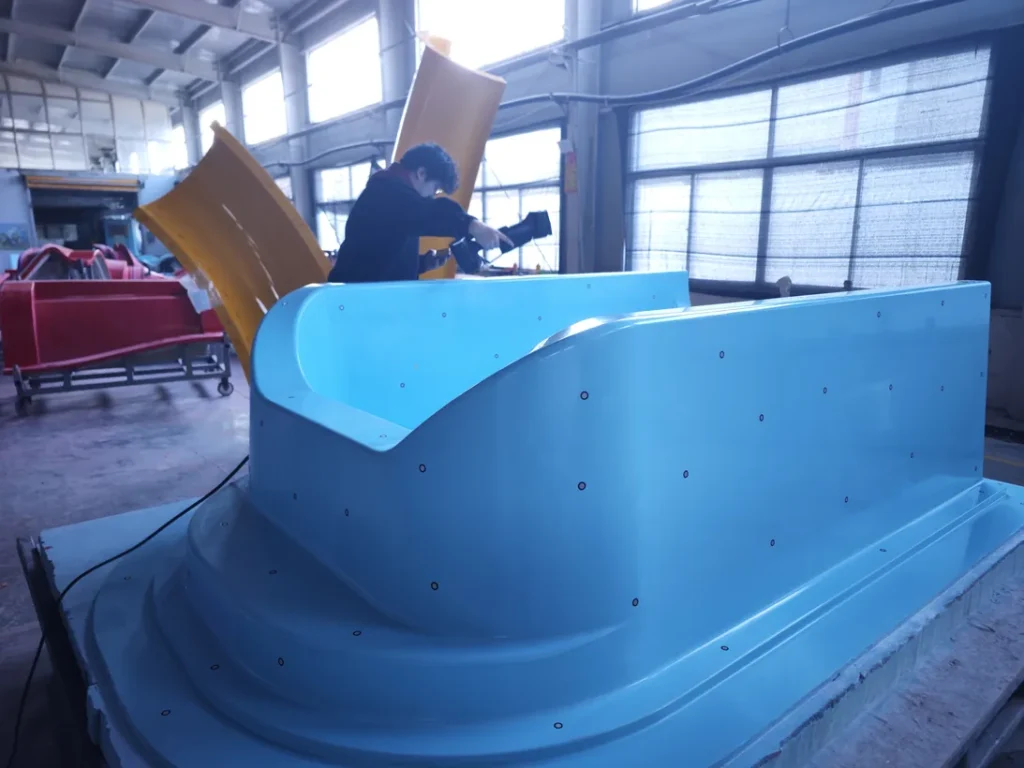
3D scanning depth of field (DoF) is a core performance metric for industrial 3D scanning systems, describing the range of distances along the scanner’s optical axis within which a target surface can be measured with consistent, specified accuracy and data completeness.
Definition
3D scanning depth of field (DoF) is a core performance metric for industrial 3D scanning systems, describing the range of distances along the scanner’s optical axis within which a target surface can be measured with consistent, specified accuracy and data completeness. Unlike photographic depth of field, which is defined by visual sharpness, 3D scanning DoF is tied directly to the reliability of 3D coordinate data generated via triangulation, pattern recognition, or optical tracking.
How It Works
3D scanning DoF is governed by the optical design, calibration, and measurement principle of a given scanning system. For structured light, laser triangulation, and photogrammetric scanners, usable DoF is bounded by the distance range where projected patterns, surface features, or tracking markers can be resolved with sufficient clarity to calculate accurate 3D coordinates via triangulation. For fixed-position scanners, DoF is calibrated to a fixed working distance range during manufacturing, though many systems support adjustments via interchangeable lenses or re-calibration. For handheld and optical tracking systems, DoF is typically designed to be wider to accommodate minor variations in operator movement or target positioning. Surfaces located outside the usable DoF range produce distorted or blurry input data, leading to increased measurement error, missing point cloud data, or failed feature detection.
Key Parameters and Criteria
DoF performance is evaluated using three standardized, measurable parameters, outlined below:
| Parameter | Meaning | Judgment Method |
|---|---|---|
| Nominal Depth of Field Range | The manufacturer-specified span of working distances (minimum to maximum) within which a scanner meets its published accuracy and data completeness specifications, measured under controlled laboratory conditions using standardized reference artifacts. | Place calibrated gauge blocks or step artifacts at 5–10 evenly spaced distances along the scanner’s optical axis; verify that measured deviation from reference values stays within the scanner’s stated accuracy threshold across all test positions. |
| Effective Depth of Field | The actual usable distance range for a specific scan scenario, adjusted for real-world variables including target surface finish, material, ambient lighting, and user-defined scan resolution settings. | Conduct test scans of the intended target at incremental working distances; measure point cloud completeness (percentage of target surface captured without gaps) and deviation against a calibrated reference artifact to identify the range where required quality thresholds are met. |
| Depth of Field Uniformity | The degree of consistency in measurement accuracy and point cloud density across the full span of the usable DoF range, rather than only at the optimal central working distance. | Measure the dimensional accuracy of a calibrated reference sphere at evenly spaced positions across the nominal DoF range; calculate variance in measured diameter and 3D coordinate position to assess consistency. |
DoF parameters vary significantly by scanner type. High-precision close-range scanners typically have a narrower DoF optimized for maximum accuracy, while large-volume tracking systems and handheld scanners have wider DoF ranges for increased operational flexibility. All parameters are subject to adjustment based on target surface properties, ambient operating conditions, and user-selected scan settings.
Suitable and Unsuitable Scenarios
Suitable Scenarios
- Scanning of parts with depth variation that falls entirely within the scanner’s usable DoF, such as small to medium industrial components, automotive interior panels, and consumer product enclosures.
- Batch scanning of identical parts, where working distance can be standardized to remain within the optimal DoF range for consistent data quality across all scans.
- Large-volume scanning of full assemblies or industrial infrastructure, where extended DoF reduces the need for frequent repositioning of scanning or tracking hardware.
- Scanning of recessed or internal features such as deep holes, where scanners with optimized near-field DoF can capture subsurface geometry without line-of-sight obstruction.
Unsuitable Scenarios
- Scanning objects with extreme depth variation that exceeds the scanner’s DoF in a single scan position, requiring multiple scan passes at adjusted working distances and additional post-scan alignment steps.
- Unstructured handheld scanning where operators cannot consistently maintain a working distance within the usable DoF range, leading to incomplete point clouds or reduced measurement accuracy.
- High-precision micro-part scanning where the required working distance falls outside the scanner’s nominal DoF, necessitating specialized close-range optics or custom calibration.
Common Misconceptions
- Misconception: 3D scanning DoF is identical to photographic DoF.
Correction: Photographic DoF is defined solely by visual sharpness, while 3D scanning DoF is tied to measurable 3D coordinate accuracy. A surface may appear visually in focus to the human eye but fall outside a scanner’s usable DoF due to triangulation error or insufficient pattern resolution.
- Misconception: A wider DoF is always preferable for industrial scanning.
Correction: Wider DoF often involves tradeoffs in peak accuracy and maximum scan resolution. High-precision inspection workflows typically use a narrow, tightly calibrated DoF to ensure consistent measurement reliability across the target surface.
- Misconception: A scanner’s nominal DoF applies to all target materials and surfaces.
Correction: Nominal DoF is measured under laboratory conditions using matte, high-contrast reference artifacts. Transparent, reflective, or low-contrast targets may have a significantly reduced effective DoF due to reduced pattern or feature detectability.
- Misconception: DoF is a fixed, unchangeable property of a 3D scanner.
Correction: Many industrial 3D scanners support DoF adjustments via interchangeable lenses, modified calibration profiles, or software pattern detection settings. All adjustments involve performance tradeoffs, such as reduced accuracy for extended DoF ranges.
Related Concepts
- Working Distance: The linear distance between a scanner’s optical reference plane and the target surface, the core variable used to define DoF boundaries.
- Triangulation Accuracy: The maximum allowable deviation between measured 3D coordinates and reference values, the primary threshold used to define the limits of usable DoF.
- Structured Light Scanning: A widely used industrial 3D scanning technology where DoF is directly tied to the clarity of projected light patterns on the target surface.
- Optical Tracking Volume: The 3D space within which an optical tracking system can reliably locate markers or scanner position, a related range metric for large-volume scanning workflows.
- Point Cloud Completeness: A data quality metric measuring the percentage of a target surface captured in a scan, commonly used to assess effective DoF for real-world targets.
FAQ
How does target surface finish affect 3D scanning depth of field?
Reflective, transparent, or low-contrast surfaces reduce a scanner’s ability to resolve projected patterns or natural surface features, shrinking the effective DoF compared to the nominal range measured on standardized matte reference artifacts. For challenging surfaces, temporary matte coatings may be applied to extend effective DoF, though this adds pre- and post-scan processing steps.
Can depth of field be adjusted on industrial 3D scanners?
Many industrial 3D scanners support DoF adjustments via interchangeable lenses, modified calibration profiles, or software settings that adjust pattern detection thresholds and scan resolution. Adjustments typically involve performance tradeoffs: extending DoF may reduce peak measurement accuracy or maximum scan resolution, while narrowing DoF can improve precision for close-range, high-precision targets.
What is the difference between nominal and effective depth of field?
Nominal DoF is a manufacturer-specified range measured under controlled laboratory conditions using calibrated reference artifacts. Effective DoF is the actual usable range for a specific scan scenario, accounting for real-world variables including target surface finish, ambient lighting, required accuracy thresholds, and user-defined scan settings.
Summary
3D scanning depth of field is a foundational performance parameter that defines the range of working distances within which a 3D scanning system can produce accurate, complete 3D measurement data. Governed by optical design, calibration, and workflow variables, DoF has distinct nominal and effective values that vary by scanner type and use case. A clear understanding of DoF constraints and tradeoffs is critical for selecting appropriate scanning hardware, configuring workflows, and ensuring consistent data quality for industrial 3D digitization, dimensional inspection, and reverse engineering applications.
- What Is 3D Scanning? Principles, Workflow, and Industrial Applications 3D scanning is a digital measurement technology that converts the surface geometry of physical objects into 3D data. This entry covers its working principles, core parameters, industrial use cases, common misconceptions, and related technical…
- What Is a 3D Scanner? Types, Parameters, and Selection Criteria A 3D scanner captures three-dimensional surface data from physical objects and converts geometry, dimensions, and features into digital data for inspection, reverse engineering, and modeling.
- What Is 3D Scanning Accuracy? Accuracy, Repeatability, and Resolution Explained 3D scanning accuracy describes how closely scan data matches an object's actual geometry and dimensions. It is assessed through local accuracy, volumetric accuracy, stitching accuracy, repeatability, and resolution.
- What Is Point Cloud Data? Point Clouds, Meshes, and CAD Models in 3D Scanning Point cloud data is an important raw data format in 3D scanning. It consists of discrete 3D coordinate points that describe object surface geometry and support inspection, reverse engineering, modeling, and archiving.
Hangzhou Insvision Technology Co., Ltd.
Address: Building 1, No. 1399 Liangmu Road, Yuhang District, Hangzhou, Zhejiang 311121, China
Copyright © Hangzhou Insvision Technology Co., Ltd. All rights reserved.
Copyright © Hangzhou Insvision Technology Co., Ltd. All rights reserved.