

STL File
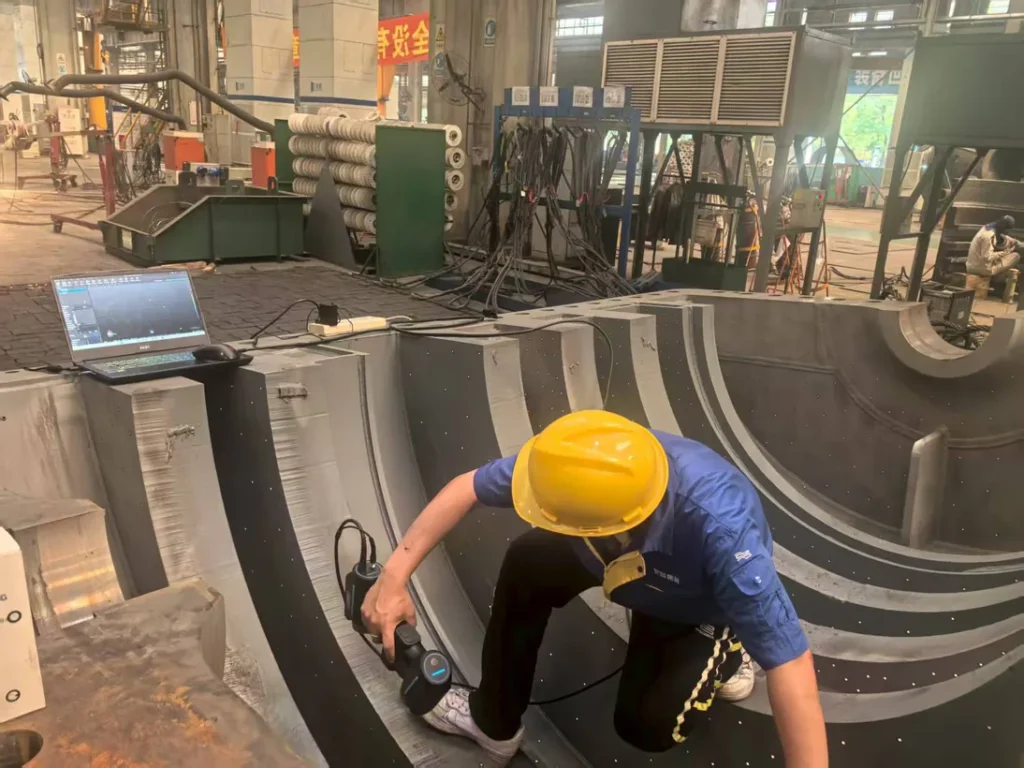
STL (an abbreviation for Standard Tessellation Language, alternately referred to as Standard Triangulation Language) is a ubiquitous 3D model file format.
Definition
STL (an abbreviation for Standard Tessellation Language, alternately referred to as Standard Triangulation Language) is a ubiquitous 3D model file format designed for representing surface geometry. Originally developed for stereolithography additive manufacturing, it has since become a de facto standard across industrial 3D scanning, reverse engineering, dimensional inspection, and digital part archiving workflows. The format encodes only surface geometry as a collection of planar triangular facets, with no native support for parametric design history, color, texture, or material properties.
How It Works
STL files represent 3D surfaces by tessellating continuous geometry into a network of non-overlapping triangular facets. Each facet is defined by two core components: a unit normal vector indicating the facet’s outward orientation, and three vertices specified in 3D Cartesian coordinates. The format is available in two primary variants: ASCII STL, which is human-readable but produces larger file sizes, and binary STL, a compact, space-efficient variant used almost exclusively for industrial applications. In 3D scanning workflows, raw point cloud data collected by scanning hardware is processed via meshing, smoothing, and optional simplification steps to generate a final STL file tailored to the intended use case.
Key Parameters and Criteria
STL file quality for industrial use cases is evaluated against four core measurable parameters, outlined in the table below:
| Parameter | Meaning | Judgment Method |
|---|---|---|
| Facet Count | Total number of triangular elements that form the STL mesh, directly related to detail capture level | Counted via standard 3D mesh processing software; optimal value depends on intended use case, with higher counts supporting finer detail but increasing file size and processing time |
| Watertightness | Degree of mesh continuity, measured by the absence of open edges, overlapping facets, and non-manifold vertices | Evaluated via automated mesh validation tools; a fully watertight mesh has zero unconnected edges or intersecting faces |
| Geometric Accuracy | Deviation between the STL mesh’s dimensions and the true dimensions of the original physical object | Measured by aligning the STL to a calibrated reference artifact or nominal CAD model; accuracy varies based on scanning hardware precision, alignment quality, and post-processing settings |
| Facet Aspect Ratio | Ratio of the longest edge to the shortest edge of an individual triangular facet, indicating mesh uniformity | Calculated per facet via mesh analysis software; values closer to 1 indicate more uniform meshes that reduce errors in machining, simulation, and 3D printing |
Suitable and Unsuitable Scenarios
Suitable Scenarios
- Additive manufacturing input: Most industrial 3D printers accept STL as a standard input format for layer-by-layer fabrication.
- Reverse engineering: STL meshes serve as an intermediate reference for converting scanned physical parts into editable parametric CAD models.
- Dimensional inspection: STL meshes are aligned to nominal CAD models to conduct tolerance analysis and dimensional deviation checks.
- Legacy part archiving: Physical components without existing digital design data are digitized as STL files for long-term reference and future reproduction.
- CNC machining toolpath generation: Watertight STL files are used to generate cutting paths for subtractive manufacturing equipment.
Unsuitable Scenarios
- Iterative parametric design: STL files do not store feature trees or editable design parameters, making them unsuitable for direct modification in parametric CAD software.
- Visualization requiring surface properties: Native STL does not support color, texture, or finish data, so alternative formats are preferred for consumer product rendering or marketing visuals.
- Regulated medical imaging diagnosis: Clinical diagnostic workflows require specialized, regulatory-compliant file formats, and STL is not approved for diagnostic use.
- High-precision feature-based metrology: Workflows requiring embedded dimension annotations or feature-specific measurement data rely on parametric CAD or annotated point cloud formats instead of STL.
Common Misconceptions
- Misconception: All STL files are dimensionally accurate.
Fact: STL mesh accuracy is entirely dependent on the quality of the input source (e.g., 3D scanner precision, alignment, post-processing settings). Poorly generated STLs may contain significant dimensional deviations, gaps, or warping that make them unsuitable for precision use cases.
- Misconception: Higher facet counts always produce higher-quality STL files.
Fact: Excessively high facet counts increase file size and processing time without delivering meaningful quality gains for low-resolution use cases. Optimal facet count is matched to the application’s precision and detail requirements.
- Misconception: STL is compatible with all industrial 3D workflows.
Fact: STL is optimized for surface mesh representation, but workflows requiring parametric data, material properties, or metrology annotations require alternative formats such as STEP, PLY, or native CAD files.
- Misconception: Any STL file can be used for 3D printing.
Fact: Only watertight, non-manifold STL meshes with no intersecting facets can be processed reliably by most industrial 3D printers. Non-watertight or corrupted STLs require repair before they can be used for additive manufacturing.
Related Concepts
- Point Cloud: Raw 3D scan output consisting of discrete coordinate points with associated accuracy data, which is typically processed and meshed to generate an STL file.
- PLY File: A flexible 3D file format that supports color, texture, and per-point metadata not available in native STL, often used for scan outputs requiring surface property data.
- Reverse Engineering: The process of converting a physical part into a fully editable digital CAD model, where STL serves as a common intermediate output between 3D scanning and parametric modeling.
- Additive Manufacturing: A layer-based fabrication process for which STL was originally developed, with the format remaining the standard input for most industrial 3D printers.
- Mesh Processing: A set of post-processing steps including smoothing, simplification, hole filling, and error correction applied to raw scan data to generate a production-ready STL file.
FAQ
Can STL files store color, texture, or material properties?
Native STL files do not support embedded color, texture, or material metadata. Some unofficial third-party extensions add limited color functionality, but these extensions are not universally compatible with industrial 3D software and hardware, making them unsuitable for most standardized workflows.
Do all use cases require a watertight STL file?
No. Watertight meshes (with no open edges or non-manifold geometry) are required for additive manufacturing, CNC machining, and solid simulation workflows, but non-watertight STLs are sufficient for reference visualization, dimensional comparison, and reverse engineering design reference.
How does 3D scanner performance affect STL file quality?
Higher scanner precision and resolution capture finer surface details, resulting in STL meshes that more closely match the geometry of the original physical part. Optimal scanner settings are typically matched to the use case’s precision requirements, as excessively high resolution can produce unnecessarily large STL files with no practical benefit for low-detail applications.
Can STL files be directly edited in parametric CAD software?
Most parametric CAD platforms treat STL meshes as static reference geometry, not editable feature-based models. While basic mesh modifications (such as smoothing or hole filling) can be performed in specialized mesh editing tools, converting an STL to a fully editable parametric CAD model requires dedicated reverse engineering workflows.
Summary
STL is a widely adopted 3D mesh file format optimized for representing surface geometry via triangular tessellation. Originally developed for stereolithography additive manufacturing, it has become a de facto standard across industrial 3D scanning, reverse engineering, dimensional inspection, and digital part archiving workflows. Its core advantages include broad compatibility with 3D hardware and software, and a simple, lightweight structure. Its key limitations are a lack of native support for parametric design history, surface properties, and embedded metadata. STL quality is evaluated based on facet count, watertightness, geometric accuracy, and facet uniformity, with suitability for a given use case dependent on workflow-specific precision and functionality requirements.
- What Is 3D Scanning? Principles, Workflow, and Industrial Applications 3D scanning is a digital measurement technology that converts the surface geometry of physical objects into 3D data. This entry covers its working principles, core parameters, industrial use cases, common misconceptions, and related technical…
- What Is a 3D Scanner? Types, Parameters, and Selection Criteria A 3D scanner captures three-dimensional surface data from physical objects and converts geometry, dimensions, and features into digital data for inspection, reverse engineering, and modeling.
- What Is 3D Scanning Accuracy? Accuracy, Repeatability, and Resolution Explained 3D scanning accuracy describes how closely scan data matches an object's actual geometry and dimensions. It is assessed through local accuracy, volumetric accuracy, stitching accuracy, repeatability, and resolution.
- What Is Point Cloud Data? Point Clouds, Meshes, and CAD Models in 3D Scanning Point cloud data is an important raw data format in 3D scanning. It consists of discrete 3D coordinate points that describe object surface geometry and support inspection, reverse engineering, modeling, and archiving.
Hangzhou Insvision Technology Co., Ltd.
Address: Building 1, No. 1399 Liangmu Road, Yuhang District, Hangzhou, Zhejiang 311121, China
Copyright © Hangzhou Insvision Technology Co., Ltd. All rights reserved.
Copyright © Hangzhou Insvision Technology Co., Ltd. All rights reserved.