

2026 Portable Scan 3 D Trends for Shop Floor Metrology
Explore 2026 scan 3 d trends for portable metrology, GD&T inspection, reverse engineering, and shop-floor quality in Industry 4.0 plants globally.
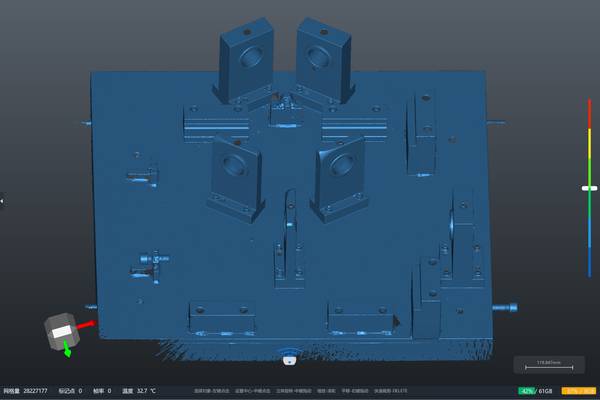
This shift is not only about scanner hardware. It reflects broader changes in how manufacturers manage quality loops, compress first-article timelines, support model-based definition, and turn measurement data into production decisions. For industrial buyers in Europe, North America, and global supply chains, the question is no longer whether portable 3D scanning can support inspection.
The more practical question is whether a scan 3 d system can perform reliably under real production conditions and feed usable data into the rest of the quality ecosystem.
Macro and Industrial Drivers Behind the Shift
Three forces are accelerating the adoption of high-precision portable 3D scanning outside the quality lab.
Common Questions
What should teams check when evaluating Macro and Industrial Drivers Behind the Shift?
Three forces are accelerating the adoption of high-precision portable 3D scanning outside the quality lab.
What should teams check when evaluating Trend 1: Metrology-Grade Accuracy Moves Closer to Production?
Portable scanners have historically involved a trade-off between mobility and accuracy.
What should teams check when evaluating Trend 2: Unified Workflows Replace Fragmented Measurement Chains?
One of the persistent inefficiencies in dimensional quality is the handoff between tools.
The first is the need to reduce CMM bottlenecks. Automotive, aerospace, energy, and precision manufacturing teams are handling more part variation, shorter production runs, and tighter delivery schedules. A stamping line, machining cell, or supplier quality station cannot always wait for tactile probing when operators need near-real-time feedback on deviation, distortion, or fixture drift.
The second driver is the rise of digital quality infrastructure. Industry 4.0 programs, MES integration, PLM workflows, and statistical process control all require measurement data that can move beyond a static report. A scan 3 d workflow must support CAD comparison, GD&T evaluation, mesh generation, and structured exports that engineering and quality teams can use without rebuilding the data path each time.
The third driver is workforce pressure. Many plants need inspection methods that reduce operator-dependent setup, shorten training time, and make results easier to interpret across shifts. Color deviation maps, guided workflows, and repeatable scan strategies help quality managers standardize inspection decisions while still preserving traceability.
Trend 1: Metrology-Grade Accuracy Moves Closer to Production
Portable scanners have historically involved a trade-off between mobility and accuracy. That trade-off is narrowing. Current systems can deliver metrology-grade performance in environments that include changing light, vibration, temperature variation, and complex part handling.
Technical progress in blue laser scanning, structured-light optimization, adaptive exposure, and higher point density has made shop-floor deployment more realistic.
For quality managers, the business impact is direct. First-article inspection can move faster, CMM capacity can be reserved for tactile-only checks, and production teams can review deviation maps within the same shift. A scan 3 d process also supports quicker root-cause analysis when parts drift out of tolerance, because engineers can see full-surface variation instead of isolated probe points.
INSVISION’s AlphaScan reflects this direction with 30 or 42 blue laser lines covering standard, deep-cavity, and fine-detail modes in a single workflow. Its IP54 rating and CE, FCC, and CNAS certifications give procurement and audit teams a practical baseline for shop-floor use rather than treating portable scanning as a lab-only tool.
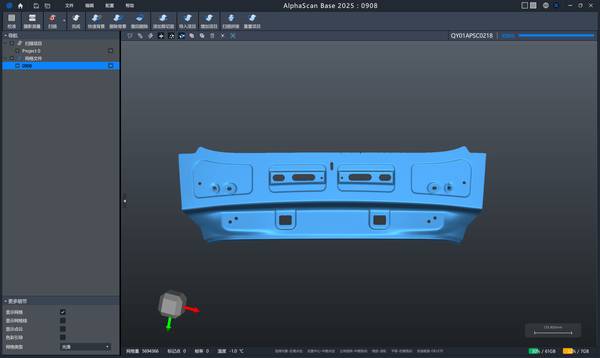
Technical requirement: buyers should validate volumetric accuracy, repeatability, calibration stability, lighting tolerance, and vibration response under actual plant conditions.
Business impact: faster feedback loops, reduced inspection queues, and more complete surface data for process correction.
Trend 2: Unified Workflows Replace Fragmented Measurement Chains
One of the persistent inefficiencies in dimensional quality is the handoff between tools. Many teams still scan a part, export a point cloud, align it in separate software, generate an inspection report elsewhere, and then move the same data into another reverse-engineering environment. Each transfer adds time, training burden, and risk of data loss.
In 2026, stronger scan 3 d implementations are moving toward unified software pipelines. The goal is to capture data, compare it with CAD, evaluate GD&T, create color-mapped reports, and prepare mesh data for reverse engineering without forcing engineers through disconnected steps.
The 3D INSVISION platform supports this direction by combining scanning, inspection-to-CAD comparison, and model generation within one workflow. For complex parts, this can shorten the path from capture to usable mesh data and make same-day reverse engineering more practical for remanufacturing, aftermarket repair, and legacy part recovery.
Technical requirement: the platform should support CAD alignment, GD&T reporting, watertight mesh generation, and exports suitable for engineering tools such as Design X and downstream CAD environments.
Business impact: fewer handoffs, shorter reporting cycles, less operator rework, and stronger consistency between inspection and reverse-engineering teams.
Trend 3: Difficult Surfaces Require Less Preparation
Black reflective surfaces, polished molds, chrome-plated trim, deep pockets, and fine engraved features have long been difficult for optical measurement. In the past, operators often needed powder spray, repeated setup adjustments, or a switch back to tactile measurement. That created extra work and raised concerns for high-value parts where surface preparation was undesirable.
Newer scan 3 d systems are improving capture performance on these difficult surfaces through adaptive laser intensity, multi-exposure processing, and scanning modes designed for deep cavities or small details. This does not remove the need for validation, but it expands the range of parts that can enter an optical inspection workflow with less preparation.
For medical devices, turbine components, precision molds, and reflective automotive parts, reduced surface preparation can protect part integrity and shorten setup time. It also makes portable scanning more useful in mixed-production environments where operators handle several geometries and finishes during the same shift.
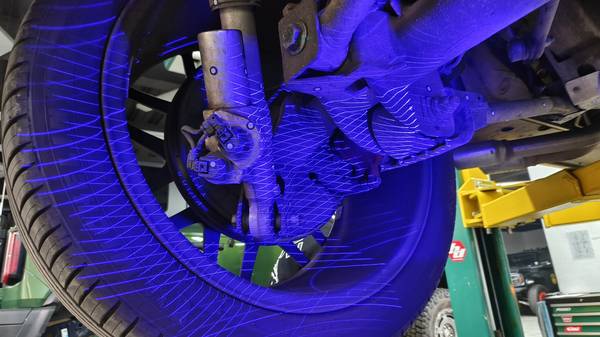
Technical requirement: pilot testing should include reflective surfaces, dark coatings, small holes, deep pockets, sharp edges, and fine surface details.
Business impact: wider application coverage, less manual preparation, and better inspection continuity across diverse part families.
Trend 4: Validation Becomes a Procurement Discipline
A controlled demonstration does not always predict how a scanner will behave beside a machining center, forming press, or welding cell. As portable scanning moves into production, validation is becoming part of procurement rather than an afterthought.
A reliable evaluation starts with workflow mapping. Buyers should define where the scan 3 d output will land: first-article inspection, incoming inspection, reverse engineering, tool validation, fixture adjustment, SPC, or MES-linked reporting. The scanner should then be tested against a traceable CMM reference artifact and real production parts under normal lighting, vibration, and operator conditions.
Edge-case testing is especially important. Pilots based only on clean, matte, simple parts can create a false sense of readiness. Industrial buyers should include black reflective parts, deep cavities, thin walls, small holes, and tight GD&T features. The validation should cover the full chain from scan capture to inspection report, not only point cloud generation.
Technical requirement: establish acceptance criteria for accuracy, repeatability, scan time, reporting time, operator variability, and data compatibility.
Business impact: lower deployment risk, clearer internal approval, and stronger confidence when scaling portable scanning across multiple cells or sites.
Trend 5: Scan Data Becomes Part of the Digital Quality Ecosystem
Point clouds are no longer the final deliverable. The value of a scan 3 d system increasingly depends on how quickly data becomes a decision. Manufacturing teams want deviation maps that support corrective action, GD&T reports that align with ISO and ASME expectations, and mesh data that can move into additive manufacturing, CNC programming, or CAD reconstruction.
This makes open data handling and integration capability central to the purchase decision. A portable scanner should support common engineering formats, structured reporting, and workflows that can connect with MES, PLM, and SPC systems. In mature quality organizations, scan data becomes one node in a connected digital thread rather than a standalone inspection file.
For Western industrial buyers, this also affects governance. Quality teams need traceability, controlled templates, repeatable reporting logic, and documentation that can support customer audits. A scan 3 d workflow should not only generate attractive visuals; it should produce reliable evidence that engineers, auditors, and production teams can act on.
Technical requirement: confirm export formats, reporting templates, API or integration options, GD&T support, and data retention practices.
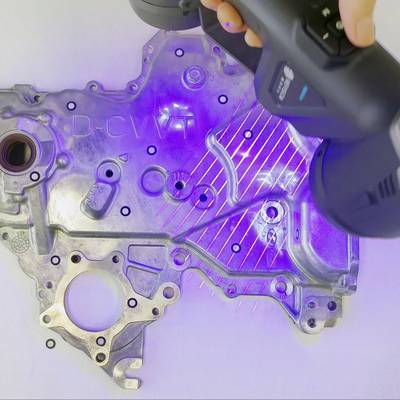
Business impact: faster decisions, stronger digital continuity, and better alignment between quality, engineering, and production operations.
Actionable Steps for Industrial Buyers
| Evaluation Area | What to Check | Why It Matters |
|---|---|---|
| Workflow fit | Define whether the system supports FAI, reverse engineering, SPC, tool validation, or multiple use cases | Prevents buying hardware that does not match the data path |
| Real-part validation | Test worst-case parts, not only clean samples | Reveals performance limits before production deployment |
| Environmental resilience | Confirm IP rating, lighting tolerance, vibration response, and shop-floor usability | Determines whether the scanner can operate outside the lab |
| Software pipeline | Review CAD comparison, GD&T reporting, mesh generation, and export quality | Reduces handoffs and reporting delays |
| Integration readiness | Check compatibility with MES, PLM, SPC, and engineering formats | Turns measurement data into production decisions |
| Operator consistency | Evaluate guided workflows, |
Hangzhou Insvision Technology Co., Ltd.
Address: Building 1, No. 1399 Liangmu Road, Yuhang District, Hangzhou, Zhejiang 311121, China
Copyright © Hangzhou Insvision Technology Co., Ltd. All rights reserved.
Copyright © Hangzhou Insvision Technology Co., Ltd. All rights reserved.