

3D Scanning Automotive Workflows for Lower Rework and Faster Delivery
Learn how 3d scanning automotive workflows improve inspection speed, rework control, labor use, delivery cadence, and quality traceability across plants.
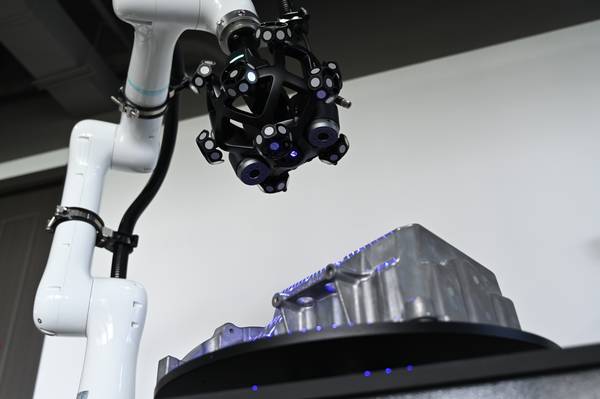
This article reviews 3D scanning automotive value from an operational perspective: where traditional inspection creates hidden cost, how scanning supports faster feedback loops, how plants can evaluate return qualitatively, and where INSVISION fits into practical shop-floor implementation.
Cost Pain Points in Traditional Automotive Measurement
Conventional automotive dimensional inspection often depends on coordinate measuring machines, dedicated fixtures, manual gauges, and specialist programming. These tools remain valuable for reference measurement and validation, but they can slow routine production decisions when every non-conformance must pass through a central metrology lab.
Capability and Deployment Mapping
| Focus Area | Decision Point | Deployment Note |
|---|---|---|
| Cost Pain Points in Traditional Automotive Measurement | Conventional automotive dimensional inspection often depends on coordinate measuring machines, dedicated fixtures, manual gauges, and specialist prog… | These tools remain valuable for reference measurement and validation, but they can slow routine production decisions when every non-conformance… |
| Cost-Reduction Paths for 3D Scanning Automotive Workflo… | A metrology-grade scanner captures dense surface data and compares the measured part directly with CAD. | Instead of measuring only selected points, 3D scanning automotive workflows provide a broader view of dimensional behavior across the entire com… |
| First-Article Inspection: Faster Launch Feedback | Pain point: New product introductions often wait for fixture preparation, CMM programming, and lab availability. | Engineering questions may remain open while production teams prepare for ramp-up. |
| In-Process Inspection: Less Waiting, Earlier Correction | Pain point: When routine checks require transport to a metrology room, parts queue for measurement and operators wait for confirmation. | If a process drifts, the delay can create a larger rework batch. |
The main cost pressure comes from waiting time. A complex casting, stamped structure, battery tray housing, or motor housing may require careful setup before measurement begins. If inspection happens late in the shift, dimensional drift may already have affected multiple parts.
The result is not only scrap or rework, but also the management time needed to isolate root causes, approve corrective action, and protect delivery commitments.
Labor dependency adds another layer. CMM programming, fixture design, GD&T interpretation, and manual report preparation require experienced metrology professionals. In many Western manufacturing markets, these roles are difficult to hire and expensive to replace. When specialist labor is consumed by repetitive checks, plants lose capacity for higher-value validation, process improvement, and launch support.
Data fragmentation also weakens operating control. Measurement reports may sit in isolated files, while production, engineering, procurement, and supplier quality teams work from different versions of the same problem. Without full-field geometry and traceable digital records, root cause analysis becomes slower and less reliable.
Cost-Reduction Paths for 3D Scanning Automotive Workflows
A metrology-grade scanner captures dense surface data and compares the measured part directly with CAD. Instead of measuring only selected points, 3D scanning automotive workflows provide a broader view of dimensional behavior across the entire component. The operating value appears in several production stages.
First-Article Inspection: Faster Launch Feedback
Pain point: New product introductions often wait for fixture preparation, CMM programming, and lab availability. Engineering questions may remain open while production teams prepare for ramp-up.
Improvement path: With 3D scanning automotive inspection, a quality engineer can capture the first-off part and generate a CAD comparison with color deviation maps. This gives engineering, quality, and manufacturing teams a shared visual record of where the part matches design intent and where adjustment is needed.
Observable value: Plants can shorten the feedback loop between prototype, first article, and production readiness. The main benefit is not only faster inspection; it is earlier discovery of dimensional issues before they become repeated non-conformances.
In-Process Inspection: Less Waiting, Earlier Correction
Pain point: When routine checks require transport to a metrology room, parts queue for measurement and operators wait for confirmation. If a process drifts, the delay can create a larger rework batch.
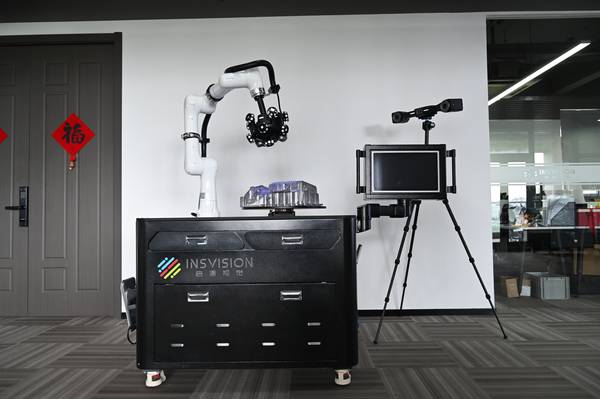
Improvement path: A handheld scanner can be placed near the cell or line side for guided inspection of critical features and surfaces. Operators can capture the part, review pass/fail information, and escalate exceptions without waiting for every routine check to reach the lab.
Observable value: 3D scanning automotive inspection helps move feedback from “after the batch” to “during the run.” Plants can detect drift earlier, adjust process parameters sooner, and reduce the number of parts exposed to the same dimensional issue.
Root Cause Analysis: Better Visibility into Deviation Patterns
Pain point: Traditional point-based reports can confirm that a feature is out of tolerance, but they may not show the full deformation pattern. Teams can spend extra time deciding whether the issue comes from tooling wear, thermal variation, clamping force, material springback, or handling.
Improvement path: Full-field scan data shows how the entire surface deviates from CAD. A color map can reveal directional distortion, local sink, twist, warpage, or assembly misalignment more clearly than isolated point measurements.
Observable value: 3D scanning automotive data supports faster diagnosis and more targeted corrective action. Instead of making repeated trial adjustments, production and tooling teams can use visible deviation patterns to narrow the cause.
Supplier Quality: Shared Data for Faster Resolution
Pain point: Measurement disputes between OEMs, Tier suppliers, and subcontractors can create delays when each party measures differently or waits for physical parts to move between sites.
Improvement path: Shared scan files, deviation maps, and structured inspection reports give both sides a common dimensional reference. The conversation shifts from subjective interpretation to specific geometry, features, and tolerance conditions.
Observable value: 3D scanning automotive workflows improve supplier corrective action discussions, reduce ambiguity, and support better traceability during audits or customer reviews.
Reverse Engineering and Legacy Parts: Less Manual Reconstruction
Pain point: Older service parts, tooling inserts, fixtures, and modified components may lack reliable CAD data. Manual measurement and model reconstruction can consume engineering time.
Improvement path: A scanner captures the as-built geometry and provides a point cloud or mesh that can be used for CAD reconstruction, tooling updates, or design validation.
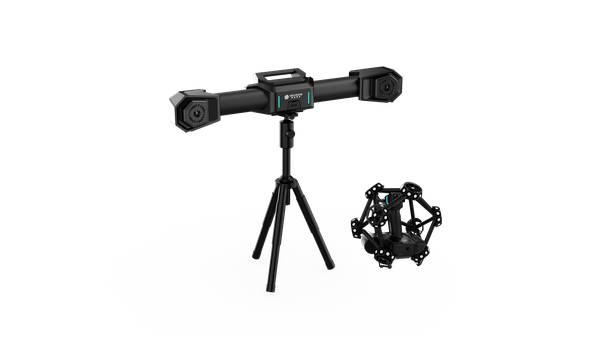
For a reliable selection, manufacturers should validate the scanner with real parts, existing inspection workflows, and reporting requirements before making a decision. INSVISION can support this process with application demos, sample data verification, and practical recommendations for integrating 3D scanning into quality control and production improvement.
Hangzhou Insvision Technology Co., Ltd.
Address: Building 1, No. 1399 Liangmu Road, Yuhang District, Hangzhou, Zhejiang 311121, China
Copyright © Hangzhou Insvision Technology Co., Ltd. All rights reserved.
Copyright © Hangzhou Insvision Technology Co., Ltd. All rights reserved.