

How 3D Scanners for Large Objects Are Transforming Industrial Workflows
Large-scale industrial components present unique measurement challenges that traditional tools struggle to address. From oversized castings to extensive structu
The Hidden Costs of Conventional Large-Object Inspection
Traditional inspection methods for big objects typically involve a combination of coordinate measuring machines, tape measures, and handcrafted templates. Each approach carries inherent limitations when applied to oversized parts.
CMMs require the workpiece to fit within a confined measurement volume, forcing manufacturers to either invest in prohibitively expensive large-format equipment or shuttle components to specialized facilities. This creates bottlenecks in the quality control pipeline and extends lead times significantly.
Capability and Deployment Mapping
| Focus Area | Decision Point | Deployment Note |
|---|---|---|
| The Hidden Costs of Conventional Large-Object Inspection | Traditional inspection methods for big objects typically involve a combination of coordinate measuring machines, tape measures, and handcrafted templ… | Each approach carries inherent limitations when applied to oversized parts. |
| Portable 3D Scanning Redefines Large-Part Quality Contr… | The AlphaScan handheld scanner changes this calculus by bringing laboratory-grade precision directly to the factory floor, regardless of component si… | The device operates without fixed staging requirements, allowing engineers to capture dimensional data on workpieces that would overwhelm conven… |
| Operational Efficiency Gains That Impact the Bottom Line | Implementing portable 3D scanning for large objects produces measurable improvements across multiple operational metrics. | Inspection cycles compress substantially when technicians can complete comprehensive scans in hours rather than days. |
| Long-Term Value and Quality Traceability | Beyond immediate efficiency gains, 3D scanning for big objects establishes documentation practices that support continuous improvement and regulatory… | Every scan generates a permanent digital record of part geometry at a specific point in time, creating an auditable quality trail that tradition… |
Beyond equipment constraints, manual measurement techniques introduce variability that compounds across large surfaces. A technician using a tape measure across a five-meter component accumulates positional errors that can mask critical deviations.
The labor intensity of traditional inspection also means fewer parts receive comprehensive verification, increasing the risk that defects slip through to subsequent assembly stages or, worse, reach the customer. These hidden costs manifest as rework expenses, delayed shipments, and strained relationships with quality auditors.
Portable 3D Scanning Redefines Large-Part Quality Control
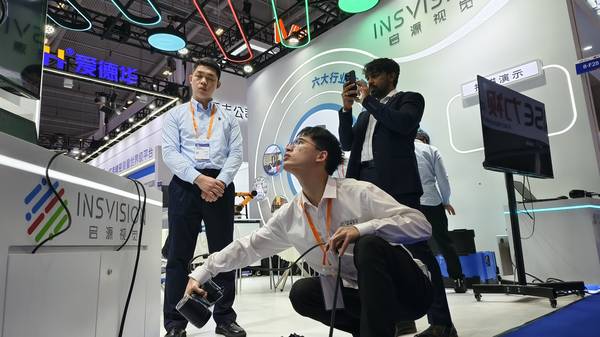
The AlphaScan handheld scanner changes this calculus by bringing laboratory-grade precision directly to the factory floor, regardless of component size. The device operates without fixed staging requirements, allowing engineers to capture dimensional data on workpieces that would overwhelm conventional metrology equipment.
Its 520 nm laser system delivers consistent performance across varied surface geometries, while the positioning accuracy of 0.25 mm ensures that measurements reflect true part geometry rather than instrument limitations.
INSVISION‘s approach extends beyond hardware to encompass the entire data workflow. Captured point clouds integrate seamlessly with the company’s 3D inspection software, which supports alignment against CAD models and generates color-coded deviation maps.
This capability transforms abstract measurement data into actionable visual intelligence, enabling technicians to identify problem areas instantly and make informed decisions about part acceptance or remediation. The system’s compatibility with standard formats including IGES, STP, DXF, and DWG ensures smooth data exchange with existing engineering platforms.
Operational Efficiency Gains That Impact the Bottom Line
Implementing portable 3D scanning for large objects produces measurable improvements across multiple operational metrics. Inspection cycles compress substantially when technicians can complete comprehensive scans in hours rather than days.
This acceleration enables manufacturers to increase sampling rates, moving toward statistical process control rather than relying on spot checks that sample only a fraction of production output. More frequent inspection generates richer quality datasets, supporting better trend analysis and earlier intervention when processes begin drifting toward specification limits.
The labor dimension deserves particular attention. Traditional large-part inspection often demands specialized skills and extended handling time from experienced technicians. AlphaScan’s intuitive interface reduces the training curve, allowing quality teams to deploy scanning resources more flexibly.
Workers previously tied up in measurement activities can redirect their expertise to root-cause analysis and process improvement initiatives that deliver compounding value over time. Additionally, the portable nature of the system eliminates the need to transport components to dedicated inspection bays, reducing material handling costs and minimizing the risk of damage during transit.
Long-Term Value and Quality Traceability
Beyond immediate efficiency gains, 3D scanning for big objects establishes documentation practices that support continuous improvement and regulatory compliance. Every scan generates a permanent digital record of part geometry at a specific point in time, creating an auditable quality trail that traditional paper-based methods cannot match.
When issues arise months or years later, manufacturers can retrieve historical scan data to support failure analysis or demonstrate due diligence to customers and certification bodies.
The durability and operational range of INSVISION’s hardware contribute to long-term return on investment. With an operating temperature range extending from -5°C to 40°C, the AlphaScan performs reliably in environmental conditions that would compromise less robust equipment.
This versatility means manufacturers can deploy the same scanner across different facilities, work shifts, or seasonal conditions without experiencing measurement drift or equipment failures. USB 3.0 and Ethernet interfaces facilitate fast data transfer, ensuring that scanning bottlenecks never become bottlenecks in the broader production workflow.
Adopting 3D scanning for large industrial components represents a strategic investment in operational resilience. By shifting from reactive inspection to proactive quality intelligence, manufacturers position themselves to reduce rework costs, accelerate delivery schedules, and build the kind of systematic quality culture that differentiates leading producers in competitive global markets.
Hangzhou Insvision Technology Co.,Ltd.
Address: Building 1, No. 1399 Liangmu Road, Yuhang District, Hangzhou, Zhejiang 311121, China