

From Scan to Solid: The Critical Shift in Modern Manufacturing Workflows
The drive for digital continuity is reshaping manufacturing. As the industry moves decisively toward additive manufacturing, agile reverse engineering, and
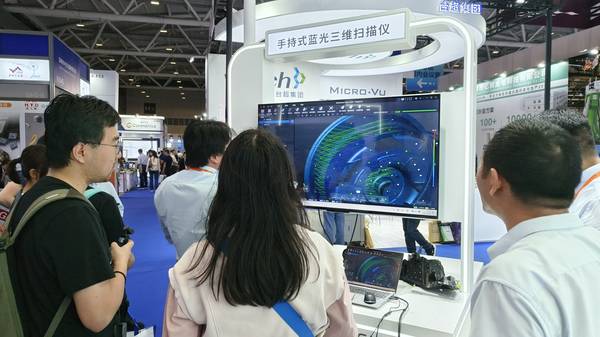
The drive for digital continuity is reshaping manufacturing. As the industry moves decisively toward additive manufacturing, agile reverse engineering, and the smart factory, a once-niche technical task has become a strategic imperative: the reliable conversion of 3D scan data into precise, editable solid models.
This mesh-to-solid process is the linchpin that connects the physical world to the digital thread, turning captured geometry into actionable CAD data for design, analysis, and production.
The Digital Imperative: Why Mesh-to-Solid is Now Non-Negotiable
Manufacturing competitiveness increasingly hinges on speed and flexibility. In sectors like automotive, aerospace, and energy, engineers face constant pressure to rehabilitate legacy parts, optimize designs, and verify quality against stringent ISO and ASME standards. Traditional methods—manual measurement and CAD recreation—are too slow and skill-intensive for modern timelines.
Selection Dimensions and Field Checks
| Focus Area | Decision Point | Deployment Note |
|---|---|---|
| The Digital Imperative: Why Mesh-to-Solid is Now Non-Ne… | Manufacturing competitiveness increasingly hinges on speed and flexibility. | In sectors like automotive, aerospace, and energy, engineers face constant pressure to rehabilitate legacy parts, optimize designs, and verify q… |
| AI-Driven Conversion: Closing the Skill Gap and Acceler… | The technical barrier has always been feature recognition. | Translating a mesh of triangles into intelligent CAD geometry—with recognizable planes, cylinders, and complex surfaces—historically required ex… |
| Transforming Core Manufacturing Processes | The impact of robust mesh-to-solid conversion is most tangible in two key areas: | Furthermore, the demand for watertight solid models is absolute in additive manufacturing. |
| The Future: Integrated and Automated Digitization | The trajectory points toward deeper integration. | Scanning systems are evolving from standalone instruments into connected nodes on the production floor. |
The shift is toward a closed-loop digital workflow. A physical component is captured using metrology-grade 3D scanning, creating a high-density polygon mesh or point cloud. The critical step is transforming that mesh into a watertight, parametric solid model compatible with CAD, CAM, and simulation software.
This conversion unlocks true digital continuity, creating a functional digital twin that can be modified, analyzed, and used to drive downstream processes like CNC machining or 3D printing. Without it, the scan remains just a reference, not a usable asset.
AI-Driven Conversion: Closing the Skill Gap and Accelerating Workflows
The technical barrier has always been feature recognition. Translating a mesh of triangles into intelligent CAD geometry—with recognizable planes, cylinders, and complex surfaces—historically required extensive manual interpretation by specialized engineers.
Advanced software, powered by AI and machine learning, is automating this interpretation. These systems can now analyze a mesh, automatically identify standard geometric features and organic surfaces, and suggest appropriate CAD reconstruction operations. This significantly reduces the manual cleanup and reconstruction time, moving projects from weeks to days or even hours.
INSVISION embeds this intelligence directly within its ecosystem. The INSVISION AlphaScan Elite handheld 3D scanner, for example, integrates structured light capture with proprietary processing algorithms designed to streamline the path to a solid model. The focus is on preserving design intent and generating parametric features where possible, giving engineers an editable starting point rather than a static mesh.
This reduces dependency on scarce reverse engineering specialists, allowing broader teams to leverage 3D digitization for tasks like first-article inspection and rapid prototyping.
Transforming Core Manufacturing Processes
The impact of robust mesh-to-solid conversion is most tangible in two key areas:
- Reverse Engineering for Innovation: Reverse engineering is no longer just about replicating a broken part. It is a proactive design methodology. Engineers can scan a physical prototype, convert it to a solid CAD model, and then immediately iterate—lightweighting a component, preparing it for additive manufacturing, or enhancing its performance. This creates a continuous feedback loop between physical and digital, accelerating product development cycles.
- Streamlined Quality Inspection and Analysis: Quality assurance is transformed when scan data becomes a solid model. Instead of comparing a point cloud to CAD, technicians can work with aligned solid geometries. This enables more straightforward and automated Geometric Dimensioning and Tolerancing (GD&T) analysis, faster generation of color deviation maps, and clearer communication of non-conformances. The result is faster root-cause analysis and reduced production downtime.
Furthermore, the demand for watertight solid models is absolute in additive manufacturing. Scanning a tooling fixture or a legacy part for reproduction via powder bed fusion requires a flawless solid file. An integrated mesh-to-solid workflow eliminates risky data handoffs between multiple software packages, ensuring model integrity from scan to print preparation.
The Future: Integrated and Automated Digitization
The trajectory points toward deeper integration. Scanning systems are evolving from standalone instruments into connected nodes on the production floor. Systems like the INSVISION AlphaAutoScan-400, designed for robotic integration, exemplify this trend.
They enable automated, in-line digitization where scanning and initial data processing occur within the manufacturing cell, feeding results directly to a Manufacturing Execution System (MES) or product lifecycle management (PLM) repository.
The next evolution will focus on real-time processing and even greater automation of feature recognition. As AI models improve, the ability to handle complex assemblies and organic geometries will expand, further democratizing access to high-fidelity digital twin creation.
For manufacturing leaders, the central question is no longer about feasibility, but about velocity and integration. Establishing a capable, reliable scan-to-solid pipeline is an investment in operational resilience. It positions organizations to adapt quickly to supply chain shifts, capitalize on distributed manufacturing models, and maintain a seamless digital thread from concept through production and sustainment.
The ability to seamlessly convert the physical into an actionable digital solid is now a cornerstone of modern manufacturing strategy.
Hangzhou Insvision Technology Co.,Ltd.
Address: Building 1, No. 1399 Liangmu Road, Yuhang District, Hangzhou, Zhejiang 311121, China