

From Micrometers to Megabytes: How 3D Scanners Are Redefining Automotive Precision
The modern automotive workshop, whether a high-volume OEM plant or a specialist restoration shop, operates on a foundation of precision.
The modern automotive workshop, whether a high-volume OEM plant or a specialist restoration shop, operates on a foundation of precision. Yet, the traditional tools of measurement—manual gauges, CMM arms, and 2D inspection jigs—often create bottlenecks in an era defined by digital threads and lean manufacturing.
The gap between physical components and their digital design intent has been a persistent source of cost, delay, and uncertainty.
This is where metrology-grade 3D scanning creates a pivotal shift. By instantly capturing a component’s complete geometry as a dense point cloud, tools like those from INSVISION transform physical assets into actionable, high-fidelity data. This digital twin becomes the single source of truth for a suite of critical industrial processes.
Closing the Loop on Production Line Inspection
First-article inspection and in-process quality checks are non-negotiables, but they must not impede throughput. The challenge lies in verifying complex, free-form surfaces against CAD models with micrometer-level accuracy, without adding hours to the cycle.
Capability and Deployment Mapping
| Focus Area | Decision Point | Deployment Note |
|---|---|---|
| Closing the Loop on Production Line Inspection | First-article inspection and in-process quality checks are non-negotiables, but they must not impede throughput. | The challenge lies in verifying complex, free-form surfaces against CAD models with micrometer-level accuracy, without adding hours to the cycle. |
| Democratizing Reverse Engineering for Legacy and Custom… | Dependency on original OEM drawings or tooling is a major constraint for aftermarket suppliers, restoration experts, and motorsports fabricators. | When a vintage component is damaged or a custom upgrade is envisioned, the absence of digital data halts progress. |
| Building a Data Foundation for Intelligent Quality Syst… | The true strategic value of 3D scanning extends beyond geometry capture; | it lies in creating structured, analyzable data at scale. |
| Integrating Scanning into the Workshop: A Practical Roa… | Successful deployment hinges on more than hardware selection. | It requires thoughtful integration into existing quality workflows. |
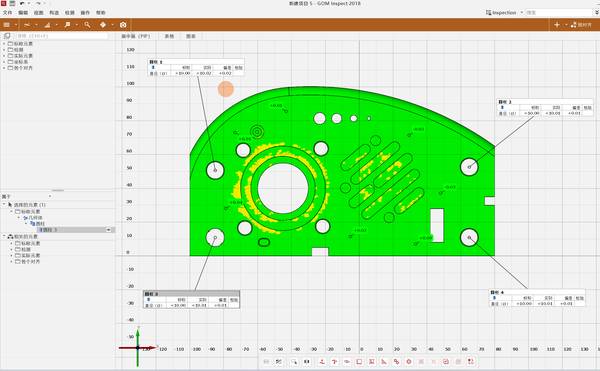
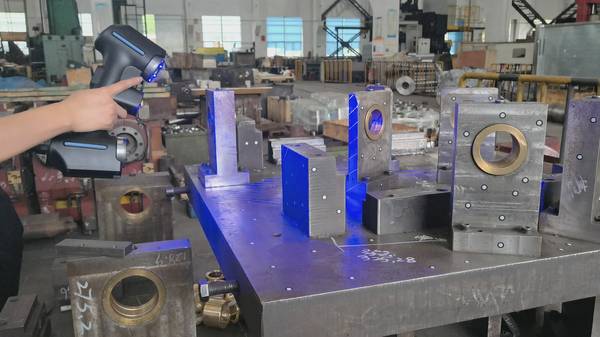
INSVISION’s handheld 3D scanners, such as the AlphaScan, address this directly. An operator scans a freshly stamped body panel or a molded interior component, capturing millions of data points in seconds. Within INSVISION’s inspection software, this scan is automatically aligned with the original CAD nominal. The output is not a spreadsheet of sample points, but an intuitive, color-coded deviation map.
Areas exceeding tolerance bands are immediately visible. This allows engineers to move beyond simple pass/fail judgments to diagnose root causes—identifying patterns indicative of die wear, fixture misalignment, or thermal distortion in tooling.
By compressing a full inspection from hours to minutes, the technology enables higher sampling rates and statistical process control without compromising line speed, turning quality assurance from a gatekeeper into a continuous feedback mechanism.
Democratizing Reverse Engineering for Legacy and Custom Work
Dependency on original OEM drawings or tooling is a major constraint for aftermarket suppliers, restoration experts, and motorsports fabricators. When a vintage component is damaged or a custom upgrade is envisioned, the absence of digital data halts progress.
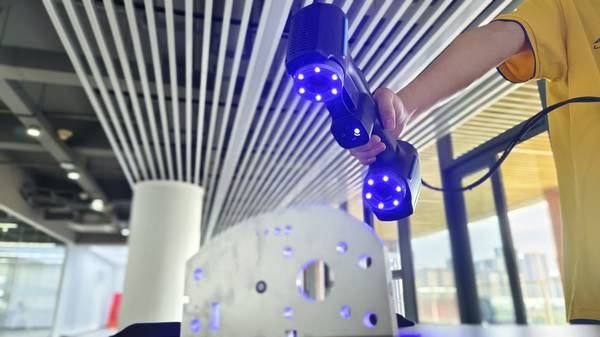
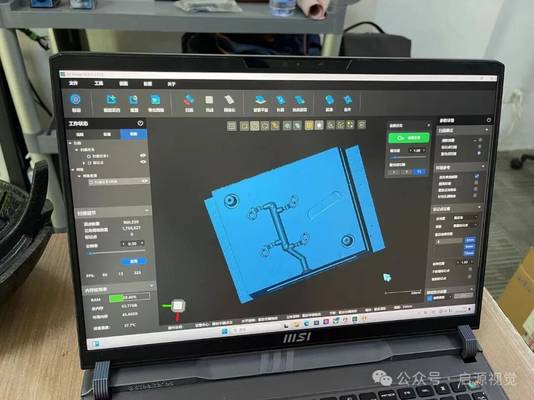
INSVISION’s scanning ecosystem turns this obstacle into a workflow. A worn classic car suspension link or a one-off prototype intake manifold can be scanned, generating an accurate 3D mesh ready for CAD. With direct export to standard formats like STEP or IGES, the data integrates seamlessly into mainstream design software.
Here, the scan serves as the foundational reference. Engineers can digitally repair wear, apply modern material optimizations, or modify designs for performance gains. The refined model is then ready for CNC machining or additive manufacturing. This capability effectively decouples workshops from legacy documentation, accelerating timelines for bespoke parts, legacy vehicle support, and low-volume production.
Building a Data Foundation for Intelligent Quality Systems
The true strategic value of 3D scanning extends beyond geometry capture; it lies in creating structured, analyzable data at scale. Modern platforms, including INSVISION’s, embed analytical tools that automate complex evaluations, such as full Geometric Dimensioning and Tolerancing (GD&T) reports against ASME Y14.5 standards.
This transforms the scanner from a measurement device into a data acquisition node for a closed-loop quality system. High-fidelity scan data from production batches can be analyzed to identify subtle trends—progressive tool wear, material spring-back variation, or thermal effects across shifts.
This predictive insight allows for proactive process adjustments before deviations lead to scrap, supporting key Industry 4.0 pillars like traceability and predictive maintenance.
Integrating Scanning into the Workshop: A Practical Roadmap
Successful deployment hinges on more than hardware selection. It requires thoughtful integration into existing quality workflows. Teams should begin by mapping their current inspection and reverse engineering processes, identifying stages where manual methods introduce the greatest delay or risk of error.
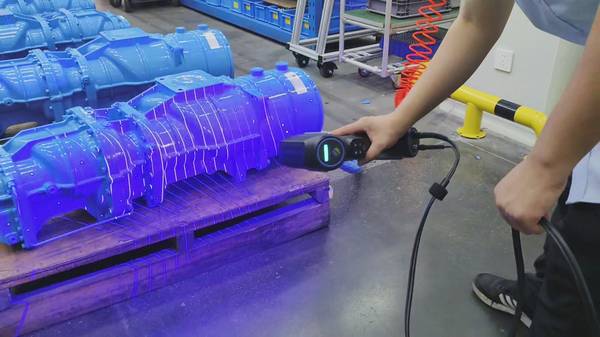
Environmental robustness is critical for shop-floor use. INSVISION designs equipment like the AlphaScan series to operate reliably in ambient conditions from -5°C to 40°C, without needing climate-controlled metrology labs. For large-scale applications, such as scanning full vehicle chassis or body-in-white structures, the large-volume AlphaVista series captures expansive fields of view to maintain accuracy across assemblies.
A pilot project focused on a high-value, problematic component—such as a complex cylinder head or a high-visibility Class A surface panel—allows teams to validate accuracy claims and quantify throughput gains. This hands-on phase builds internal competency and provides a clear, evidence-based ROI calculation to justify broader program expansion.
The Path to Digital Confidence
For automotive professionals, the transition to 3D scanning is a move toward digital confidence. It replaces estimation with evidence, and sampling with comprehensive data. INSVISION’s handheld 3D scanners provide a practical conduit for this transition, enabling workshops and manufacturers to bridge the gap between the physical and digital worlds.
The result is a tangible elevation in precision, a significant acceleration in development and repair cycles, and a stronger foundation for the data-driven decision-making that defines modern industrial competitiveness.
Hangzhou Insvision Technology Co.,Ltd.
Address: Building 1, No. 1399 Liangmu Road, Yuhang District, Hangzhou, Zhejiang 311121, China